Whether you’re diving into your first chess match or brushing up on the basics, setting up the board correctly is your very first move. Here’s how to do it like a pro—even if you’re just getting started!
How to set up a chess board
- Orient your board.
- Place pawns on the second row.
- Put the rooks in each corner.
- Put the knights next to the rooks.
- Put the bishops next to the knights.
- Put the queen on the square of her color.
- Put the king next to the queen.
Here’s how that will look:
Step 1. Orient your board in the right direction.
Make sure each player has a light-colored square in the corner on their right-hand side. This sets the stage for everything else to fall into place.

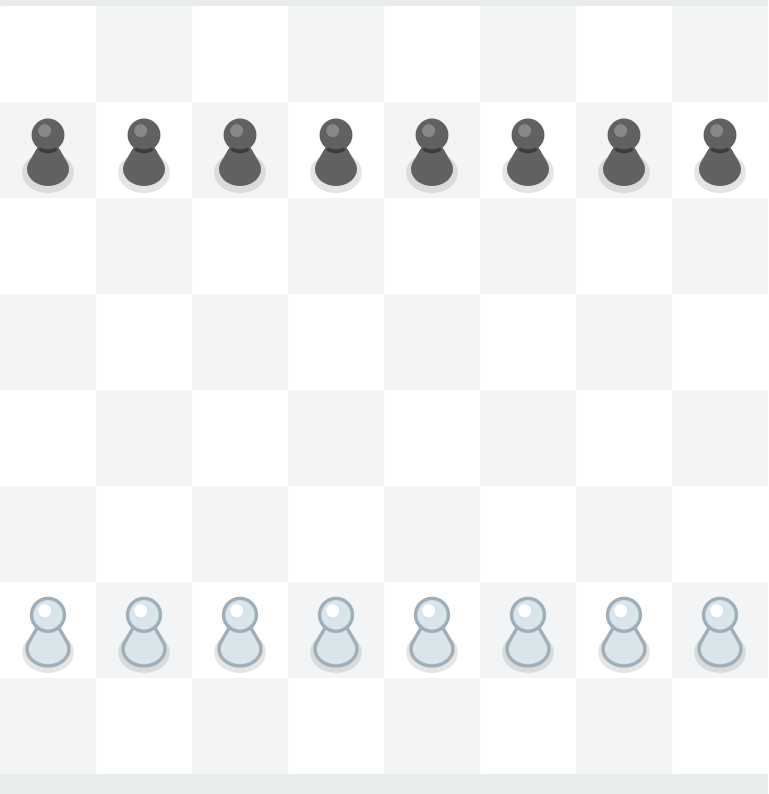
Step 2. Place your pawns on the second row.
Next, line up all eight pawns on the second row (the first row is the one closest to you). Both players will do this—it’s the front line of your army!
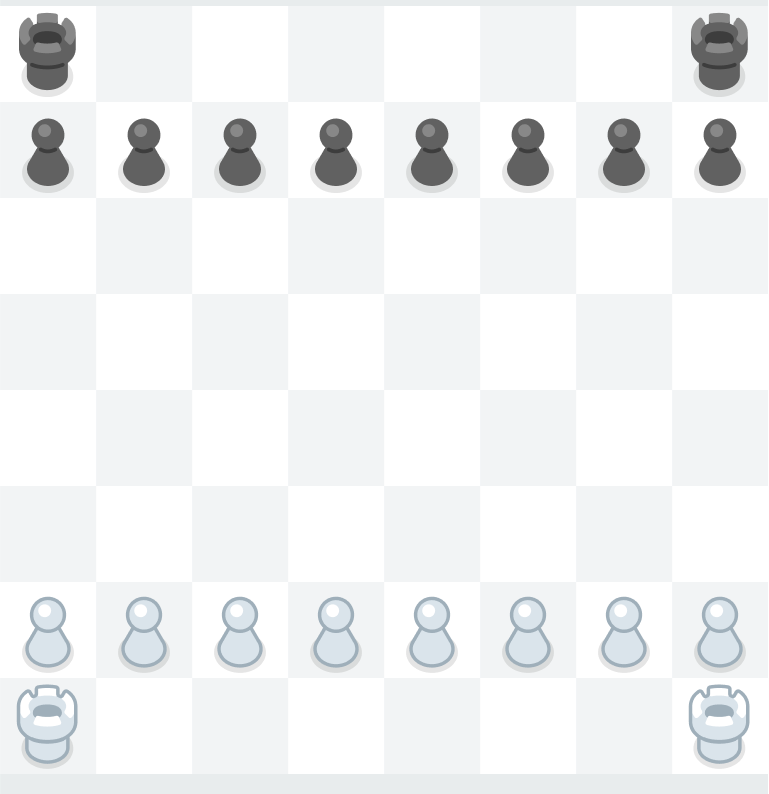
Step 3. Put the rooks in each corner.
Now your rooks go in the two corners of your first row. Think of them as your castle walls.
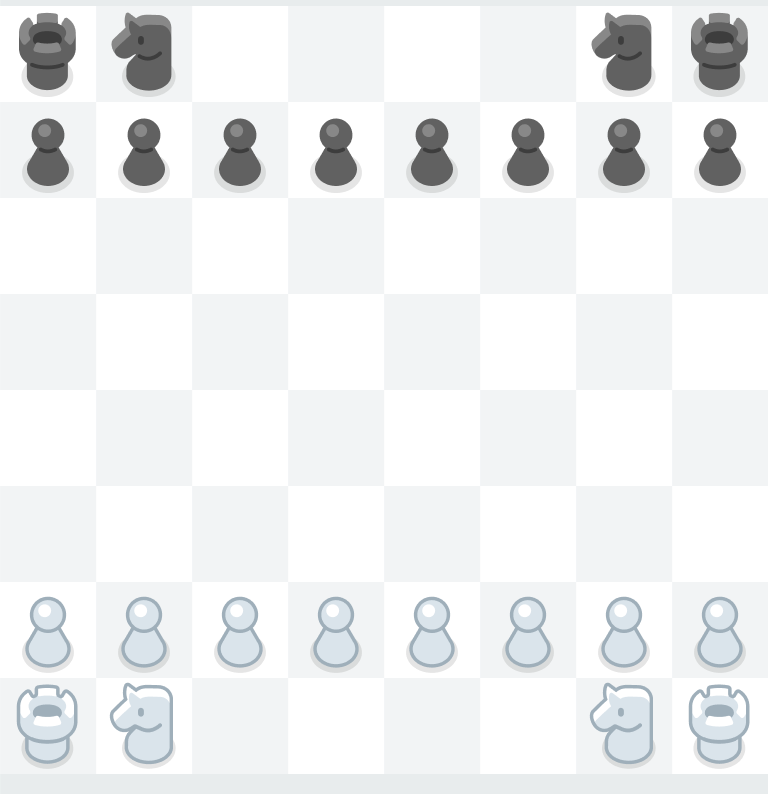
Step 4. Put the knights next to the rooks.
Next come the knights, one square in from each corner, next to the rooks. These are your trusty cavalry!
Step 5. Put the bishops next to the knights.
Place your bishops right next to the knights. You can think of them as close advisors of the monarchs. 👑
Fun fact: Bishops evolved from elephant pieces in earlier versions of chess!
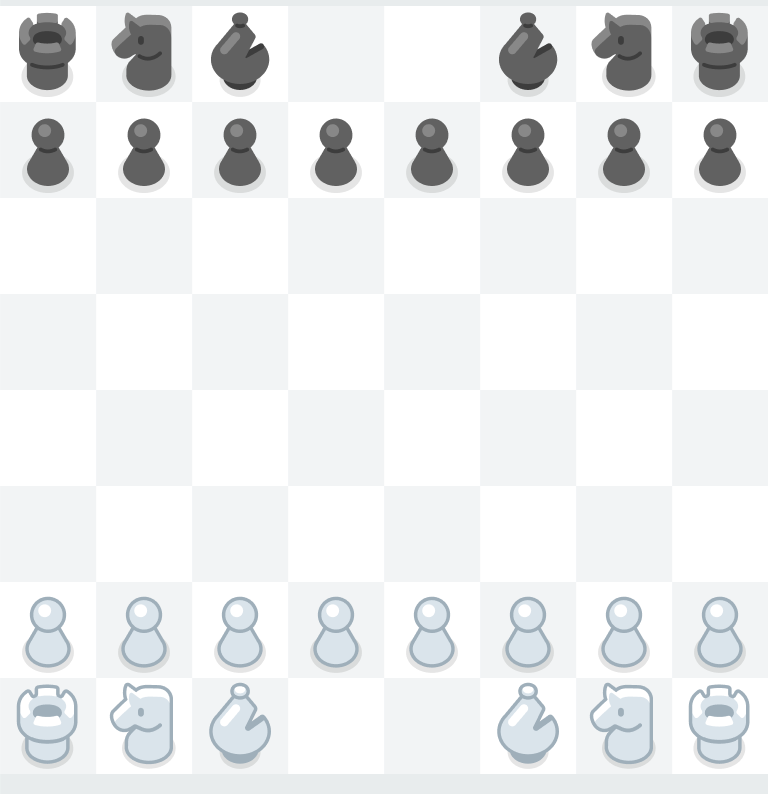
Step 6. Put the queen on her own color.
It can be tricky to remember the next steps! Always place the queen on the square that matches her color. If you’re playing White, that means the queen goes on the light square.
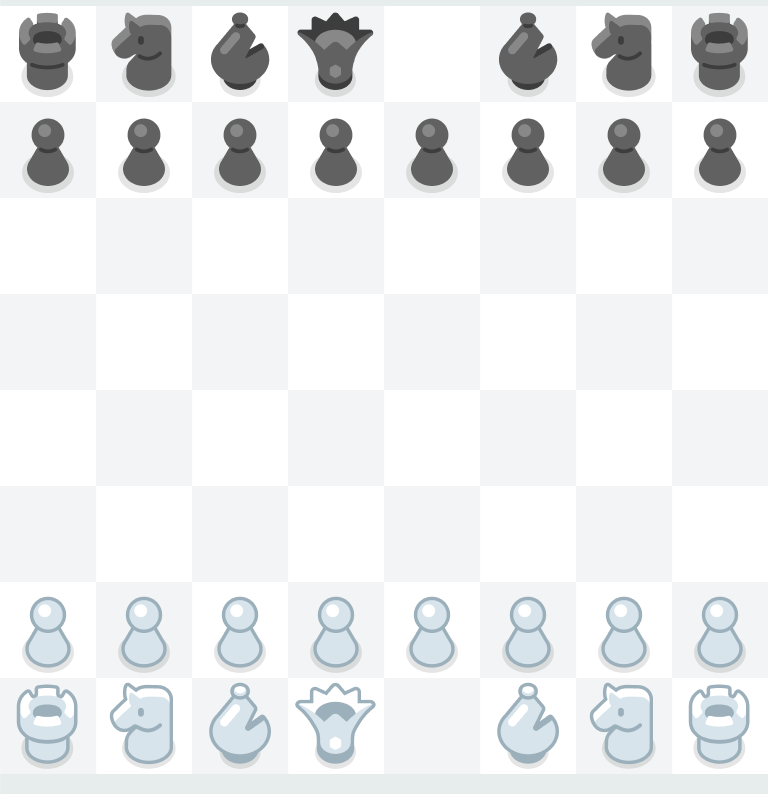
Step 7. Put the king next to the queen.
The king gets the final square in the first row. Now your royal court is ready!
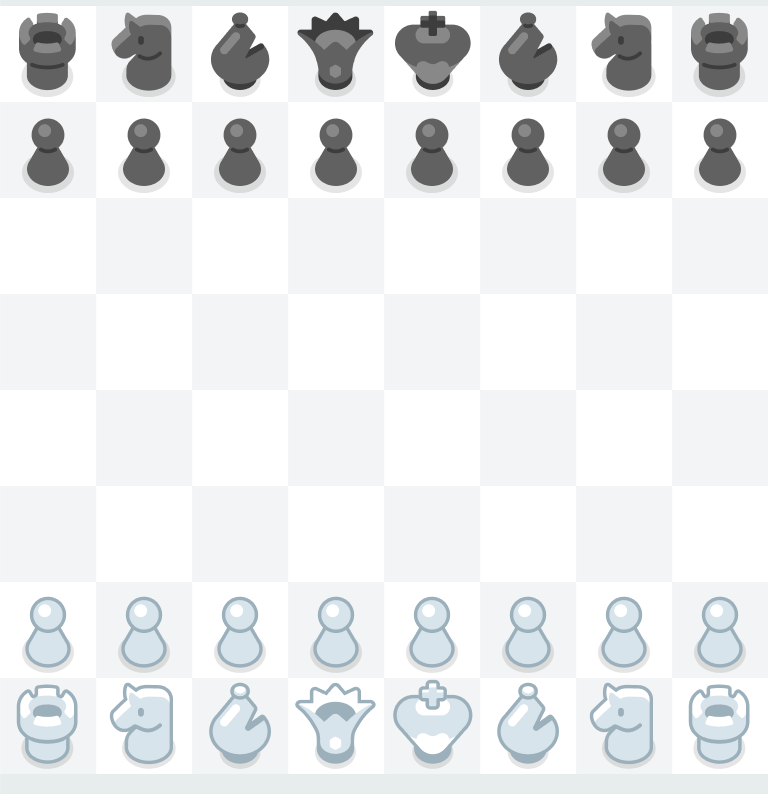
Time to play ⏰
White always goes first, which gives a slight advantage. Over time, you’ll learn to use your color as part of your strategy, either to make the most of that advantage or to develop techniques to work around it.
If you’re using a clock, here’s what you should know:
- Each player gets their own timer (like “5 minutes” each).
- You press the button to end your turn and start your opponent’s clock.
- The player with the black pieces decides where they want the clock. Since most people are right-handed, the clock tends to be on Black’s right.
- Playing with a clock helps build good habits (and keeps games snappy!). This is especially good for beginners, who can use a clock to help them play more efficiently (it’s so tempting to want to consider all possible moves!).
Your move!
That’s it—you’re ready to play! 🏁
As you keep practicing, you’ll start recognizing patterns on the board, and in fact, the dark and light squares will become part of what you look for when you identify and consider moves. Learning to set up the board helps train your brain from the very beginning. ♟️