I’ve been volunteering with Allegheny Mountain Rescue for about five years now. For most of that time, my mental model of search and rescue looked a lot like incident response at Duolingo. Something breaks, someone notices, resources get deployed, and the situation stabilizes.
That model mostly works until it doesn’t.
Recently, I had the opportunity to take a Managing Lost Person Incidents (MLPI) course, which wrapped up with an in-person segment in Badlands National Park. For those who haven’t had the opportunity to make the trek, the Badlands are vast, exposed, deceptively simple to look at, and extremely unforgiving once you’re responsible for coordinating people and decisions across them.
What struck me almost immediately was how little the hardest problems had to do with “search” itself.
The early part of an incident often looks familiar. You gather what you know, deploy resources, and try to converge on an answer. But once an incident stretches across operational periods, once uncertainty stays high and the number of people, tools, and decisions explodes, the work changes entirely. The challenge stops being finding the answer and becomes managing the chaos around not having one yet.
One moment from the course really stuck with me. We walked through a scenario that seemed straightforward on the surface: plenty of resources; plenty of capable people. But as time passed, the complexity grew faster than the problem itself. Decisions created second-order effects. Information became fragmented. The cognitive load on the person coordinating everything became the limiting factor.
That felt very familiar.
A few lessons I took away that map cleanly to how we handle rare, high-impact incidents at Duolingo:
- Long-running incidents need different playbooks. What works for a one-hour incident breaks down when you’re coordinating across shifts and days.
- Command structure matters more over time, not less. As incidents grow, informality becomes a liability. Clear roles and decision ownership reduce risk.
- Documentation isn’t overhead. It’s essential. Someone needs to own the shared narrative of what’s happening, what’s been tried, and why decisions were made.
- Task visibility is a force multiplier. When the incident commander can’t see ownership and progress at a glance, they become the bottleneck.
- Incident command is a different job. Being good at fixing things (or finding people) doesn’t automatically translate to orchestrating people, resources, and uncertainty.
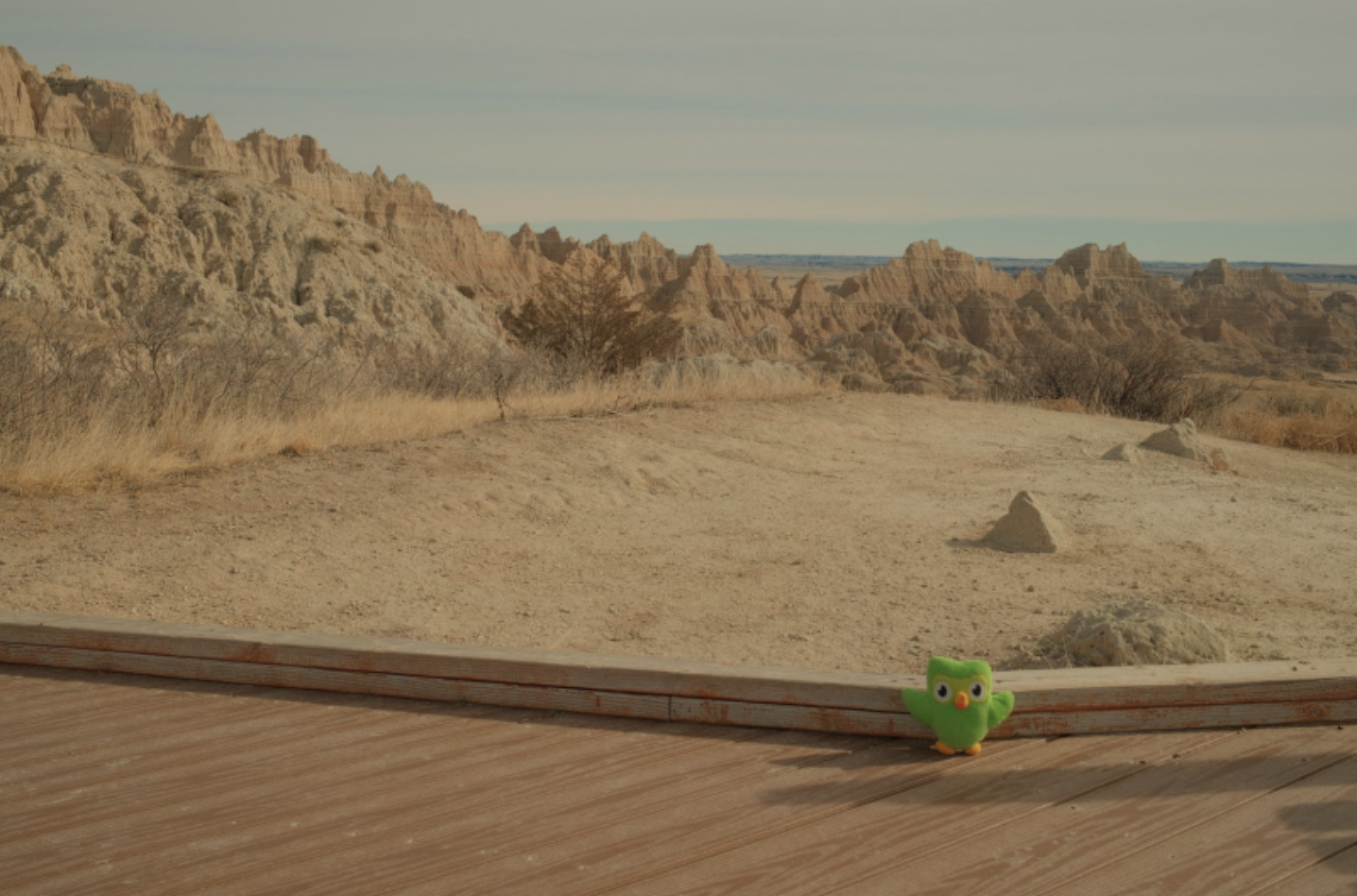
In search and rescue, teams rely heavily on a shared “map,” a single artifact that grounds everyone in the same reality. Standing in the Badlands, it became obvious why: When the terrain is that open and disorienting, you need a common reference point or everyone starts solving different problems.
It made me think a lot about what our equivalent “map” should be during major incidents, and how intentional we are about defining it ahead of time.
I left this class with a better appreciation of how much better outcomes are when teams plan for complexity before they’re surrounded by it, whether that terrain is rock and heat or systems and users. (I also had an amazing time in Badlands National Park. 10/10. Will visit again sometime.)
If you enjoy thinking about how systems behave under stress (and how to design for complexity before it emerges) we’re hiring engineers at Duolingo.
Disclaimer: This class was not sponsored by Duolingo. I paid for the travel myself and took PTO days. I’m a member of Allegheny Mountain Rescue Group and this is just what I do for fun. I had the time of my life taking this class.