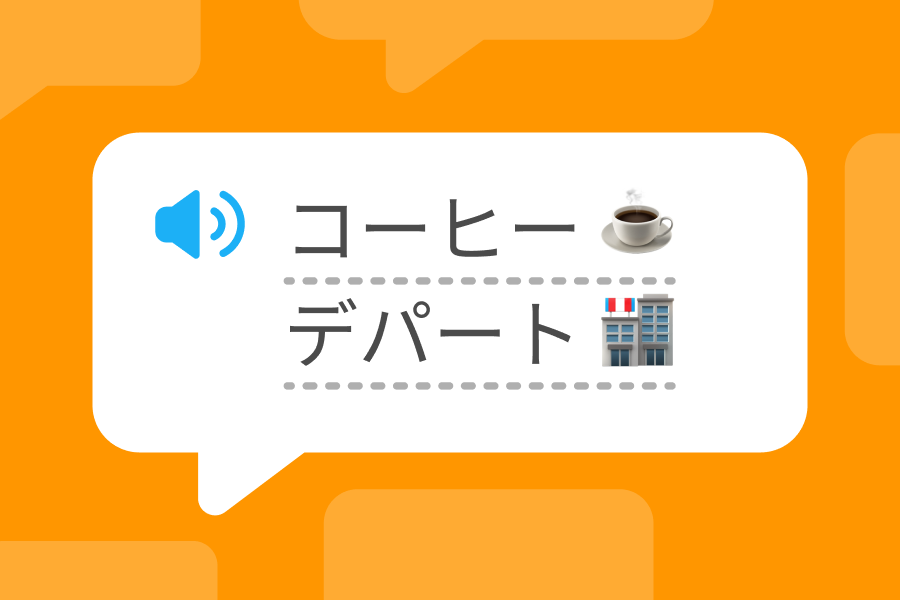
Did you know that Japanese is full of loanwords from other languages? These loanwords are called 外来語 (gairaigo), and they reflect centuries of trade and cultural exchange.
Most gairaigo come from English, but some also come from European languages like Dutch and Portuguese. No matter which language they are taken from, their pronunciation is adapted into Japanese. Let’s take a closer look at some examples and their origins:
- 16th century: loanwords from Portuguese
- 17th-19th centuries: loanwords from Dutch
- Meiji era (1868-1912): loanwords from German and French
- Since the 20th century: loanwords from English
Words from Portuguese 🇵🇹
In the 16th century, the Portuguese were the first Europeans to establish trade with Japan. Traders and missionaries introduced everyday items like bread and tobacco, which led to their adoption as loanwords in Japanese.
Bread: パン (pan)
Source: Portuguese “pão” 🍞
Japanese equivalent: nonexistent
Tobacco/cigars/cigarettes: タバコ (tabako)
Source: Portuguese “tabaco” 🚬
Japanese equivalent: nonexistent
Words from Dutch 🇳🇱
During the 17th to 19th centuries, Japan largely closed its borders, placing severe restrictions on foreign trade and travel. Only Chinese and Dutch traders were still able to operate, resulting in Dutch loanwords entering the language during this period.
Beer: ビール (biiru)
Source: Dutch “bier” 🍺
Japanese equivalent: 麦酒 (bakushu), or “wheat alcohol” (outdated and no longer in use)
Coffee: コーヒー (koohii)
Source: Dutch “koffie” ☕
Japanese equivalent: nonexistent, but the kanji 珈琲 (koohii) is sometimes used instead of the katakana コーヒー for stylistic purposes
Words from German 🇩🇪 and French 🇫🇷
In the Meiji era (1868-1912), Japan reopened its borders and experienced rapid modernization. During this period, German contributed scientific and work-related terms, while French added words related to culture and lifestyle.
Energy: エネルギー (enerugii)
Source: German “Energie” 🔋
Japanse equivalent: Several, including 電力 (denryoku; for electrical energy), 原子力 (genshiryoku; for nuclear energy), 体力 (tairyoku; for physical energy)
Survey/questionnaire: アンケート (anketto)
Source: French “enquête” 📋
Japanese equivalent: 調査 (chousa; for formal surveys) and アンケート (for everyday or low-stakes questionnaires)
Words from English 🇺🇲🇬🇧
From the 20th century onward, English has become the primary source of gairaigo, especially in technology, business, and pop culture.
Toilet: トイレ (toire)
Source: English “toilet” 🚽
Japanese equivalent: 便所 (benjyo; literal and rarely used in conversation) or お手洗い (otearai; more equivalent to a “wash room” and quite formal)
Department store: デパート (depaato)
Source: English “department store” 🏬
Japanese equivalent: 百貨店 (hyakkaten; for written and/or official contexts, like company names and signage)
Japanese loanwords carry more than their literal meaning
As you can see, you may already know more Japanese than you think! Gairaigo aren’t just linguistic shortcuts—they’re cultural bridges that show how Japan has absorbed and reshaped words from around the world. So have fun learning Japanese and uncovering a global story woven into the language itself! 🌏