Learning openings requires understanding chess notation, the system for naming pieces and moves. Get a refresher on chess notation here!
Nimzo-Indian Defense: 4 quick facts
- This hypermodern opening is named after famous world-class 20th century player Aron Nimzowitsch, proponent of the hypermodern approach and writer of the chess classic My System. Because this opening’s name is a bit of a mouthful, it’s often shortened to just “the Nimzo.”
- It’s one of Black’s most common responses to 1. d4 and is frequently played by top grandmasters. It’s also suitable for lower-level players, since it doesn’t require as much strict memorization as other openings.
- The Nimzo is very flexible, allowing the same three starting moves to transpose into other openings, including the Queen’s Gambit and the Queen’s Indian Defense.
- This opening is one of the Indian defenses, a family of hypermodern openings, all beginning with 1. d4 Nf6. This makes the Nimzo-Indian Indian Defense closely related to other Indian defenses, like the Queen’s Indian Defense, the Bogo-Indian Defense, and the King’s Indian Defense. These openings are also known for often transposing into each other!
Nimzo-Indian Defense: the moves
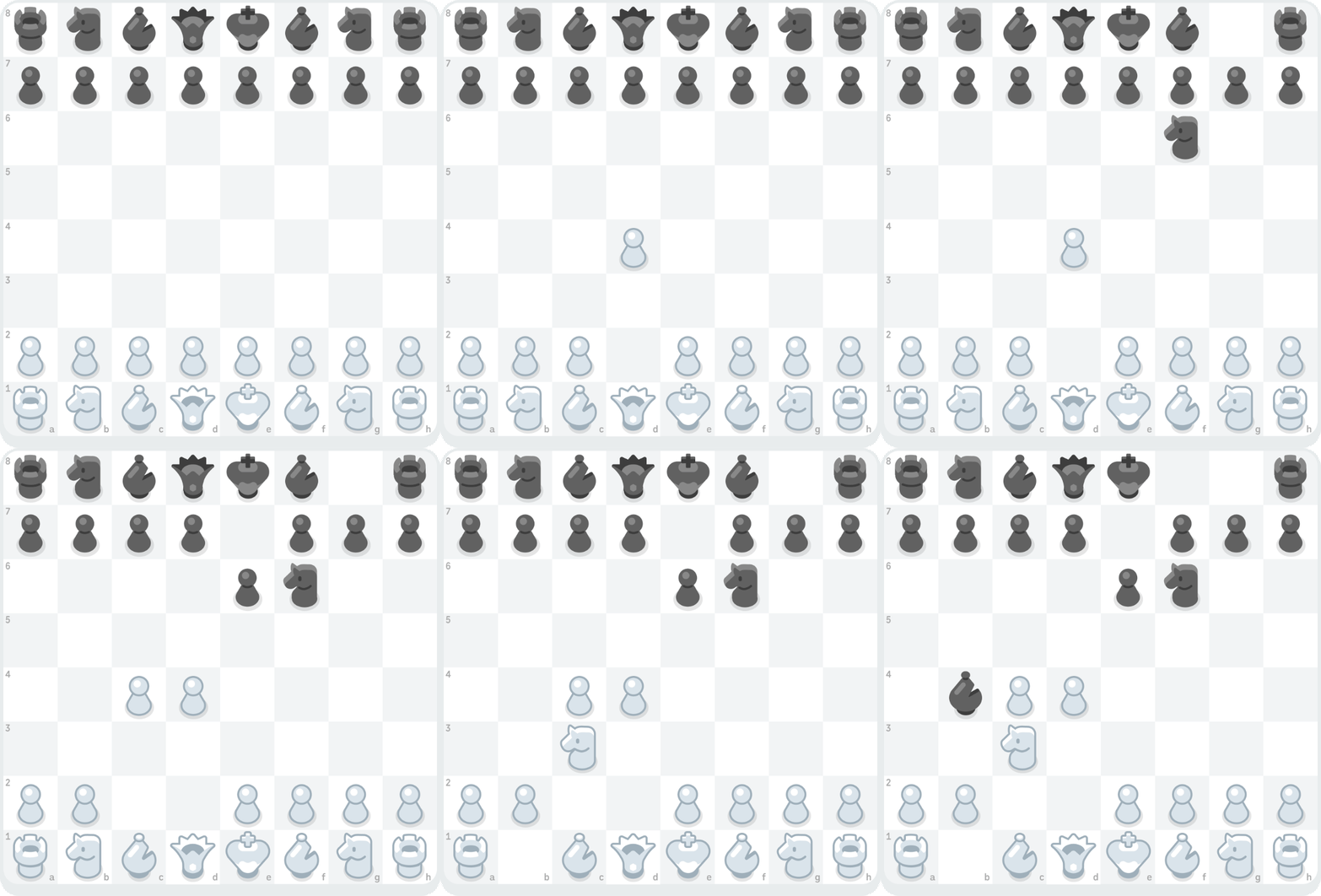
Here are the moves for the Nimzo-Indian Defense:
💡
1. d4 Nf6
2. c4 e6
3. Nc3 Bb4
2. c4 e6
3. Nc3 Bb4
Ready to play the Nimzo?
The Nimzo-Indian Defense is a great option against 1. d4, offering a strong opening with rapid development for Black.
If you’re looking for more openings, check out our guide featuring over 30 options for every skill level!