
For anyone serious about chess, learning chess notation—the system for recording chess moves during games—is a must! Not only is chess notation required when playing in rated tournaments, it’s also useful for revisiting your games for personal growth.
Read on to learn the ins and outs of chess notation!
In this post:
- What is chess notation?
- How to read and write chess notation
- Learn the symbols for special moves
- Learn additional symbols
- When do you use chess notation?
What is chess notation?
Chess notation is a universally recognized way of recording chess moves. Over time, there have been different global standards. In the past, the most popular method of chess notation was called descriptive notation, but the most common one used today—and the one we’ll discuss here—is called algebraic notation.
How to read and write chess notation
In algebraic notation, each piece is given a capitalized one-letter abbreviation. In the case of pawns, no piece abbreviation is given, simply the destination square. This is because pawns in chess are usually contrasted with the more valuable pieces starting out on the back row, with pieces colloquially referring to only the major and minor pieces: kings, queens, rooks, knights, and bishops.
To record a move, write the abbreviation of the piece followed by the piece’s destination square. You’ll record each pair of White and Black moves on the same row, following the move number (“1.” for the first turn in the game, “2.” for the second, and so on).
How do you refer to each individual square on the chess board?
Each square on the chess board is specified using a coordinate system, with letters representing each vertical column (or file) and numbers representing each horizontal row (or rank). The letters “a” through “h” are used to indicate each individual file, and the numbers 1 through 8 are used to indicate each individual rank.
No matter which player is recording the moves, the coordinate system is always used from White’s perspective. This means that the leftmost column (or file) on the chess board is the a-file, and the file second from the left is the b-file, and so on. Similarly, the first row (or rank) on the chess board is called the 1st rank, and the rank second from the bottom is the 2nd rank, and so on. However, from Black’s perspective, the leftmost file will always be the h-file and the bottommost rank from Black’s perspective will always be the 8th rank, because the coordinate system is always referenced from White’s perspective.
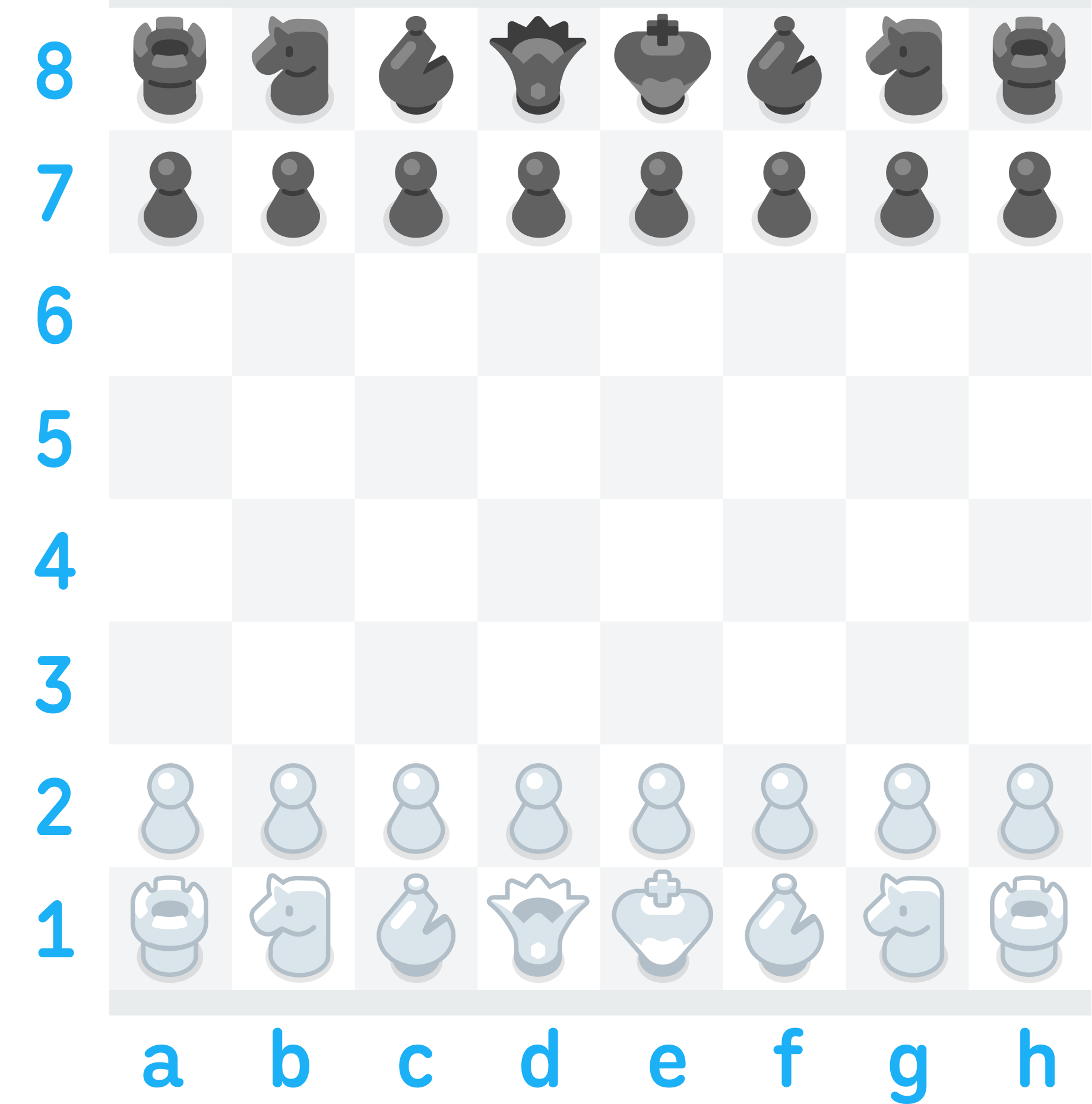
Here’s what each piece is called:
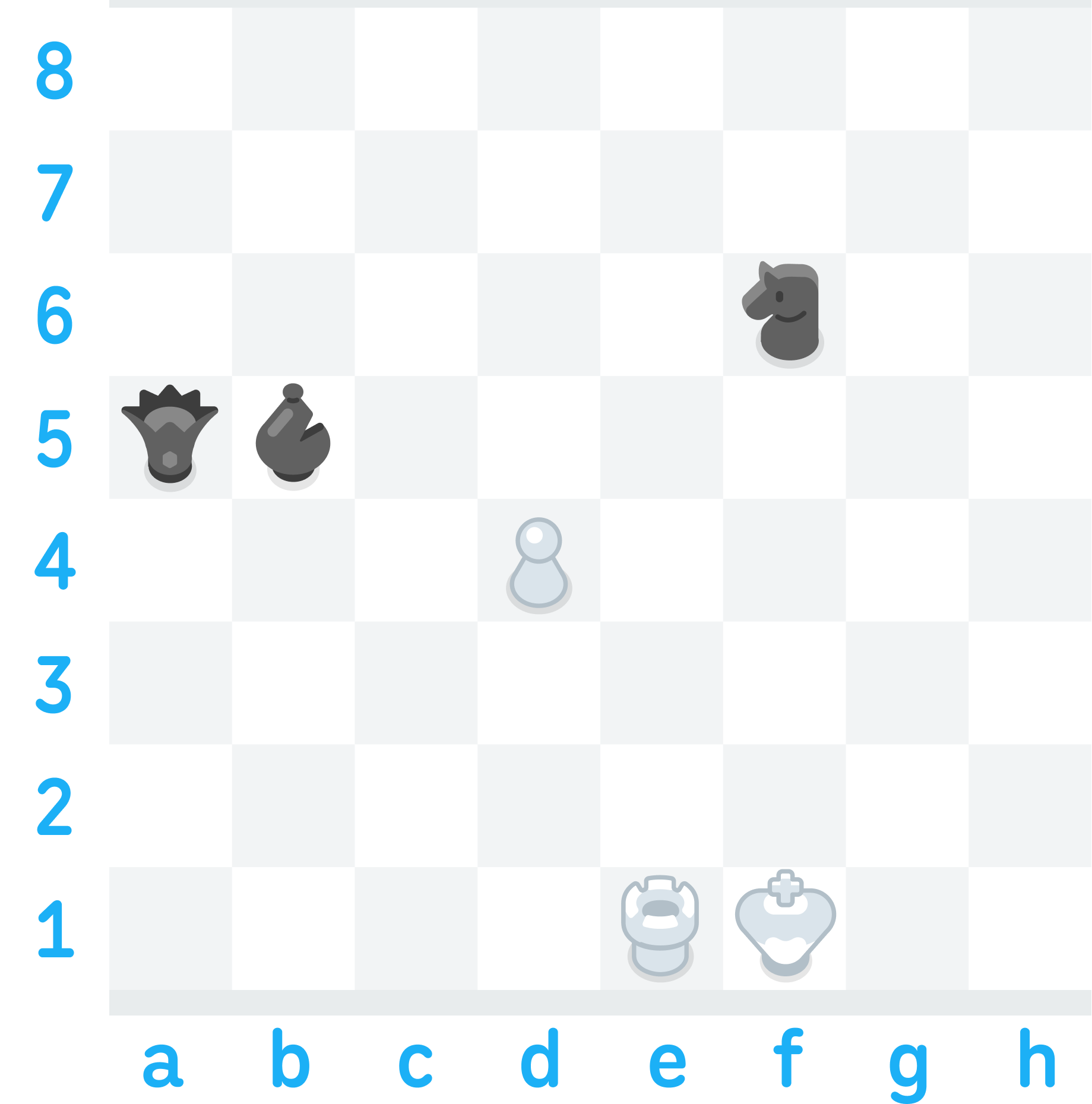
| Piece | Abbreviation | Example move |
|---|---|---|
| King | K | Kf1 |
| Queen | Q | Qa5 |
| Rook | R | Re1 |
| Bishop | B | Bb5 |
| Knight | N | Nf6 |
| Pawn | d4 |
And here’s what each example move from the table above looks like on a chess board:
Symbols for special moves
For special moves like capturing, castling, pawn promotion, or en passant, there are designated ways to notate them.
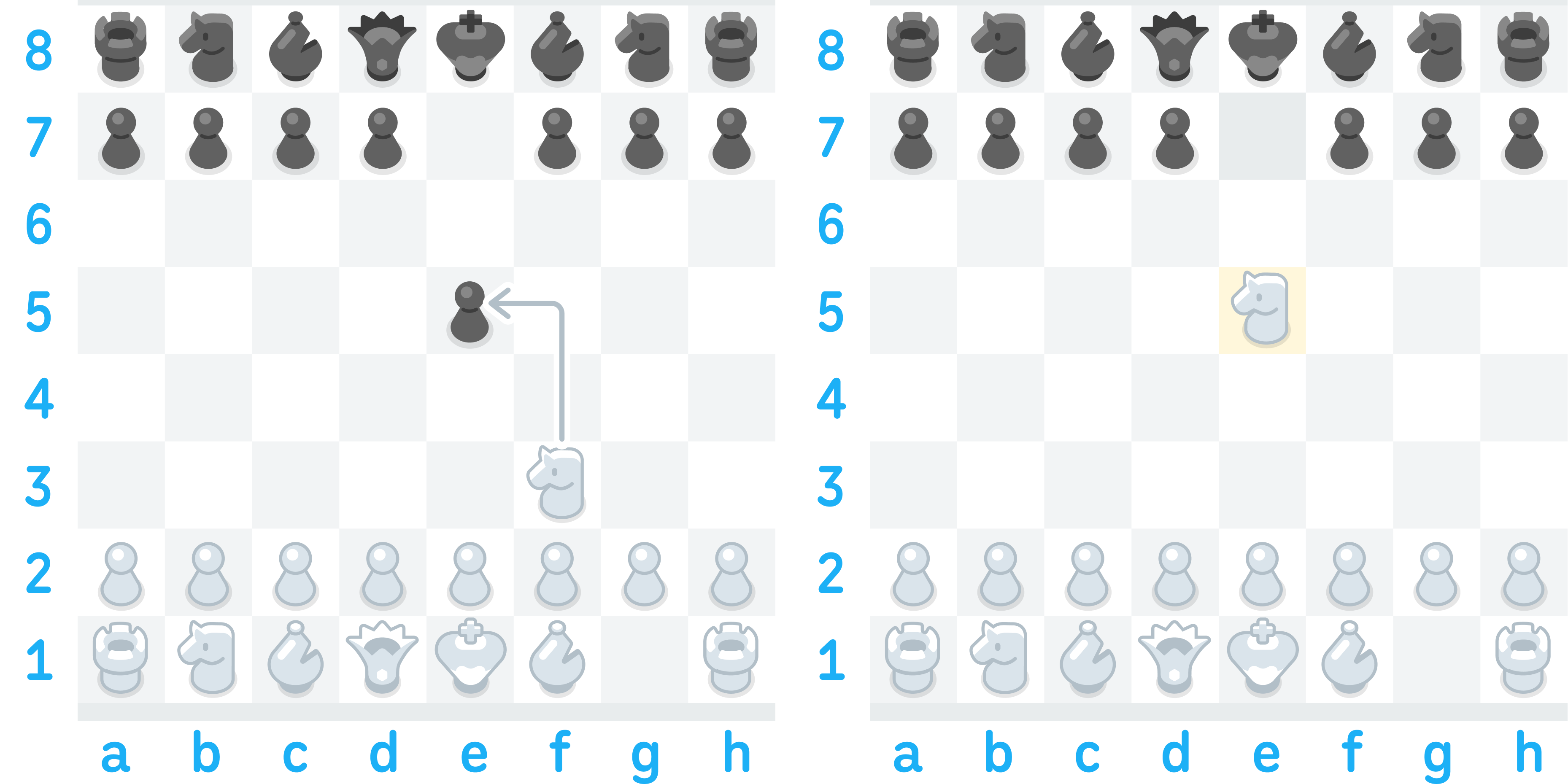
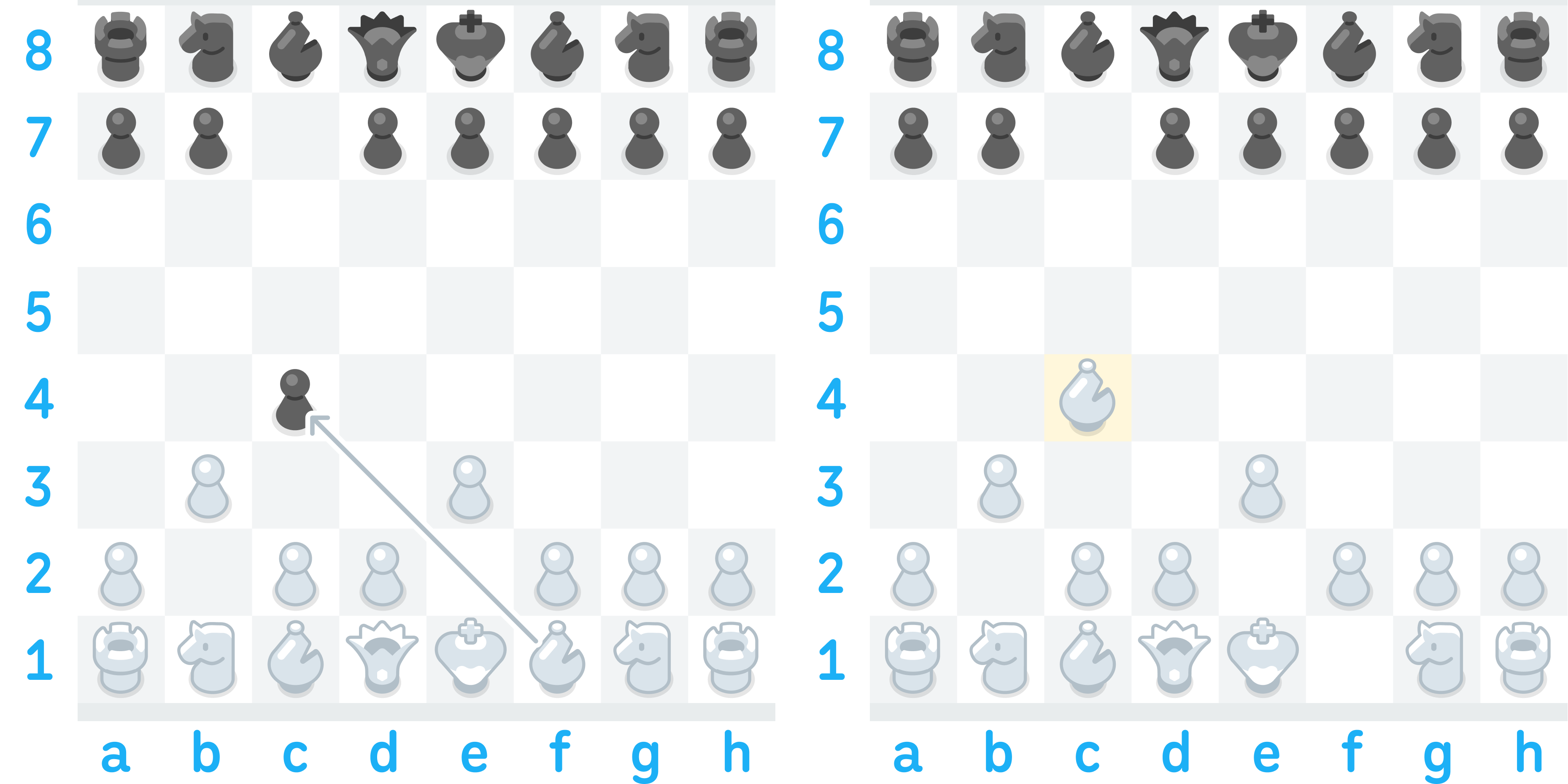
When a piece captures during a move, an x is used between the piece abbreviation and the destination square. A knight on f3 capturing a pawn or piece on e5 would be recorded as Nxe5.
For pawns capturing, the name of the file that the pawn is on is used, followed by the x and then the destination square. This means that if a pawn on b3 captures a pawn or piece on c4, this would be recorded as bxc4.
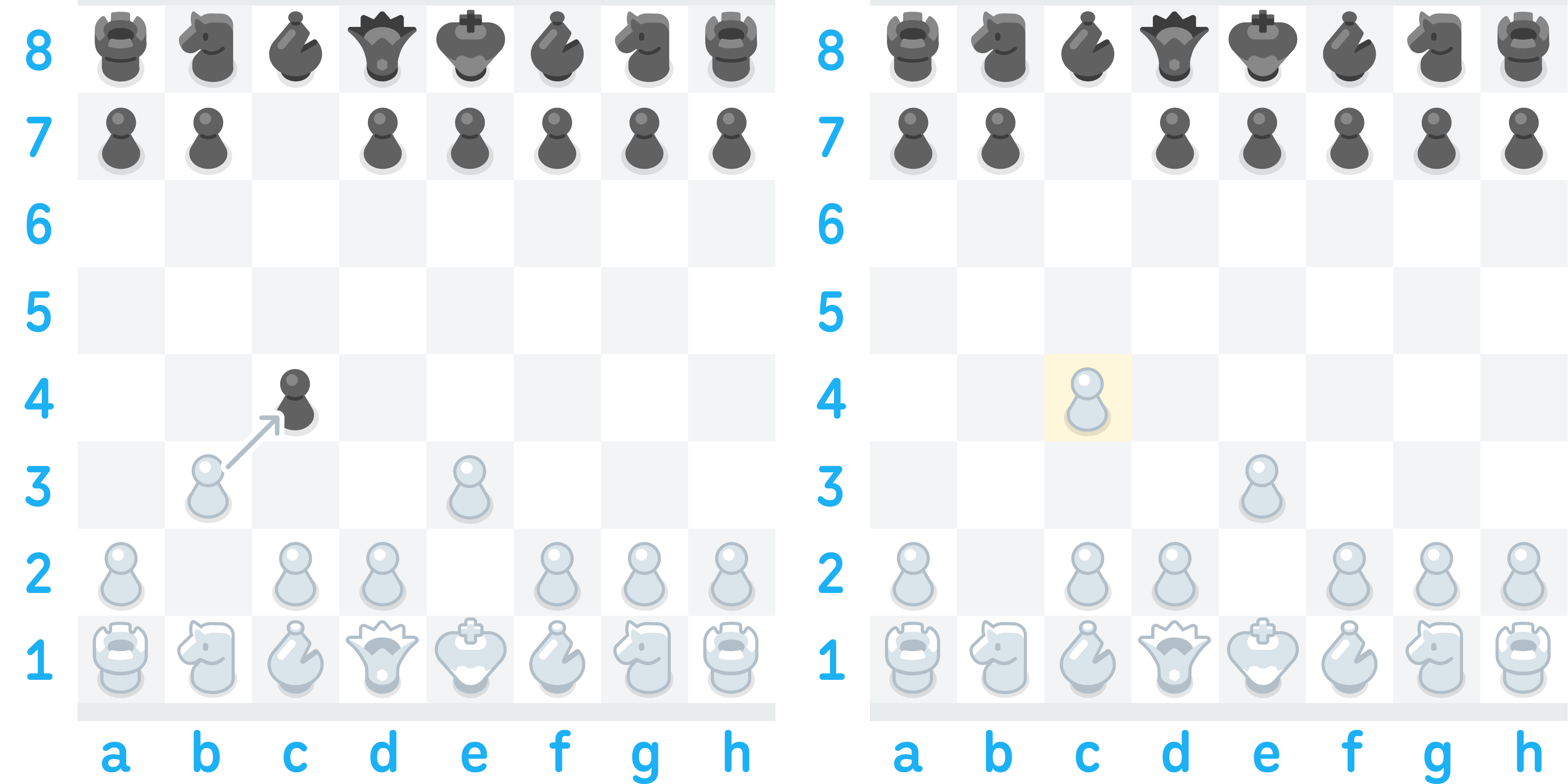
It’s important that you use lowercase letters when referencing pawns, and uppercase letters for pieces, because bxc4 would indicate a pawn on the b-file capturing on c4, whereas Bxc4 indicates a bishop capturing on c4.
Castling
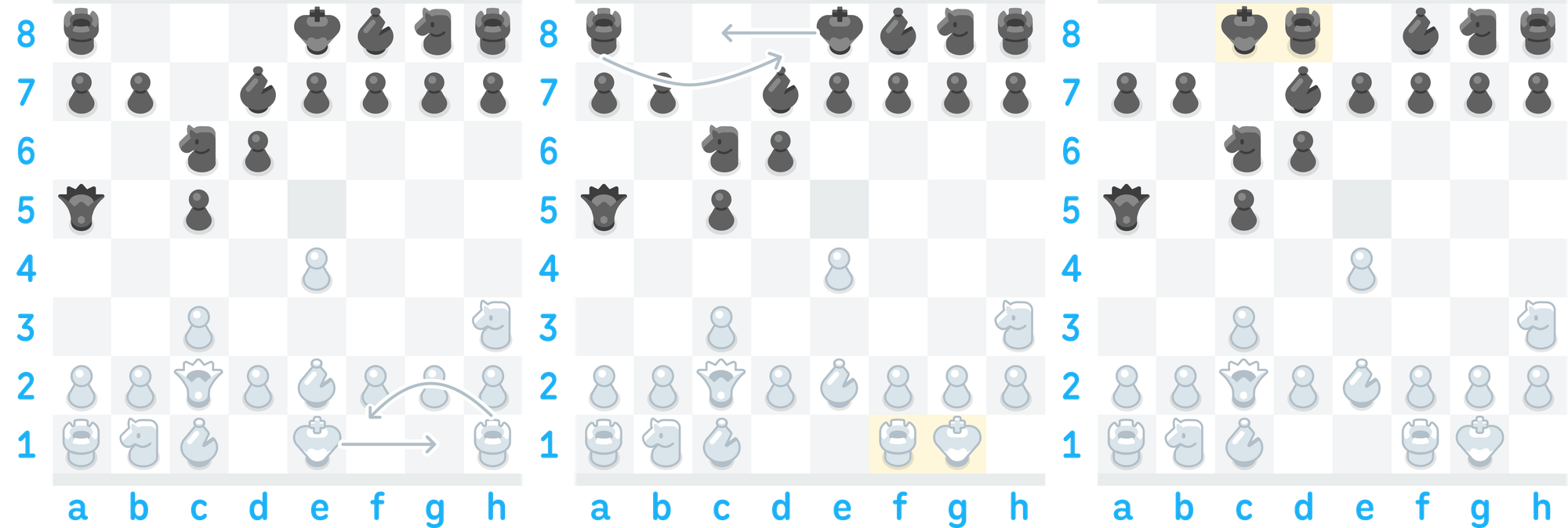
0-0 is used for kingside castling, whether it’s White castling kingside or Black castling kingside. Meanwhile, 0-0-0 is used to indicate queenside castling, whether it’s White castling queenside or Black castling queenside. You can think of each zero as the number of spaces moved by the participating rook. With kingside castling, each rook only moves two squares over, so there are two zeroes. And with queenside castling, each side’s rook moves three squares over, so there are three zeroes.
Here’s an example: if White castles kingside on move 10, followed by Black immediately castling queenside, this would be notated as 10. 0-0 0-0-0. Yes, that’s a lot of zeroes and dashes!
Pawn promotion
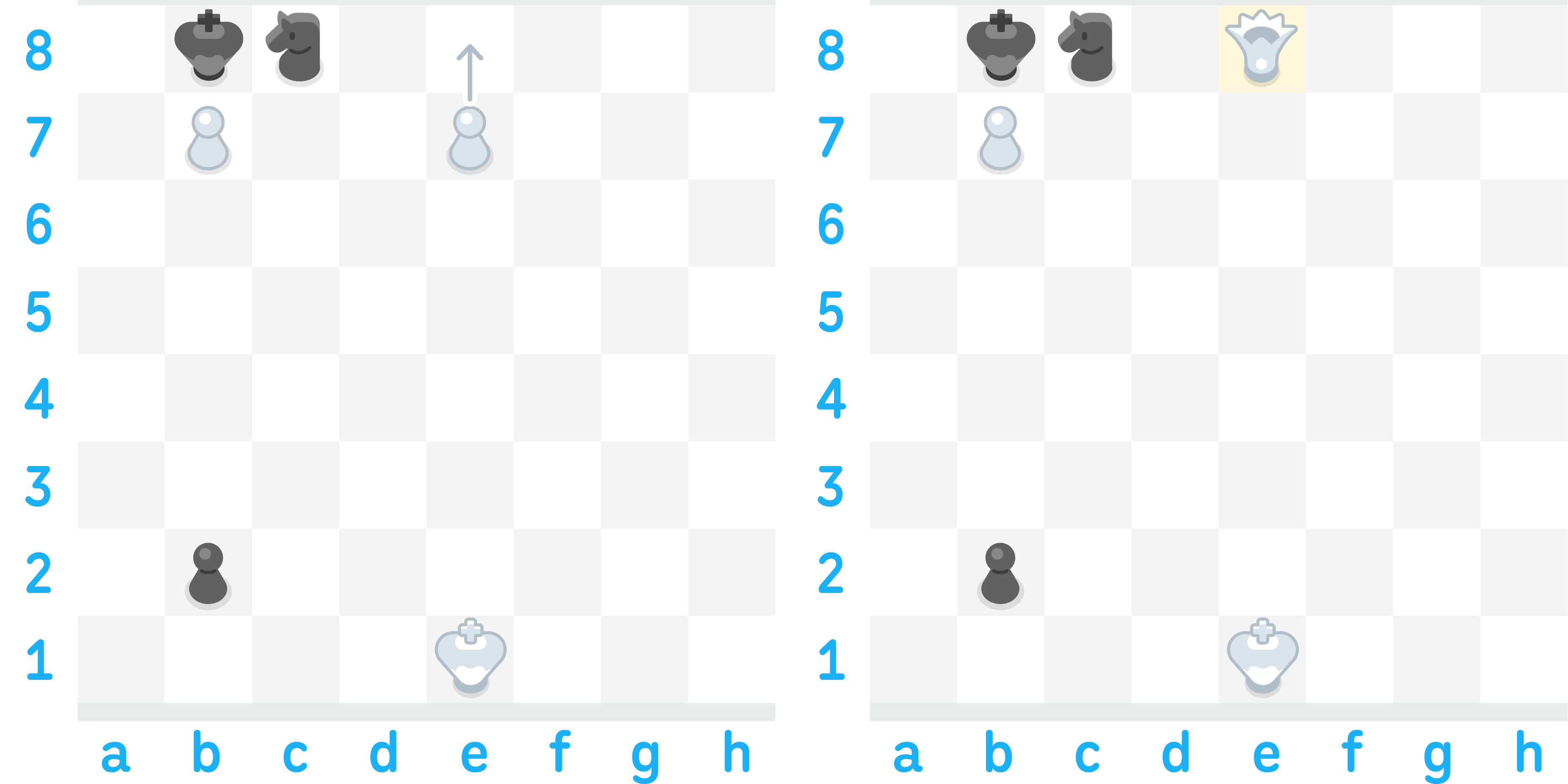
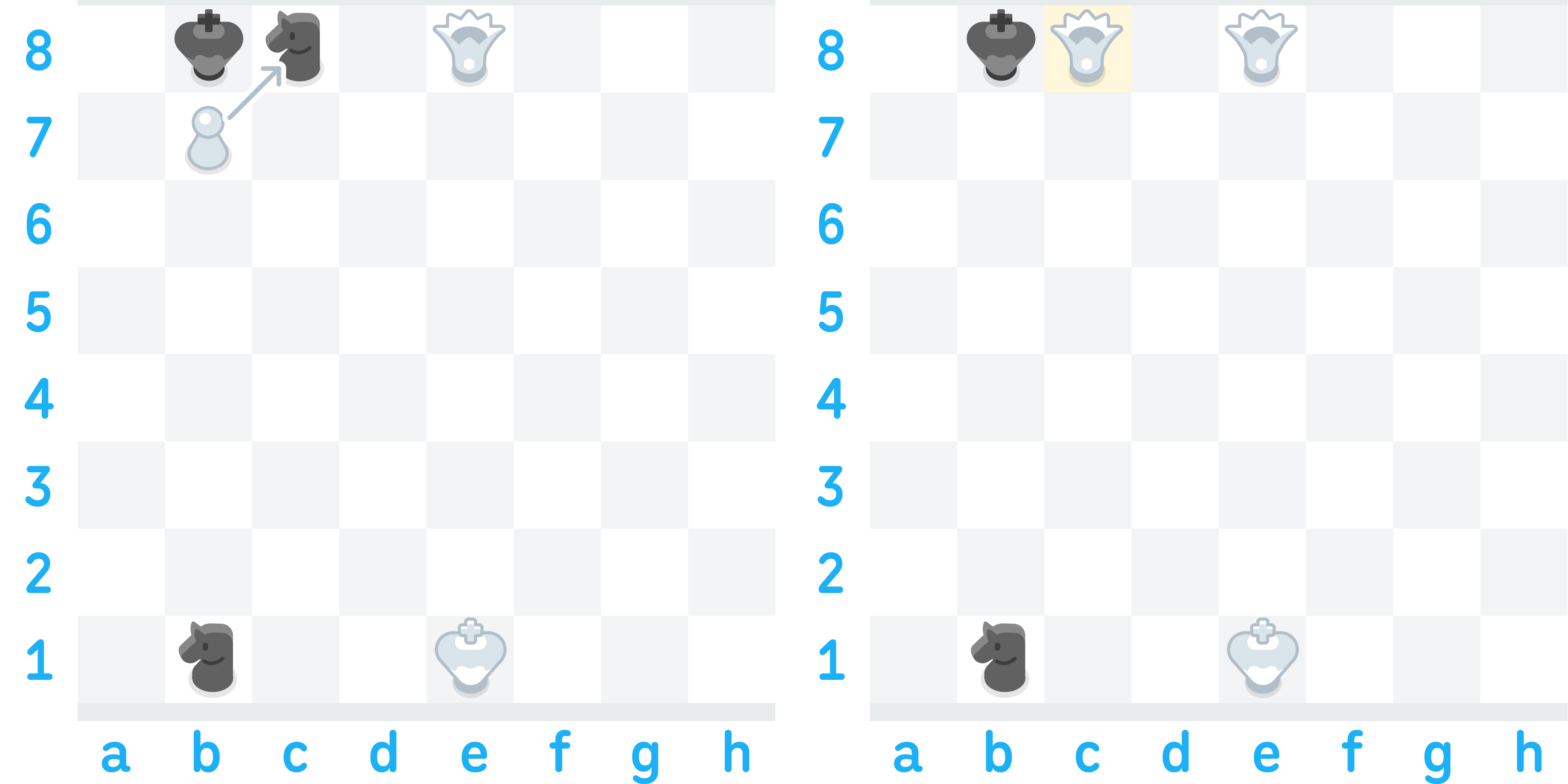
For pawn promotion, the destination square is recorded, followed by the equals sign, and then the abbreviation for the piece the pawn promotes to. If White promotes their e-pawn to become a queen, this would be notated as e8=Q.
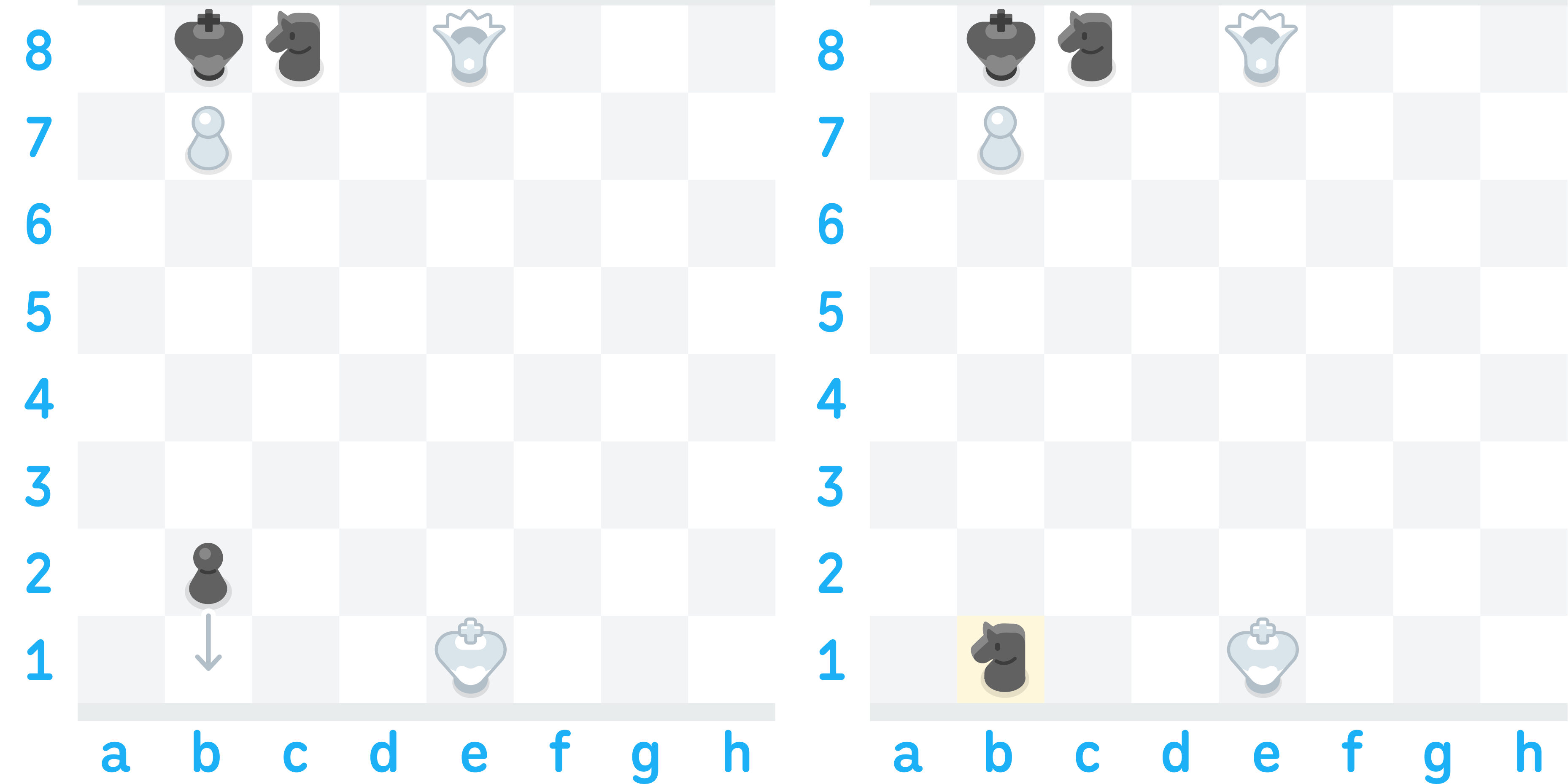
Similarly, if Black were to promote their b-pawn to become a knight, this would be written down as b1=N.
In the case of captures, you would simply write the file of the pawn, followed by an x, followed by the destination square, the equals sign, and then the piece abbreviation. So if a pawn on the b-file captured a piece on c8 and became a queen, this would be recorded as bxc8=Q.
En passant
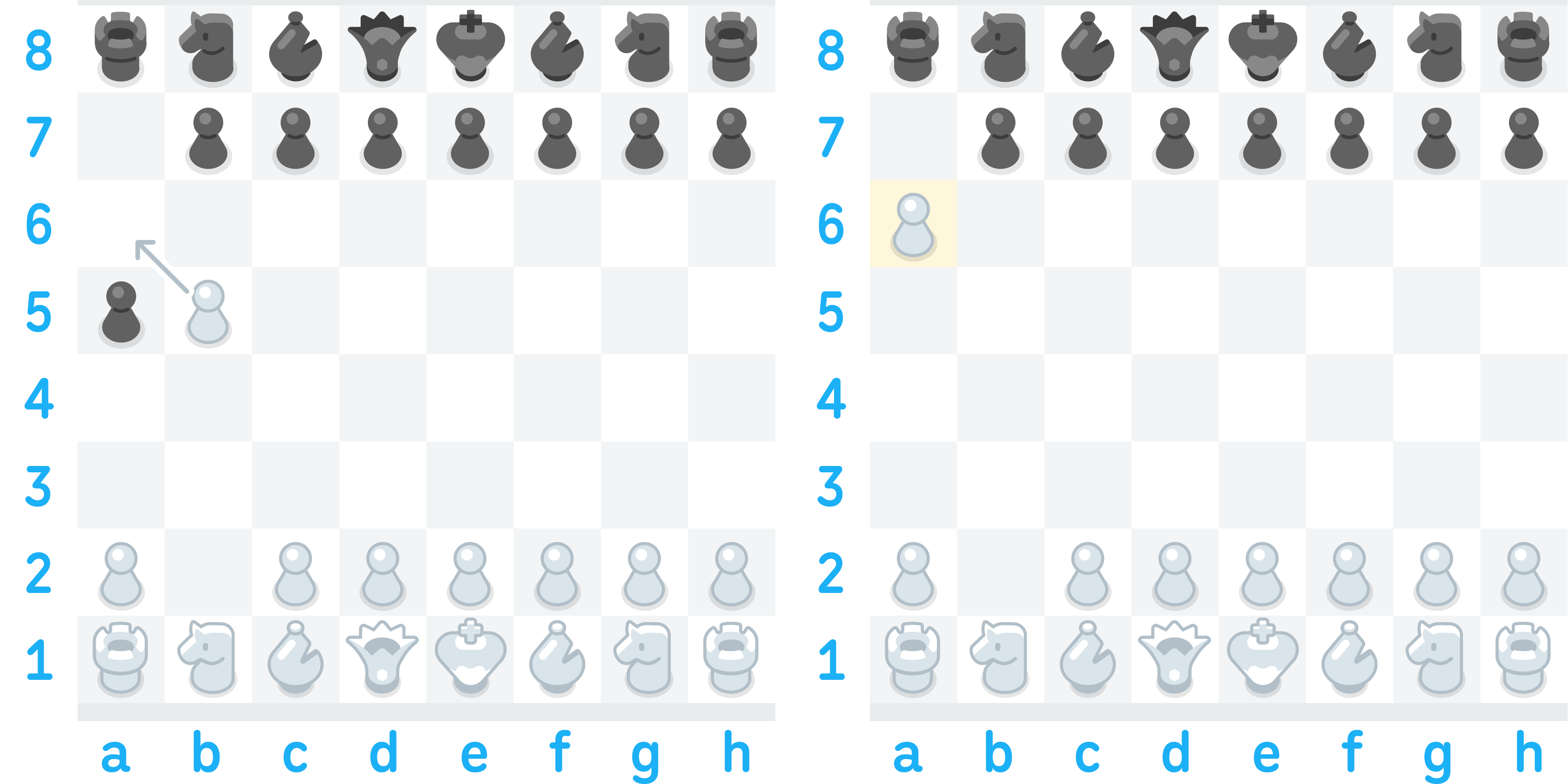
With en passant, e.p. can be written after the move if desired, but this is optional. If White’s pawn on b5 captures Black’s pawn on a5 via en passant, this may be notated as bxa6 e.p. or simply as bxa6. Experienced chess players will understand that this capture must have occurred by en passant.
Additional symbols
Check
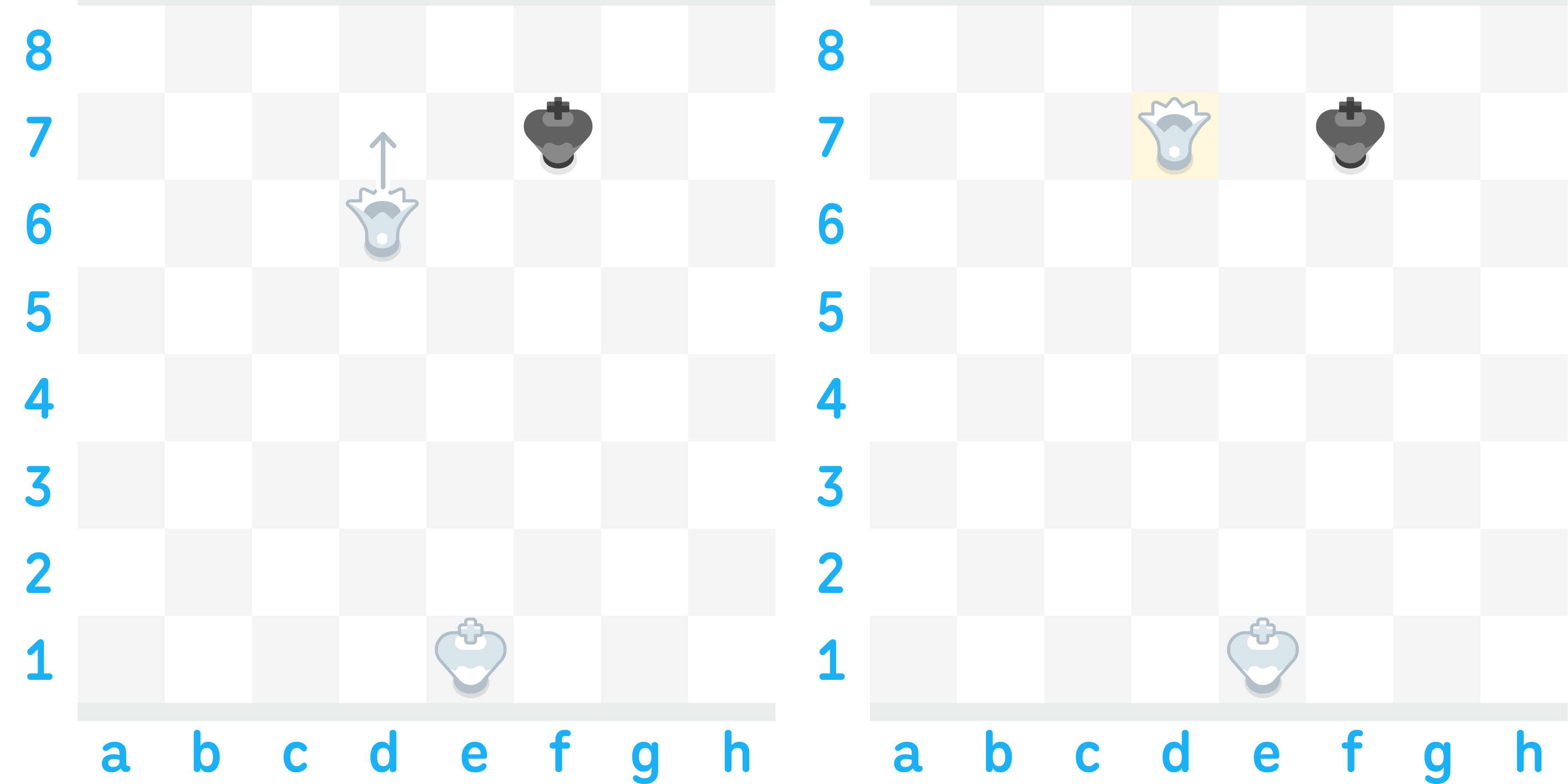
+ is optionally used when a player’s move results in a check. If a queen lands on d7, delivering check, this would be recorded as Qd7+.
Checkmate
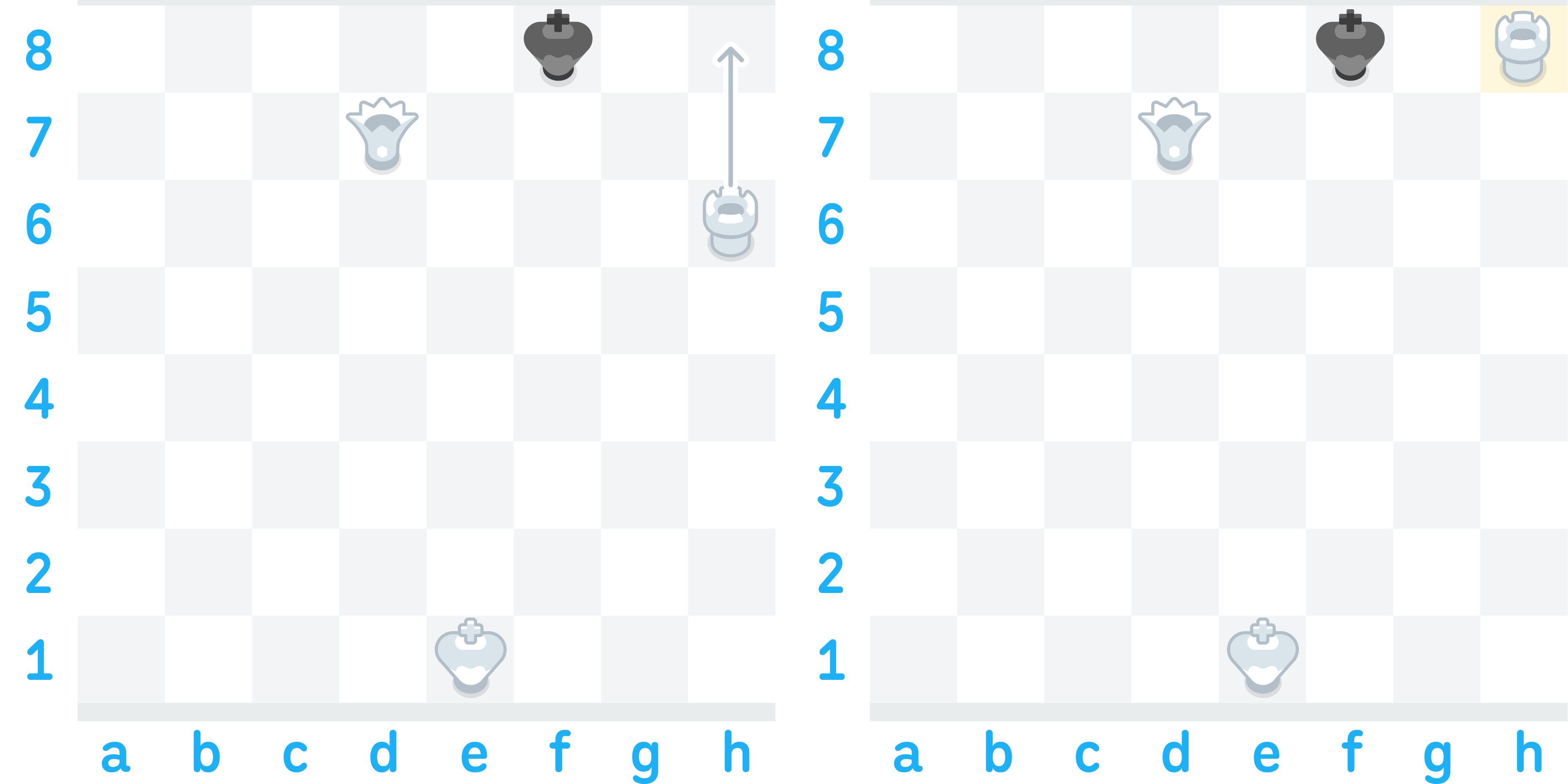
Similarly, # is optionally used when a player’s move results in a checkmate. If a rook on h8 executes checkmate, this would be written as Rh8#.
Symbols designating move quality
Certain characters are sometimes used to indicate especially good, interesting, unclear, or terrible moves:
- ! indicates a surprising or good move, whereas !! indicates a brilliant move.
- ? indicates a questionable or poor move, while ?? references a blunder.
- ?! is used for a likely questionable but interesting move that may be hard to answer or evaluate.
- !? is used for moves that are interesting or hard to find, but that may be not that good upon further examination.
These additional annotations are not required, and may be added while analyzing a game that’s already ended. They allow players to quickly see critical moves when looking back at a scoresheet.
When do you use chess notation?
If you want to play in an official rated chess tournament, you will most likely be required to write down all the moves using algebraic notation. Even top grandmasters are required to write their moves down according to the International Chess Federation (FIDE)!
Nowadays, most online chess websites automatically record the moves for you, in addition to saving all your games.
However, if you’re ever playing a casual, in-person (also known as over-the-board, or OTB) game, you may choose to record the moves if you want to save the game or analyze it afterwards! Writing down your moves is beneficial for your own progress and personal growth, and having a record of your chess games allows you to run them through a chess engine (a computer program that analyzes chess moves, games, or positions and calculates the best move at every point), which in turn allows you to find your own blunders and missed opportunities. Identifying your own weaknesses is a great way to rapidly improve and climb the Elo ladder.
Take notes!
Chess notation is an extremely useful skill for chess players to learn and use. It’s a necessity for any player looking to compete on the official stage, as well as a practical tool for growth. If you’re looking to become serious about chess and improve, brush up on chess notation and record your chess games each time you play!