
The bishop moves and captures in a very straightforward fashion. Traveling diagonally, it can control many squares at a time and create powerful tactics.
In this post:
Chess 101: the bishop
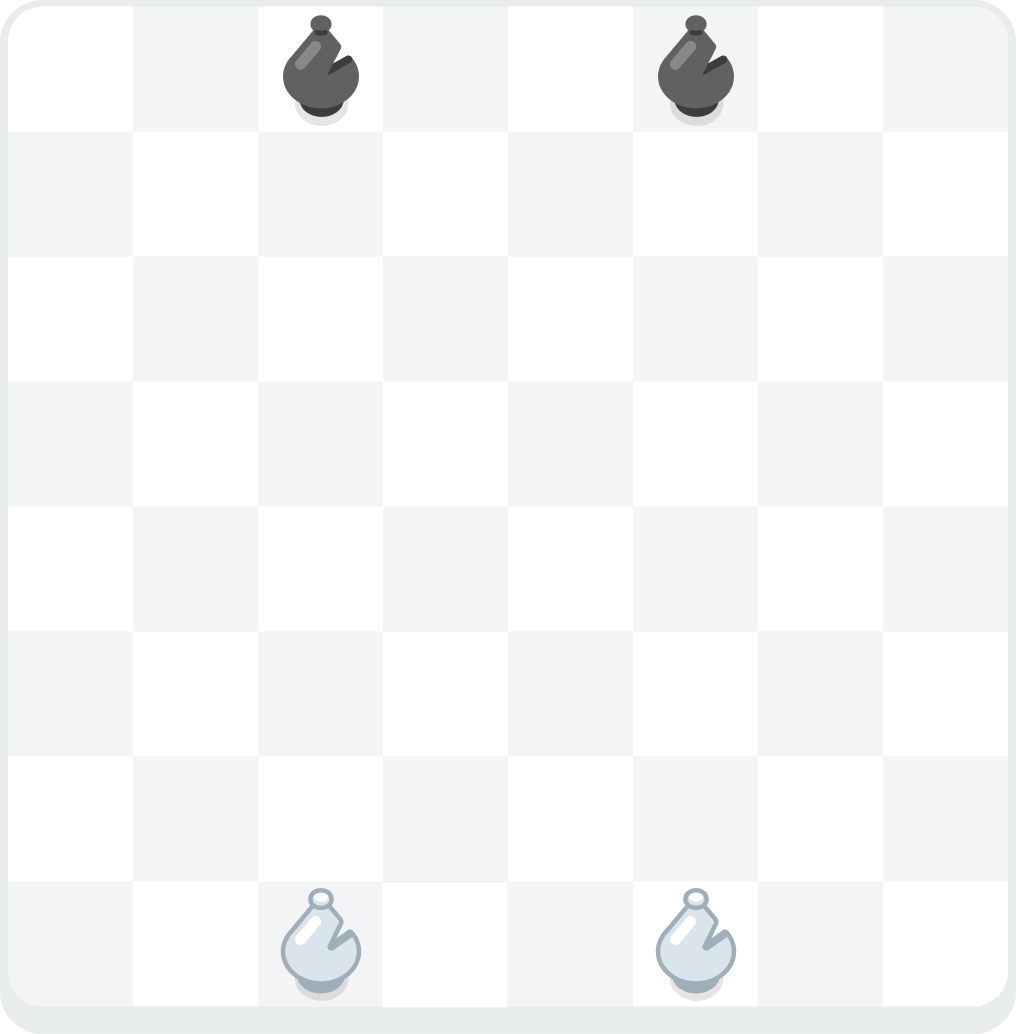
The bishop has a pointed top with a distinctive diagonal notch, often thought to represent the Christian religious figure’s traditional hat, called a mitre. Each player begins with two bishops, positioned on c1 and f1 for White, and c8 and f8 for Black.
In earlier versions of chess, including its ancestor chaturanga, this piece began as an elephant. In fact, many languages still use a word meaning “elephant” for this piece today! But because elephants aren’t native to Europe, when chess spread there during the Middle Ages, Europeans adapted the piece into something more familiar to them: a church bishop.
In terms of piece value, the bishop is typically considered 3 points, the same as the knight. As similar-value pieces, bishops and knights are grouped together as minor pieces. While a single bishop cannot checkmate on its own, the two bishops can deliver mate as a pair. They’re less powerful than rooks and queens but are still important long-range pieces.
How the bishop moves
The bishop moves any number of squares diagonally in any direction, as long as no pieces block its path (it can’t jump over other pieces). To capture, bishops land on a square occupied by an opponent’s piece.
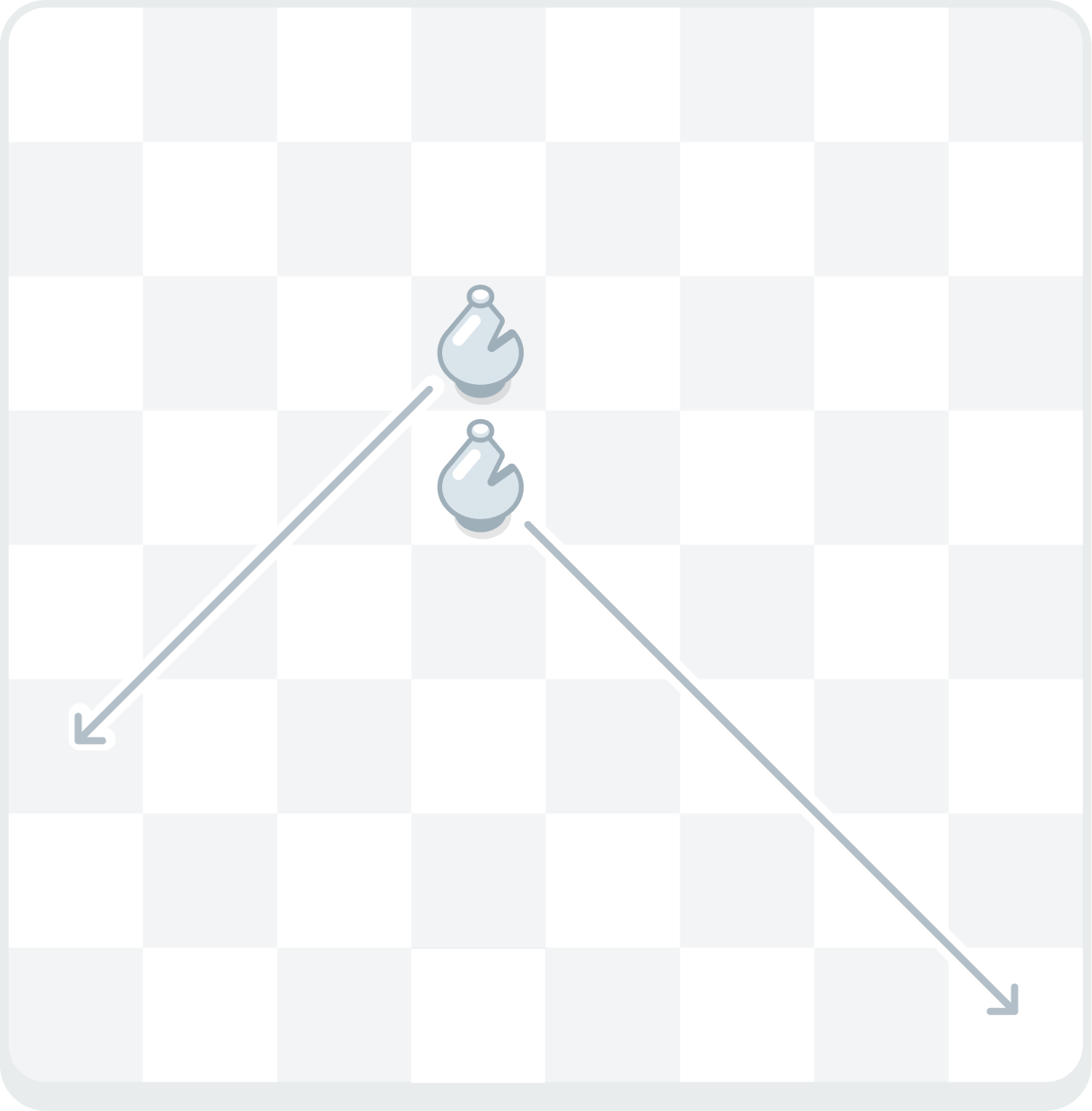
One important detail about bishops is that they only operate on one square color. At the start of the game, one bishop begins on a light square and the other begins on a dark square. A bishop that starts out on a light square will forever remain on the light squares and may never move onto a dark square at any point during the game, and vice versa.
This means each bishop can only control half of the board’s squares. Think twice before relinquishing a bishop—you’ll forever lose bishop control of that color!
Strategy tips
Bishops are important tools in developing your game and moving closer to checkmate. Here are some facts and pointers on using your bishops!
Tactical strengths
Bishops are long-range pieces, allowing them to attack pieces from far away, and on both sides of the board simultaneously.
Common tactics involving bishops are:
- Pins, where an enemy piece is attacked and restricted from moving, because doing so would expose a more valuable enemy piece behind it
- Forks, where two enemy pieces are attacked at once
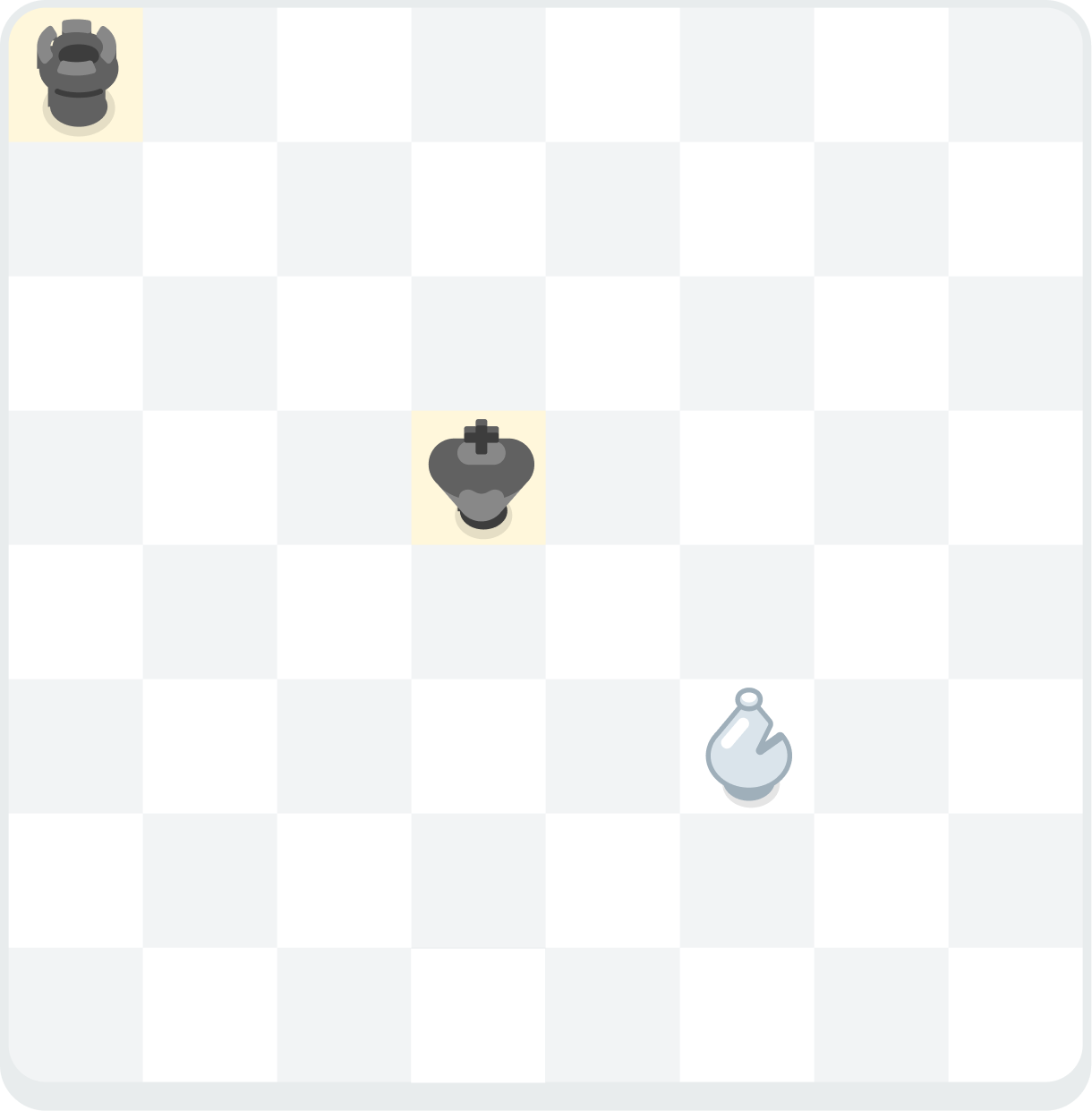
- Skewers, where a valuable enemy piece is attacked, but when it moves, it exposes another less valuable enemy piece behind it
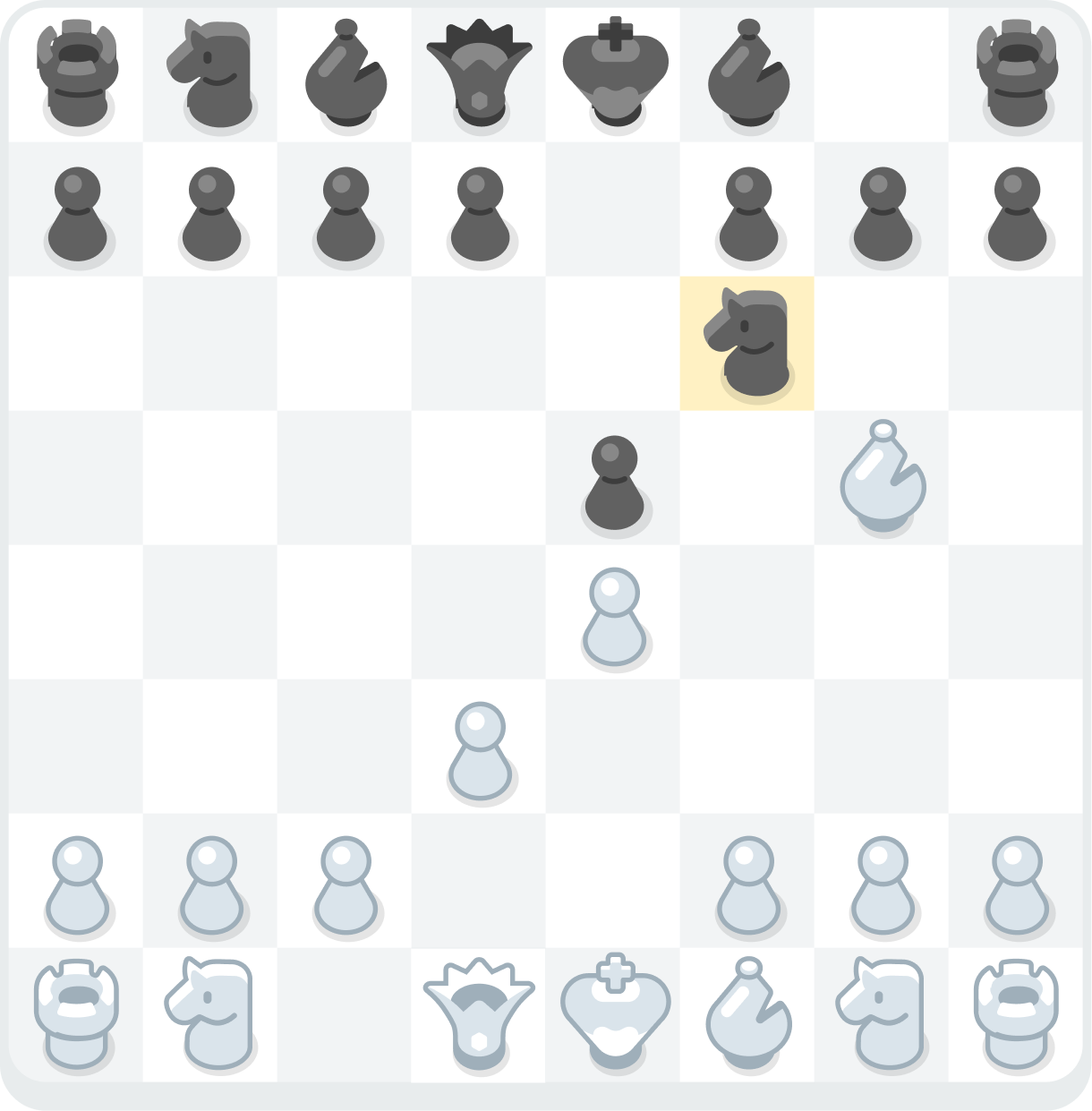
Example of a pin
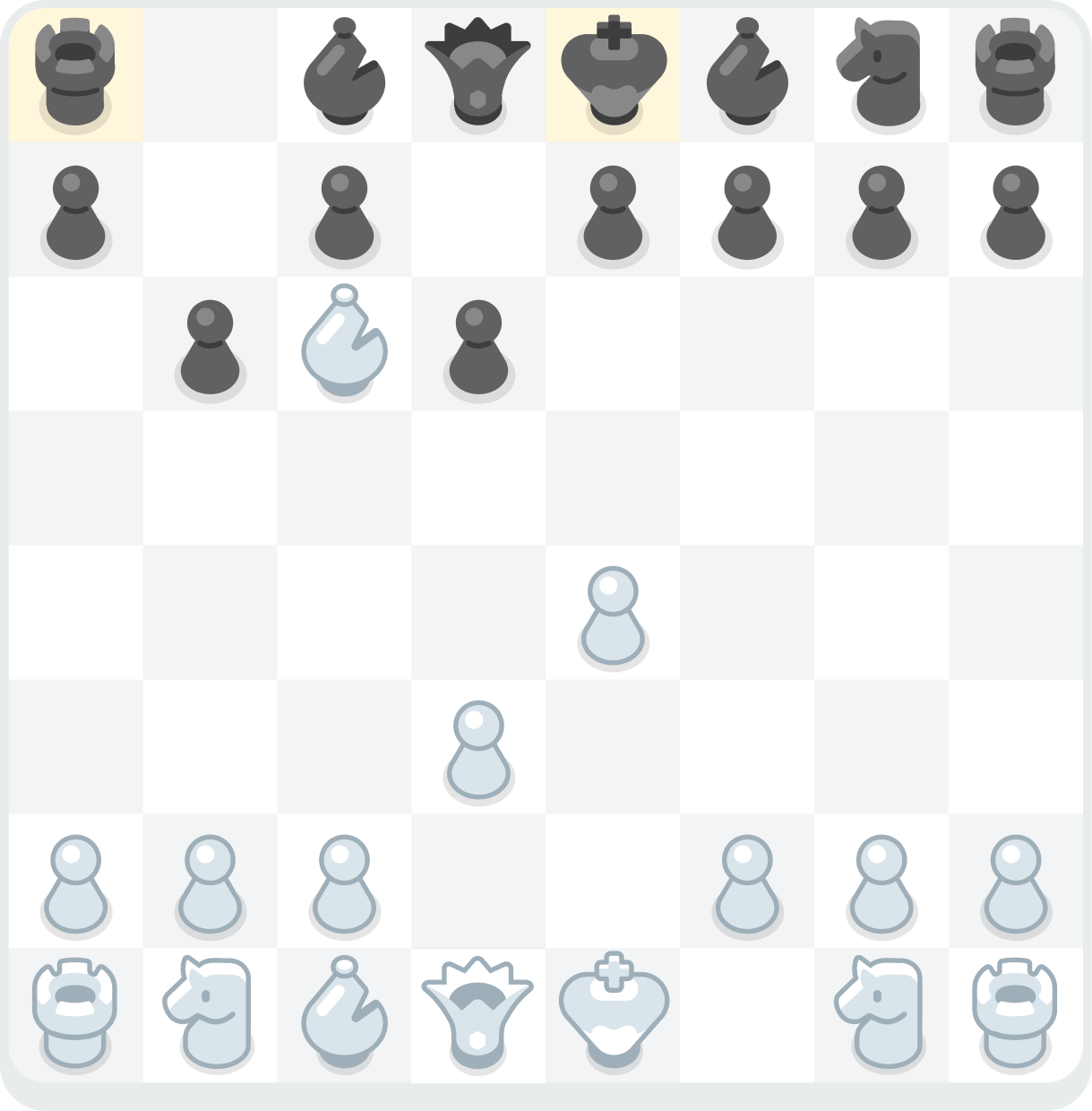
Example of a fork
Example of a skewer
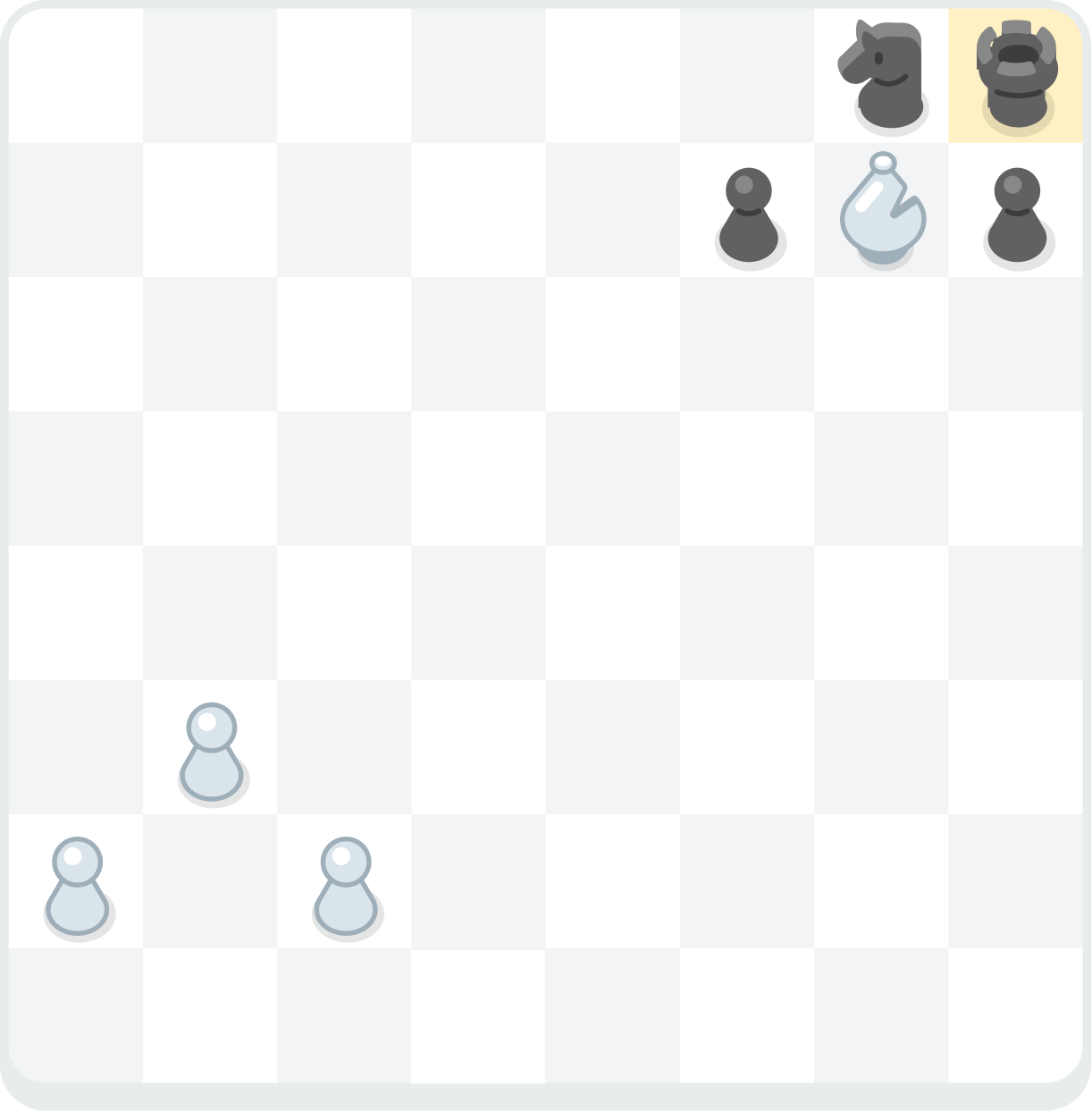
Another common trick with the bishop is trapping enemy rooks in their starting corner squares if players aren’t careful.
Bishop vs. knight
Bishops and knights are both minor pieces worth 3 points, but they have very different strengths.
Let’s compare them:
| Bishops | Knights | |
|---|---|---|
| Square coverage | Only one color | Both colors |
| Positions they do best in | Open | Closed |
| Attacking range | Long-range | Short-range |
| Endgames they do best in | Pawns on both sides of the board | Pawns on just one side of the board |
As you can see, knights and bishops complement each other really well, and there are good reasons for this:
- Knights usually shine in closed positions because they may jump over pawns or pieces and maneuver onto any color square.
- Bishops often outperform knights in open positions, as well as endgames, especially when pawns are on both sides of the board. This is in part because bishops are longer-range pieces than knights, and can attack both sides of the board at once. Knights can only control squares close to them and require multiple moves to reach the other side of the board.
The fianchetto
One distinctive way to develop a bishop is called a fianchetto, which is Italian for “little flank.”
A pawn in front of the starting position of a knight moves one square forward on either side of the board, and the nearby bishop moves onto the square the pawn previously occupied.
From this position, the bishop is on one of the two longest possible diagonals on the board, it controls critical central squares, and it can exert powerful pressure across the board.

Because moving the pawn up to fianchetto creates potential weaknesses on that side of the board, players should usually avoid trading their fianchettoed bishop away, especially if their king is castled on that same side. Conversely, if a player is trying to attack, they may choose to attack and trade off an enemy’s fianchettoed bishop in order to exploit the weaknesses left behind once it’s gone.
The bishop pair
Having both bishops—one light-squared and one dark-squared—is called having the bishop pair.
This is considered a significant advantage because the two bishops together can control both colors of squares and thus the entire chess board.
In fact, many players award the bishop pair an extra point of value. While each bishop individually is 3 points, the bishop pair is often valued at 7 points.
Opposite-colored bishop endgames
Some of the trickiest endgames occur when each player has only one bishop, and the bishops are on opposite colors.
These endgames can be surprisingly hard to win—even when one side has more material (more total points when tallying up the point values of both sides’ pieces on the chessboard) and would be winning in other circumstances. One bishop cannot attack what the other bishop defends, so players can intentionally place important pawns or pieces on squares the opponent’s bishop cannot attack!
Take a long look at your bishops!
Bishops’ long-range attacking capabilities and tactical potential make them versatile chess pieces. Learn how to use your bishops well—and their diagonal attacks can become strong weapons on the board.