
In chess, every move ultimately revolves around one piece: the king. While it may not be the strongest attacker, protecting your king—and attacking your opponent’s—is the entire objective of the game.
In this post:
- Chess 101: the king
- How the king moves
- Check, checkmate, and stalemate
- Strategy tips for the king
- Resignation
Chess 101: the king
The king is the most important piece on the chess board. It is usually the tallest piece, topped with a cross and sometimes a small crown. Historically, the king has represented the highest ruler in society. In ancient India, chess’s predecessor included a piece representing the raja (from Sanskrit, meaning “king” or “ruler”). When the game spread to Persia, the ruler became the shah. Eventually, as chess moved into medieval Europe, this piece became known as the king.
Each player starts with one king, placed on the first and eighth rank (or row). The kings begin opposite each other on the same file (or column), called the e-file. This means White’s king starts on e1 and Black’s king begins on e8.
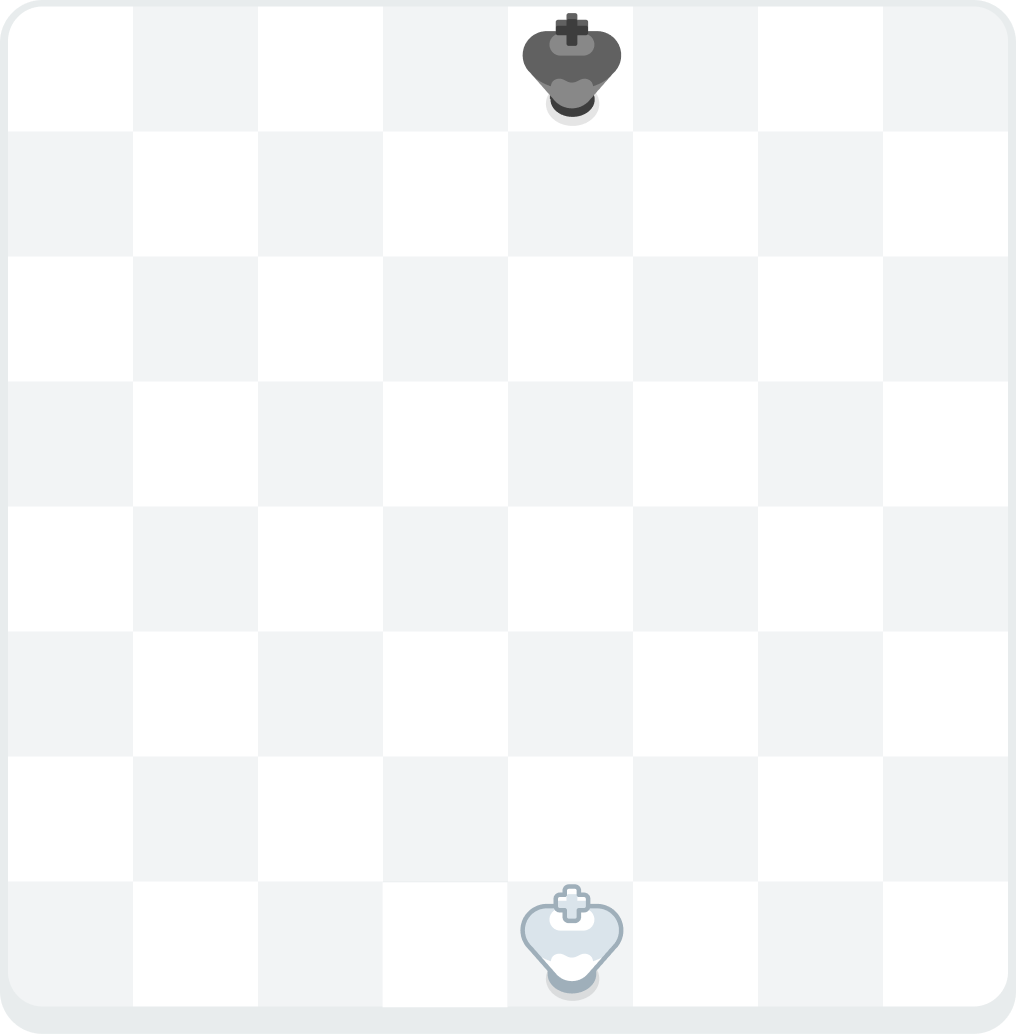
Beginning players sometimes mix up the placement of the king and queen, since they are the only pieces that are placed slightly off-center—and don’t come in symmetric pairs like all the other pieces. To remember the starting position of each piece, use the mnemonic “queen on her own color.” This means that White’s queen always starts out on the white square closest to the central axis of the board, while Black’s queen starts out on the black square closest to the center. The kings then go on the remaining square, or the opposite color, so the White king will start on a black square, and the Black king on a white square.
To ensure correct gameplay, it’s often advisable to quickly check your opponent’s setup before the game begins. Once the first move has been made, however, pieces may not be rearranged—even if they were set up incorrectly!
The king is a unique piece when it comes to value. Unlike other pieces, it can never be captured or traded. Because of this, some players say the king has no point value. Others argue the opposite—that it is the most valuable piece on the board, because losing it immediately ends the game.
Even though the king isn’t very powerful in terms of movement, it is unquestionably the most important piece in chess.
How the king moves
The king moves one square in any direction, either horizontally, vertically, or diagonally. Because it moves only one square at a time, the king has more limited range than most other pieces.
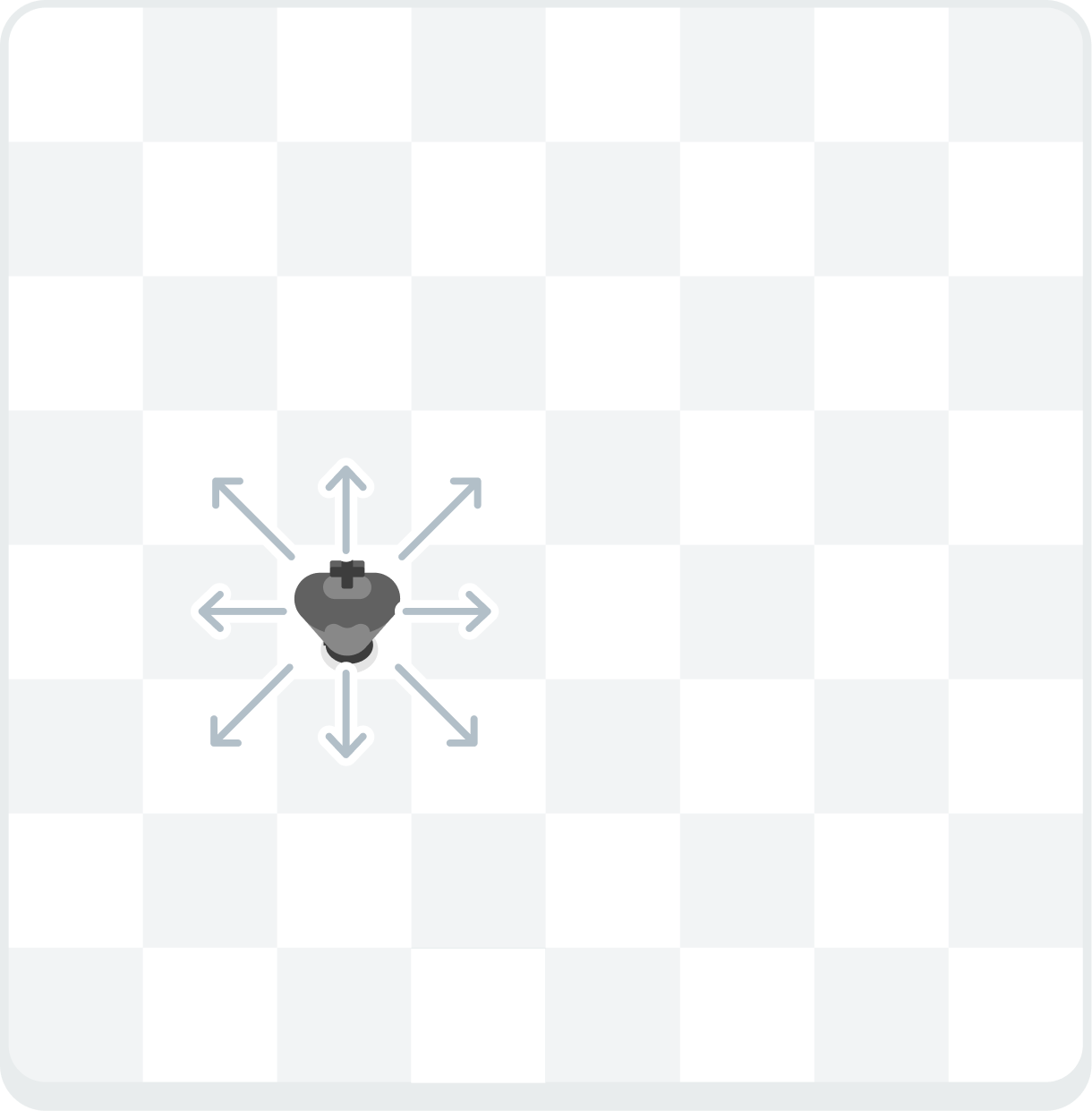
The king captures the same way it moves—by moving onto an adjacent square occupied by an opponent’s piece.
There is also a special move in chess involving the king called castling. Castling allows a player to move the king and rook at the same time to improve king safety and activate the rook. It’s the only move in chess where two pieces move at once. Players may only castle once in a game—so use it wisely!
Check, checkmate, and stalemate
The king is at the center of three essential chess concepts: check, checkmate, and stalemate.
Check occurs when the king is under attack by an opposing piece. When a king is in check, the player must respond immediately by getting out of danger. There are only three ways to get out of check: moving the king away, capturing the attacking piece, or blocking the check with another piece.
Checkmate happens when the king is in check and there is no legal way to escape the attack. The king cannot move to safety, no piece can block the attack, and no piece can capture the attacker. As soon as checkmate occurs, the game ends, and the player who delivered checkmate is declared the winner.
If a player has no legal moves available, but their king is not in check, the situation is called stalemate. Unlike checkmate, stalemate results in a draw, meaning neither player wins the game.
Strategy tips for the king
Because checkmate ends the game instantly, king safety is one of the most important priorities in chess. This means that threats towards the king take precedence over other types of tactics!
In the opening
Kings are usually safest behind a shield of pawns. Unlike other pieces, bringing the king into the center too soon can expose it to dangerous attacks. For this reason, do not develop your king to the center of the board like your other pieces, but instead aim to castle early. Castling is one of the main goals of the opening, and should often be completed within the first 5 to 10 moves of the game.
In the middlegame
By this point, your king should already be castled, so now your task is to keep an eye on your king’s safety. If your opponent begins attacking your king, it’s paramount to respond immediately and reinforce your defenses, or create a counterattack.
Look for ways to attack the enemy king whenever possible. Use multiple pieces together to forge a successful attack—not just one piece at a time.
In the endgame
The king’s role changes dramatically in the latest stage of the game. When many pieces have been traded and the board becomes more open, the king often becomes a valuable attacking and defending piece. In endgames, it is common—and often necessary—to move the king toward the center of the board.
From the center or sides, the king can help attack enemy pawns, support the promotion of your own pawns, and defend important squares.
In the endgame, an active king can make the difference between winning and losing.
Resignation
Sometimes a chess game ends before checkmate or a draw appears on the board. One way that this happens is called resigning.
Resigning means that a player chooses to concede the game, usually because they acknowledge that they are going to lose the game sooner or later. In traditional chess etiquette, players tip their king over to signal resignation.
Strong players often resign when they believe their opponent can inevitably convert the advantage into a win. This saves both players time and energy.
At beginning levels, however, games can change quickly. A winning position can easily turn into a losing one if mistakes happen. Because of this, beginners should consider playing the game out, rather than resigning early, to get in the extra practice and see what evolves!
All eyes on the king!
The king might not be especially active, especially early on, but the entire game revolves around its safety. Protect your own king at all costs while launching attacks against your opponent’s king. Remember, checkmate is the objective of the game!