
Chess is a game of strategy, but it all starts with knowing your pieces. From powerful queens to lowly pawns, each piece has its own role, movement, and unique characteristics.
In this post:
- What are the chess pieces?
- How does each chess piece move?
- What is the value of each piece?
- The pawn
- The knight
- The bishop
- The rook
- The queen
- The king
What are the chess pieces?
There are two players, or colors, in chess: White and Black. When setting up a chess board, you’ll immediately see that there are many kinds of pieces.
Each side begins with 16 pieces:
When talking about chess pieces, you’ll often hear specific terms that are used for grouping certain pieces together:
- Pawns vs. pieces: Pawns are in a category of their own. Everything else is simply called a “piece.”
- Major vs. minor pieces: The queen and rooks are referred to as “major pieces,” while the knights and bishops are called “minor pieces.”
Together, these pieces work as a team to protect the king and attack your opponent.
How does each chess piece move?
Each piece moves in a unique way. Some slide across the entire board in one fell swoop, one can jump over other pieces, and some have more limited movement.
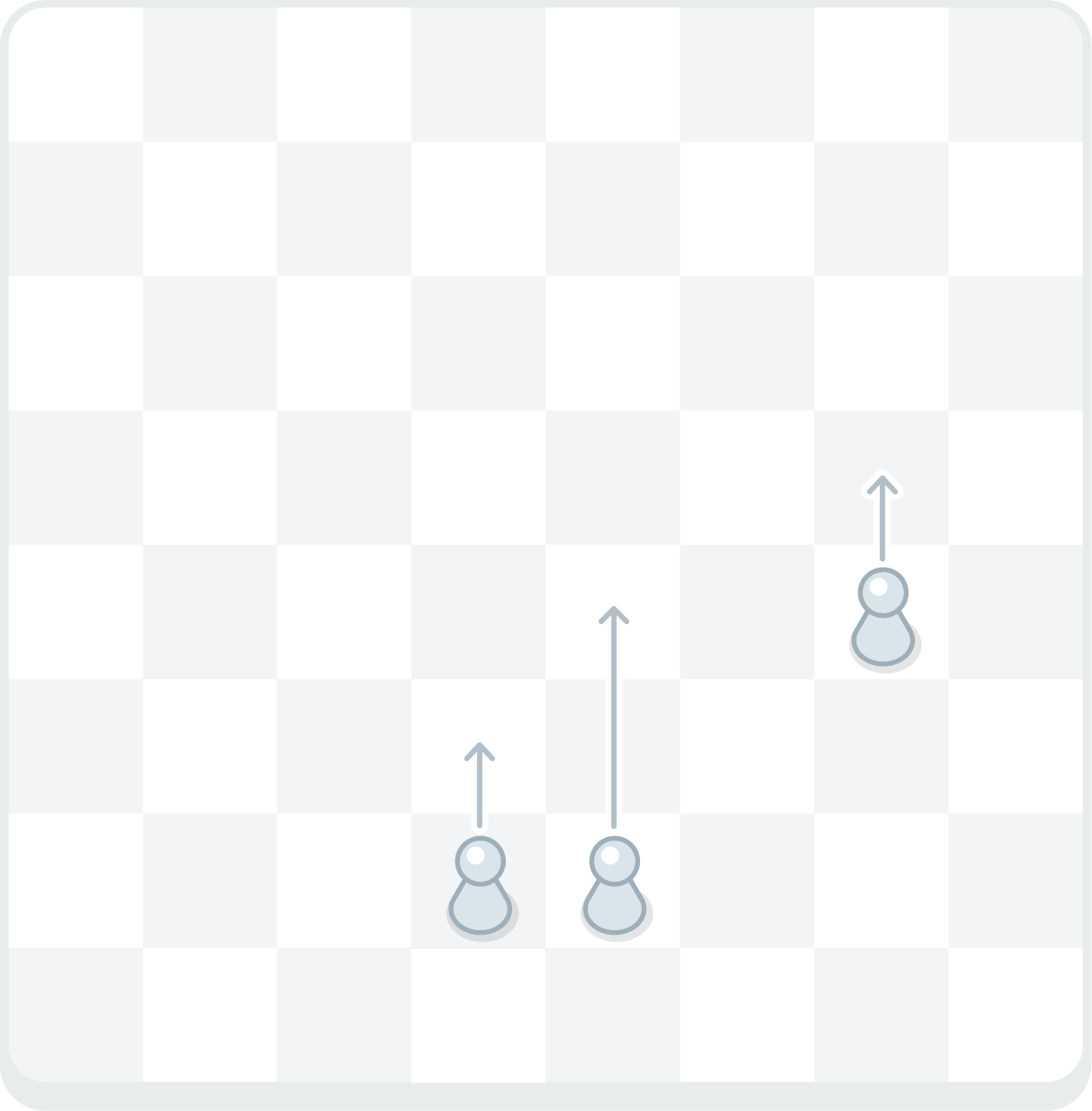
Pawns move forward, but never backward. On their first move, they may advance one or two squares. After that, they can only move one square forward at a time.
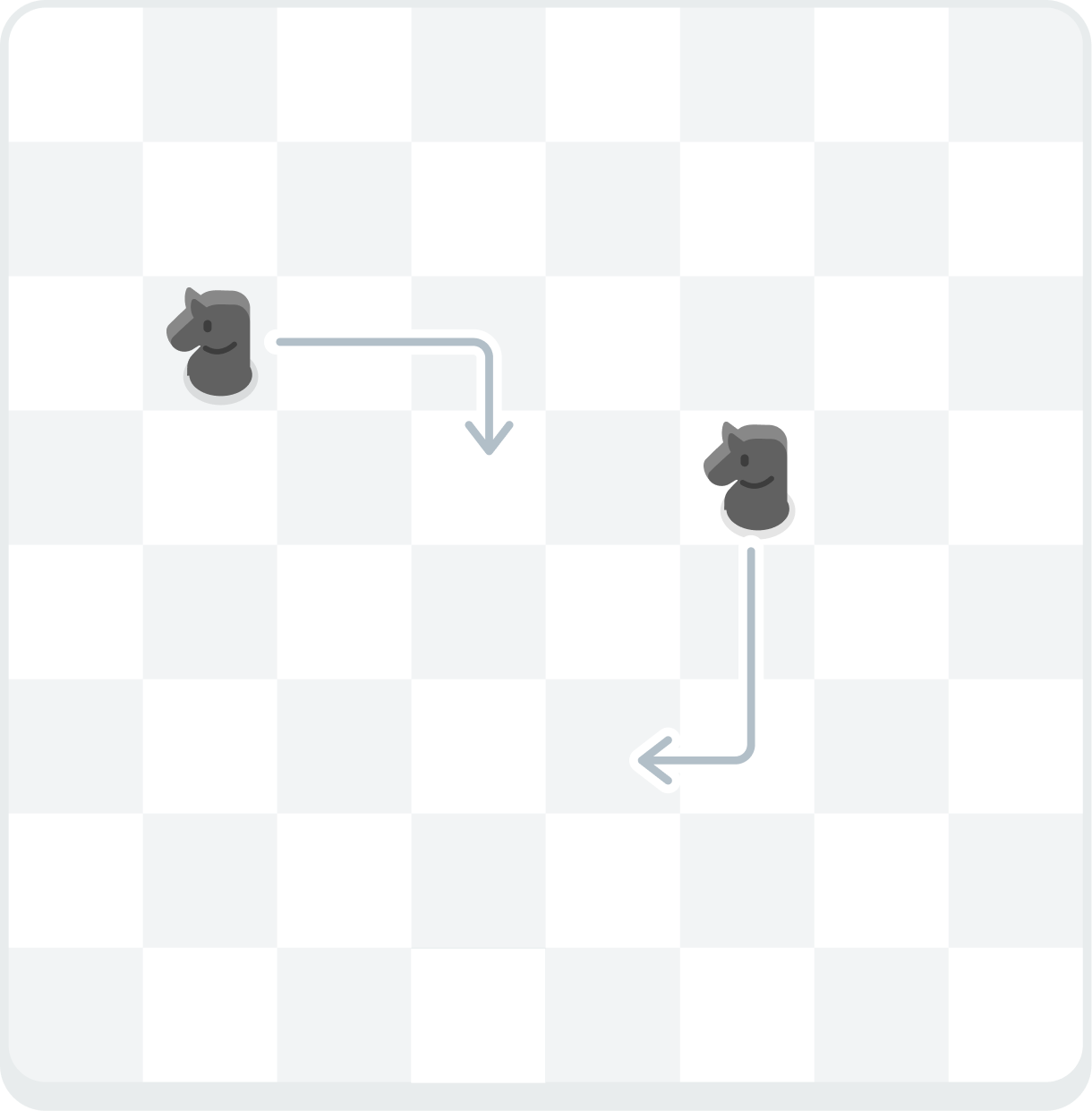
Knights move in an L-shape: Two squares in one direction (horizontal or vertical), then one square perpendicular to that.
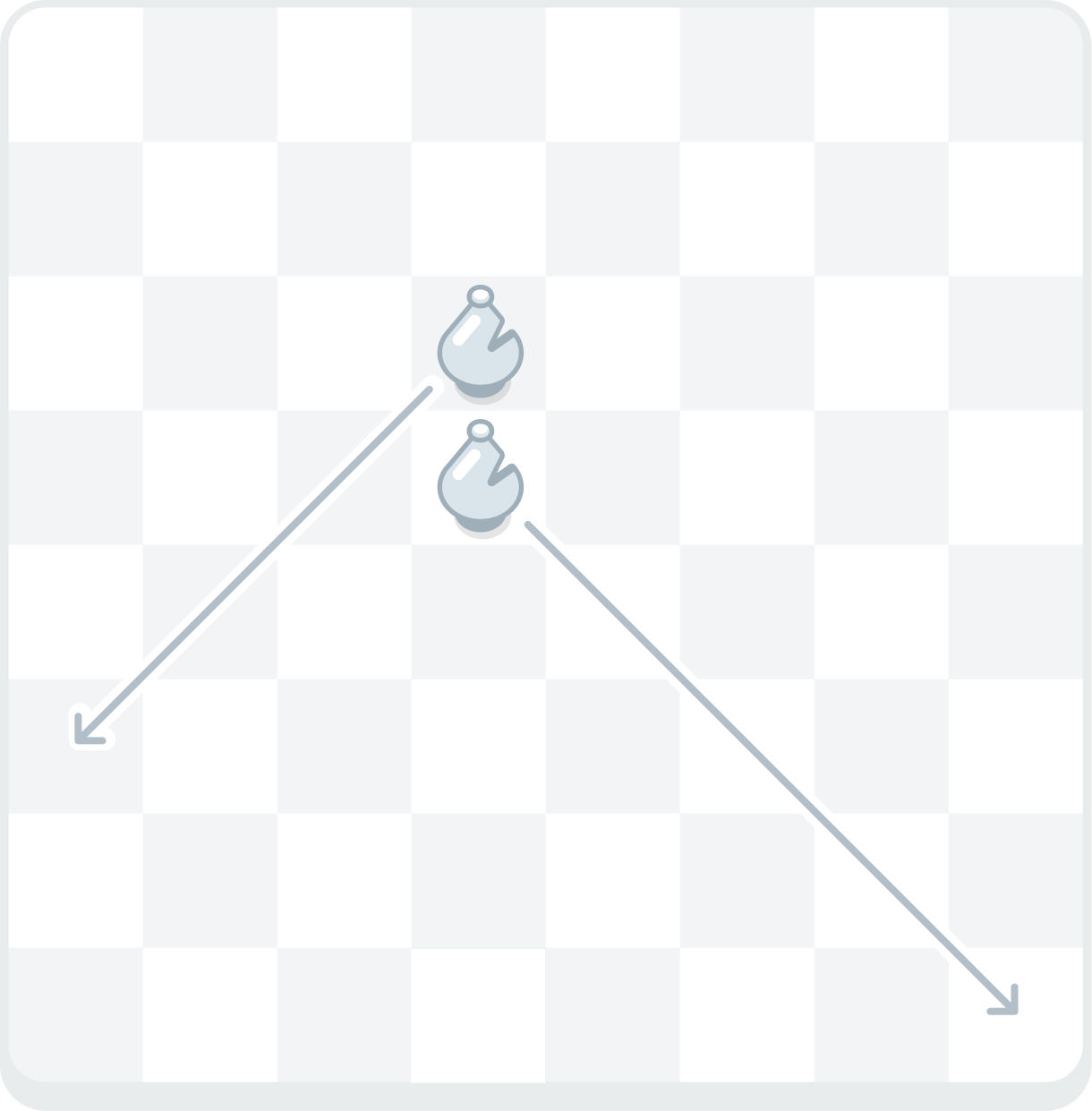
Bishops move diagonally any number of squares.
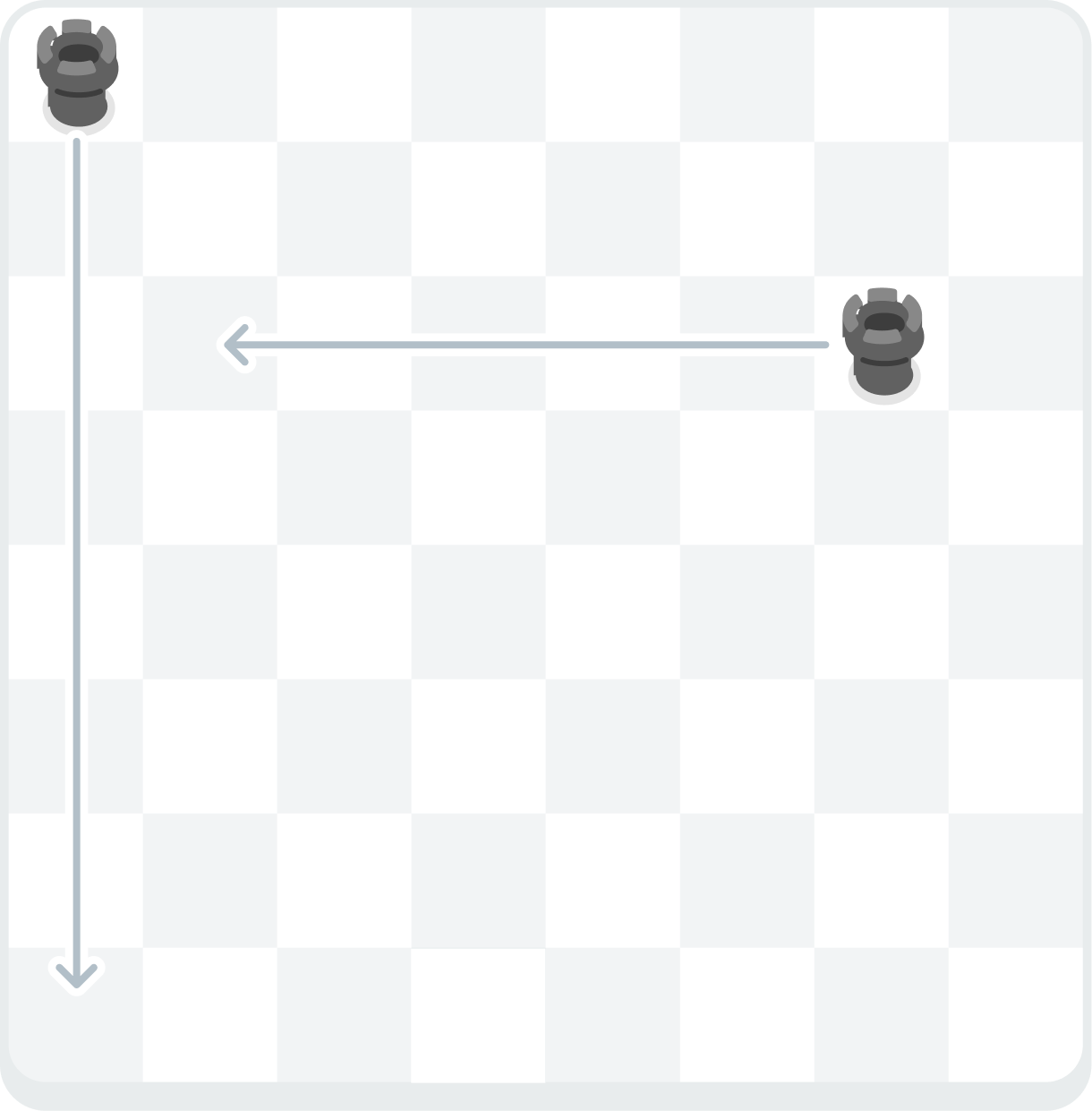
Rooks move horizontally or vertically any number of squares.
The queen moves horizontally, vertically, or diagonally any number of squares.
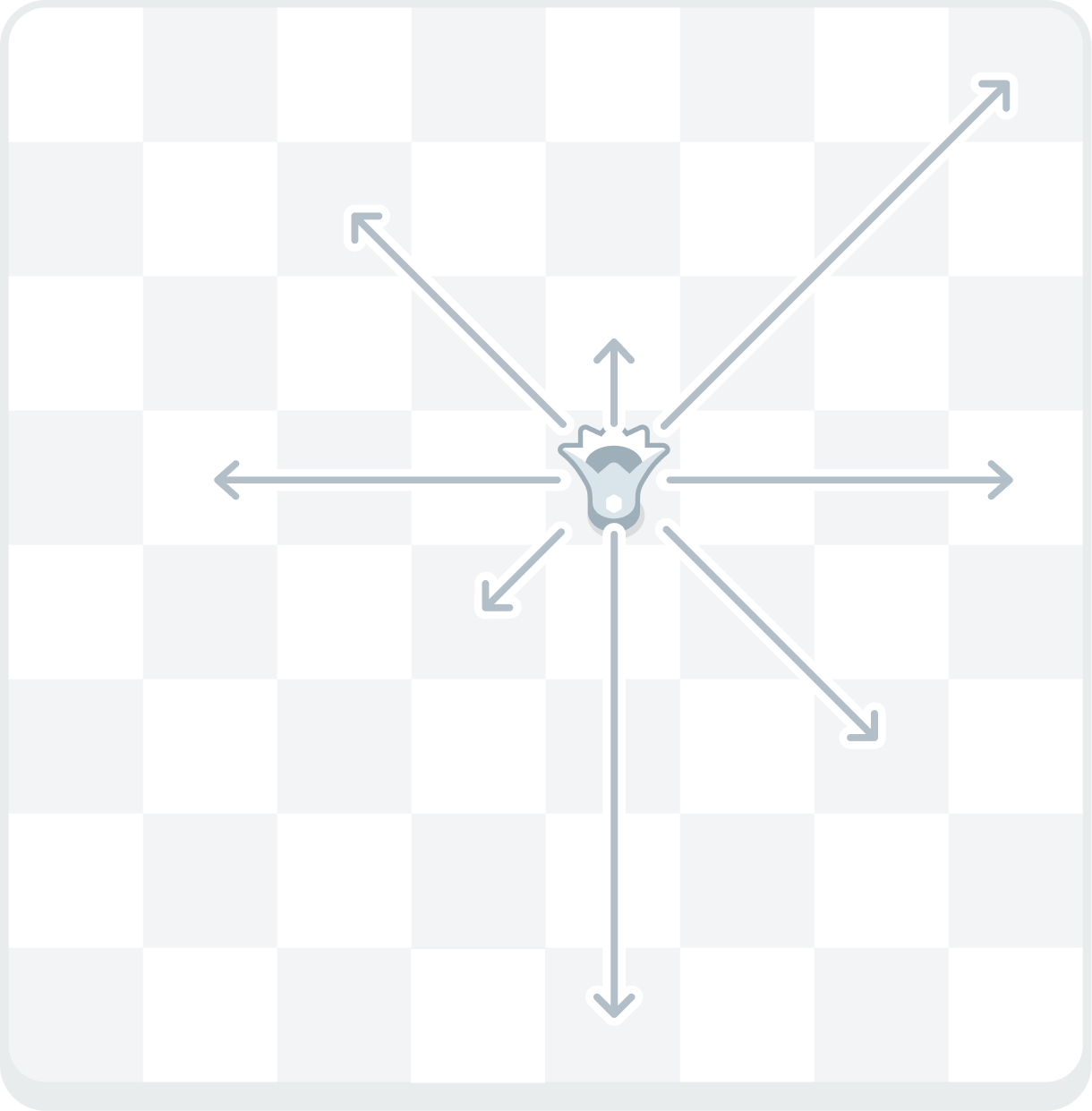
The king moves one square at a time in any direction.

What is the value of each chess piece?
In chess, pieces are also often assigned point values to measure their relative strength:
| Piece | Point value |
|---|---|
| pawn | 1 point |
| knight | 3 points |
| bishop | 3 points |
| rook | 5 points |
| queen | 9 points |
| king | invaluable (you can’t win without it!) |
These values aren’t official rules, but they help players evaluate trades and positions.
The pawn
The pawn has a rounded top, almost like a small helmet. Each player starts with 8 pawns, placed on the second and seventh rank (the row in front of the major and minor pieces), for a total of 16 on the board.
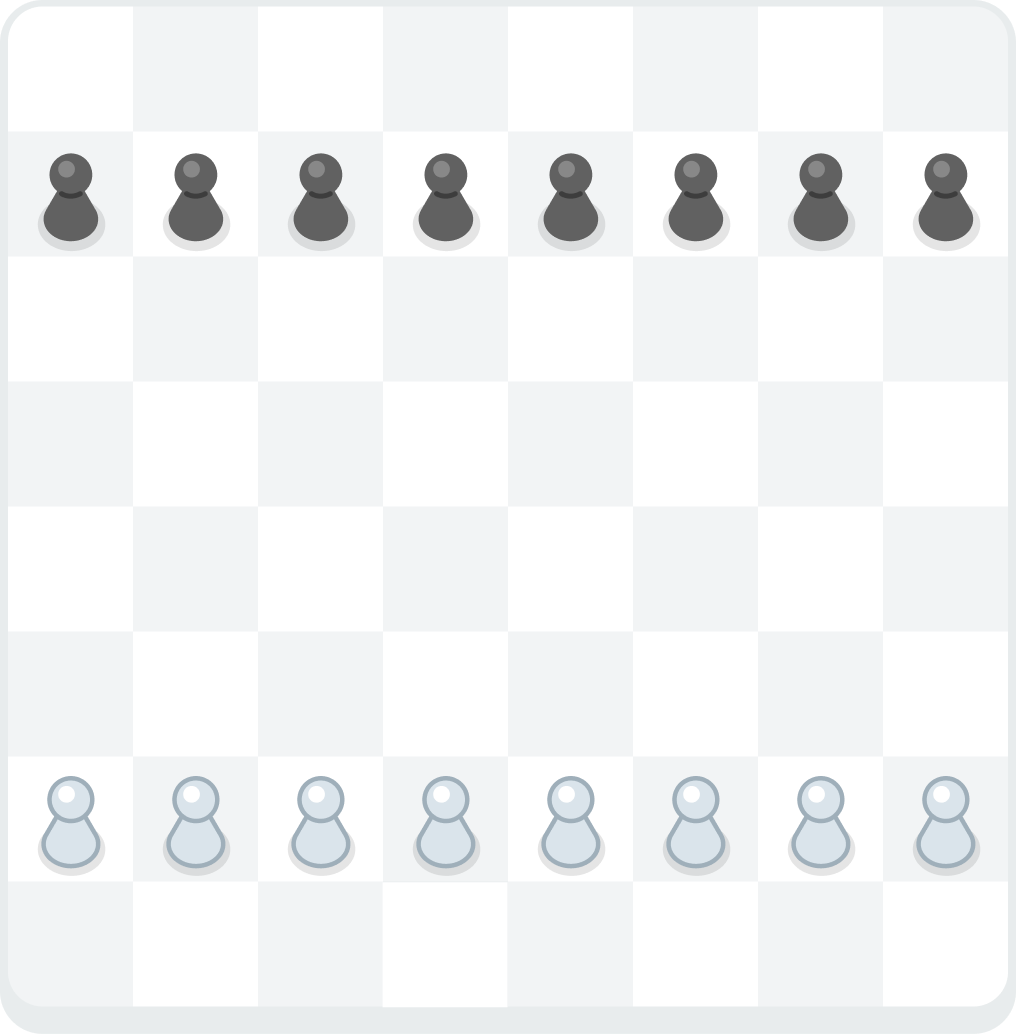
Here’s what makes pawns unique:
- They are the only piece that captures differently than they move. They move straight ahead but capture diagonally.
- They are the only piece that can never move backwards.
Pawns also have two special rules:
- En passant: A special capture that can occur immediately after an opposing pawn moves two squares forward.
- Promotion: When a pawn reaches the opposite end of the board, it must promote to another piece: a queen (the most powerful choice), a rook, a knight, or a bishop.
The knight
The knight looks like a horse’s head. Each player has 2 knights, placed on the first and eighth rank, the second square in from each side (between the rook and bishop).

It’s the only piece that can jump over other pieces, making it especially useful in crowded positions.
The bishop
The bishop has a pointed top with a diagonal notch. Each player has 2 bishops, positioned on the first rank, on the third square in from each side. This means that each side starts with one bishop on a light square and one bishop on a dark square.
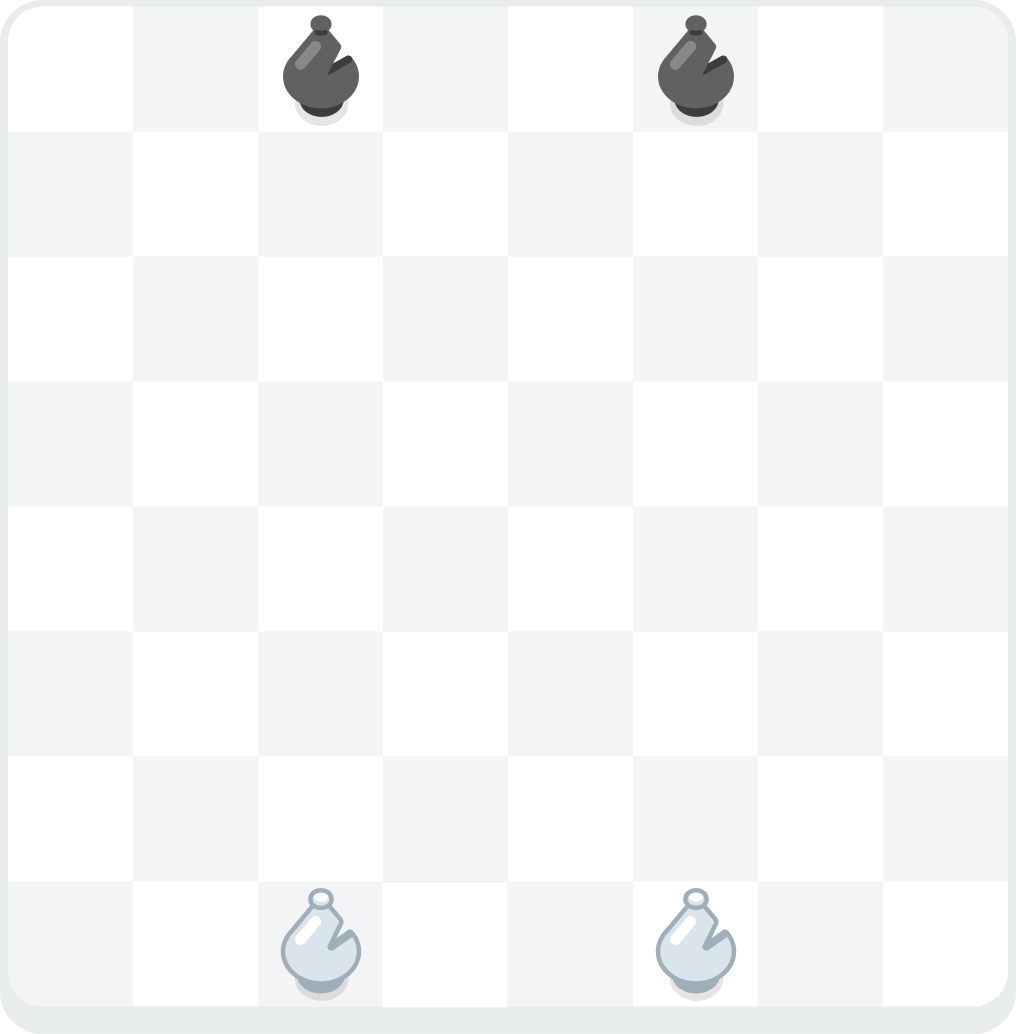
Because bishops only move diagonally, they remain on the same color square for the entire game.
The rook
The rook looks like a castle tower. Each player begins with 2 rooks, placed in the corners of the board.

They’re powerful major pieces and play a part in castling, a special move that helps protect the king and activate the rook.
The queen
The queen wears a crown and is usually the second-tallest piece. Each player has 1 queen, placed on the first and eighth rank, on the same color as that side’s queen. White’s queen starts on the left side of center from White’s perspective, on a white square, while Black’s queen starts on the right side of center from Black’s perspective, on a black square.

Combining the power of the rook and bishop, the queen is the most valuable piece on the board.
The king
The king is usually the tallest piece, topped with a cross. Each player has one king, starting on the first and eighth rank, next to the queen. White’s king begins on the right side of center, from White’s perspective, while Black’s king begins on the left side of center from Black’s perspective.

While not very mobile, it’s the most important piece—if your king is checkmated, the game is over.
Check, please!
Becoming better at chess starts with understanding your pieces. Once you know how each one moves, you’re ready to think ahead, plan tactics, and start playing with confidence. ♟️