The rook may look like a miniature castle, but on the chess board, it’s a powerful, long-range piece. Whether you’re brand-new to chess or brushing up on strategy, here’s everything you need to know about the game’s second strongest piece!
In this post:
Chess 101: the rook
The word rook is believed to originate from the Persian word rukh, meaning “chariot.” Over time, this piece came to be represented as a castle—hence its familiar turret shape on modern 3D sets. On 2D boards for in-person gameplay, it’s usually shown as a small tower-like icon.
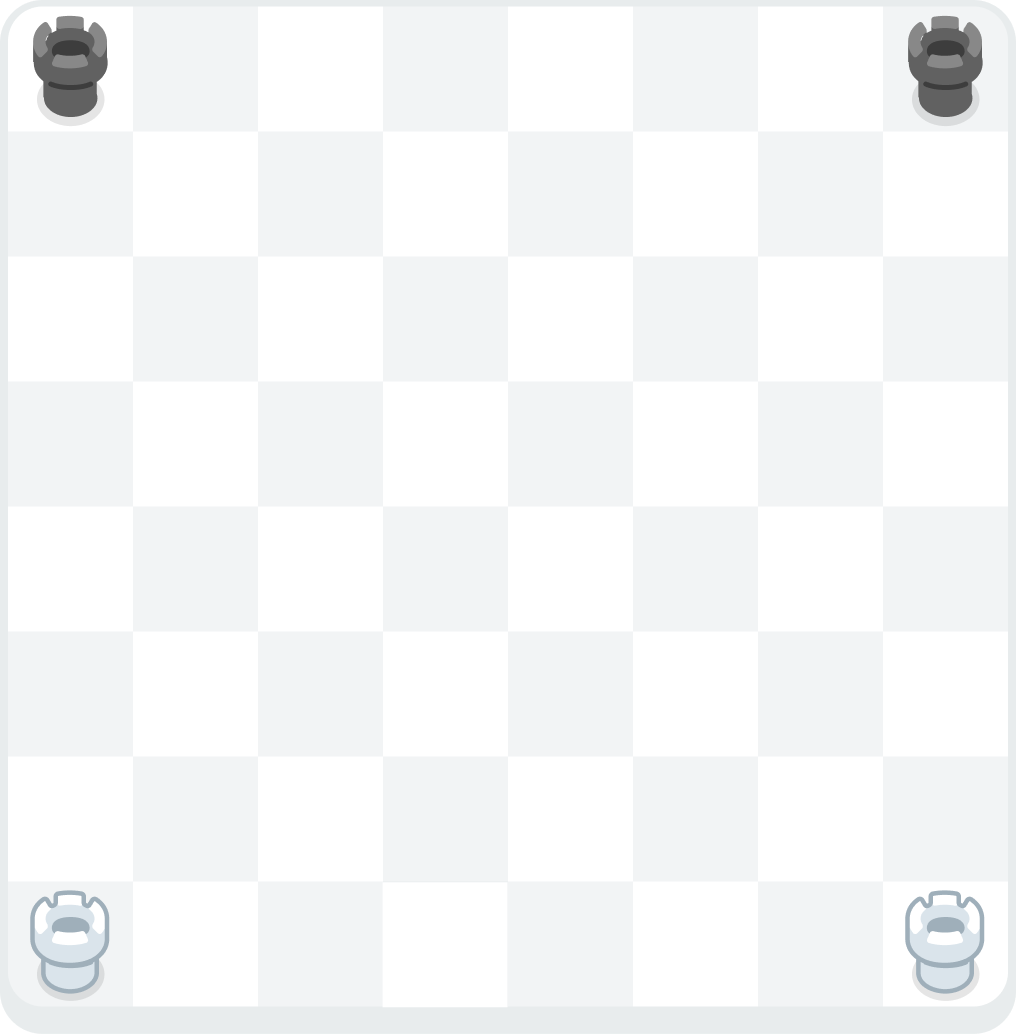
Each player starts with two rooks, positioned in the four corners of the board—one on each end of the back rank.
In terms of piece value, the rook is worth 5 points, making it the second most valuable piece after the queen. Rooks, along with queens, are often collectively grouped together and called major pieces, while lower-value bishops and knights are categorized as minor pieces. This is a useful distinction because a single major piece can successfully force checkmate on its own, whereas a lone minor piece cannot.
How the rook moves
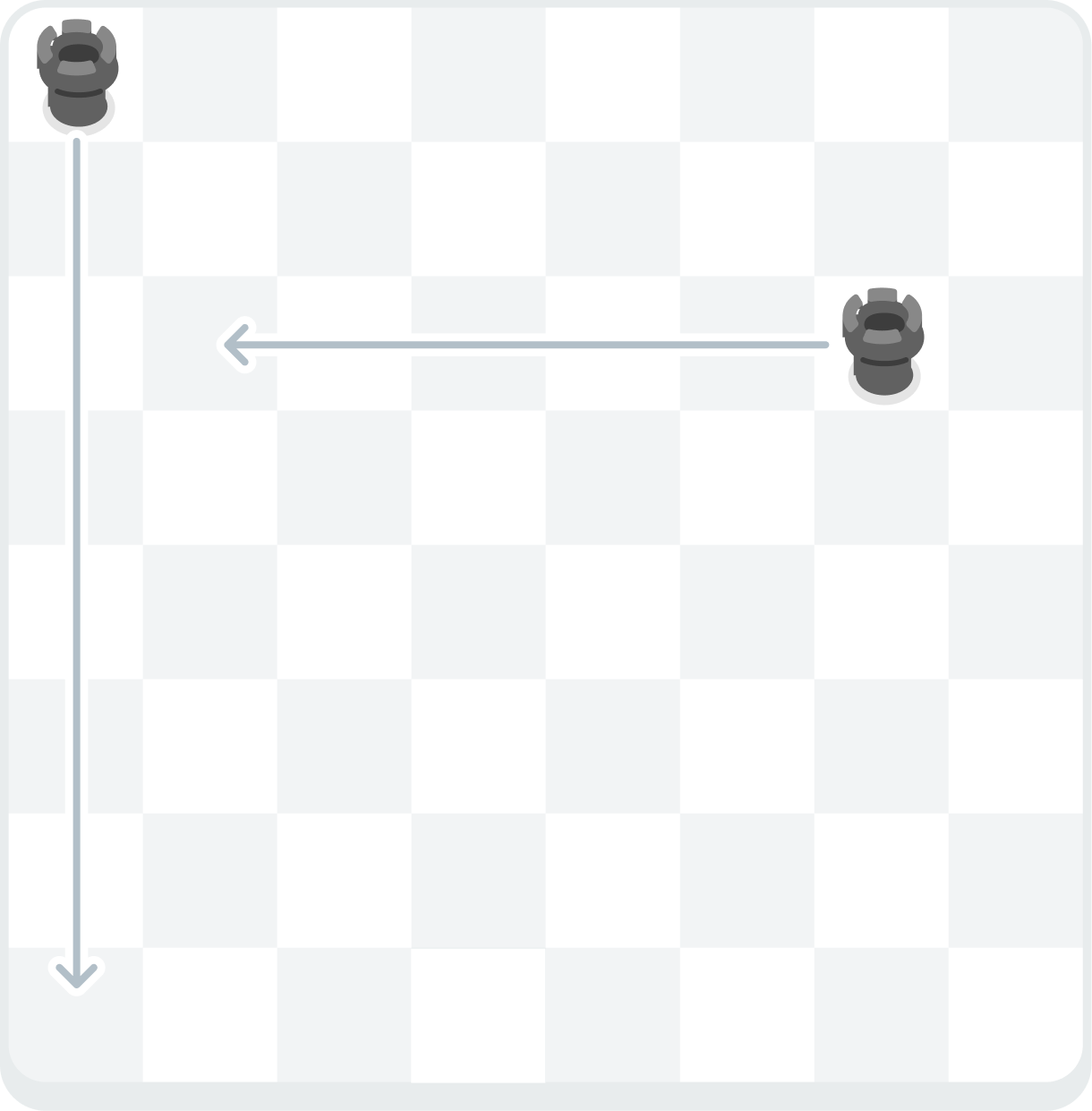
Rooks move any number of squares either vertically or horizontally in straight lines. They capture the same way they move: by landing on a square occupied by an opponent’s piece on the same row or column.
Like most pieces, rooks cannot jump over other pieces (exception: knights) and they can never promote (exception: pawns).
Special move with the rook: castling
The rook is involved in one of chess’s most unique moves: castling.
Castling is the only move in chess where two pieces move at the same time—the king and a rook. It’s also the only time these two pieces are allowed to “jump,” as they move around each other in one single coordinated move.
Here’s how it works:
- The king moves two squares over towards the corner of the board, and the rook moves over the king, landing one square adjacent to the king.
- You can castle to either side of the board, and it's called queenside castling if castling on White’s left or kingside castling if castling on White’s right.
- Each player may castle once per game.
- Neither the king nor the chosen rook may have moved at all earlier in the game.
- There must be no pieces in between them.
- The king may not be in check, move through check, or end up in check.
Yes, it’s a lot of rules! 😅 Even top players have slipped up on castling rules—so if you need a reminder now and then, you’re in good company.
How to use the rook strategically
Rooks play an important role in chess, especially later in the game. Be sure to keep them in mind as you plan your next move! Here are two ways to use your rooks.
1️⃣ Develop your rooks later in the opening, after you’ve already developed most of your minor pieces (knights and bishops). Try to position your rooks on open files, semi-open files, or central files.
2️⃣ Rooks shine in the middlegame and endgame once the board starts to open up. Later in the game, there are fewer pieces on the board and more open ranks and files, allowing rooks to maximize their control of the board.
Do’s with the rook
- Castle early in the opening.
- Develop rooks later in the opening, after pawns, knights, and bishops. You’ll usually want to move them after castling.
- Place rooks on open files (files with no pawns of either color) or semi-open files (files with just one pawn of either color). This allows your rooks to fully utilize their long-range attacking powers.
- Connect your rooks by clearing pieces between them.
- Double your rooks on the same rank or file.
- Move your rooks to the 7th rank as White or 2nd as Black. This is the rank all the pawns start out on, so this allows you to attack enemy pawns as well as threaten the enemy king.
- Look for opportunities to use your rook(s) to checkmate your opponent on the back rank.
- Use your rook to promote your pawns. It’s usually best to place your rooks behind your pawns in the endgame.
Don’ts with the rook
- Don’t develop your rooks to the side of the board behind edge pawns in the opening.
- Don’t rush your rooks into the middle of the board early in the game. They’re valuable, so they’ll become easy targets for lower-value enemy pieces like knights, bishops, and pawns.
- Don’t leave your rooks stuck in the corners.
- Don’t let your own pawns or pieces block your rooks. This will limit your rooks’ attacking range.
You’re no rookie!
When used well, the rook can control entire swathes of the board, invade enemy territory, and deliver checkmate. Make the most of this powerful piece, and you’ll be well on your way to improving your results.