Learning openings requires understanding chess notation, the system for naming pieces and moves. Get a refresher on chess notation here!
English Opening: 4 quick facts
- The English Opening is named after famous 19th century English player Howard Staunton.
- It’s a solid and versatile opening that is often played by top grandmasters.
- This opening is considered a flank opening, meaning that it starts out with moving a flank (side) pawn, as opposed to moving the more common center pawns with either 1. e4 or 1. d4.
- The English can turn into either a hypermodern or a more classical opening, depending on how both players respond. It often transposes into other openings, such as the Queen’s Gambit or one of the Indian Defenses, including the King’s Indian Defense and the Nimzo-Indian Defense.
English Opening: the move
Here is the move for the English Opening:
💡
1. c4
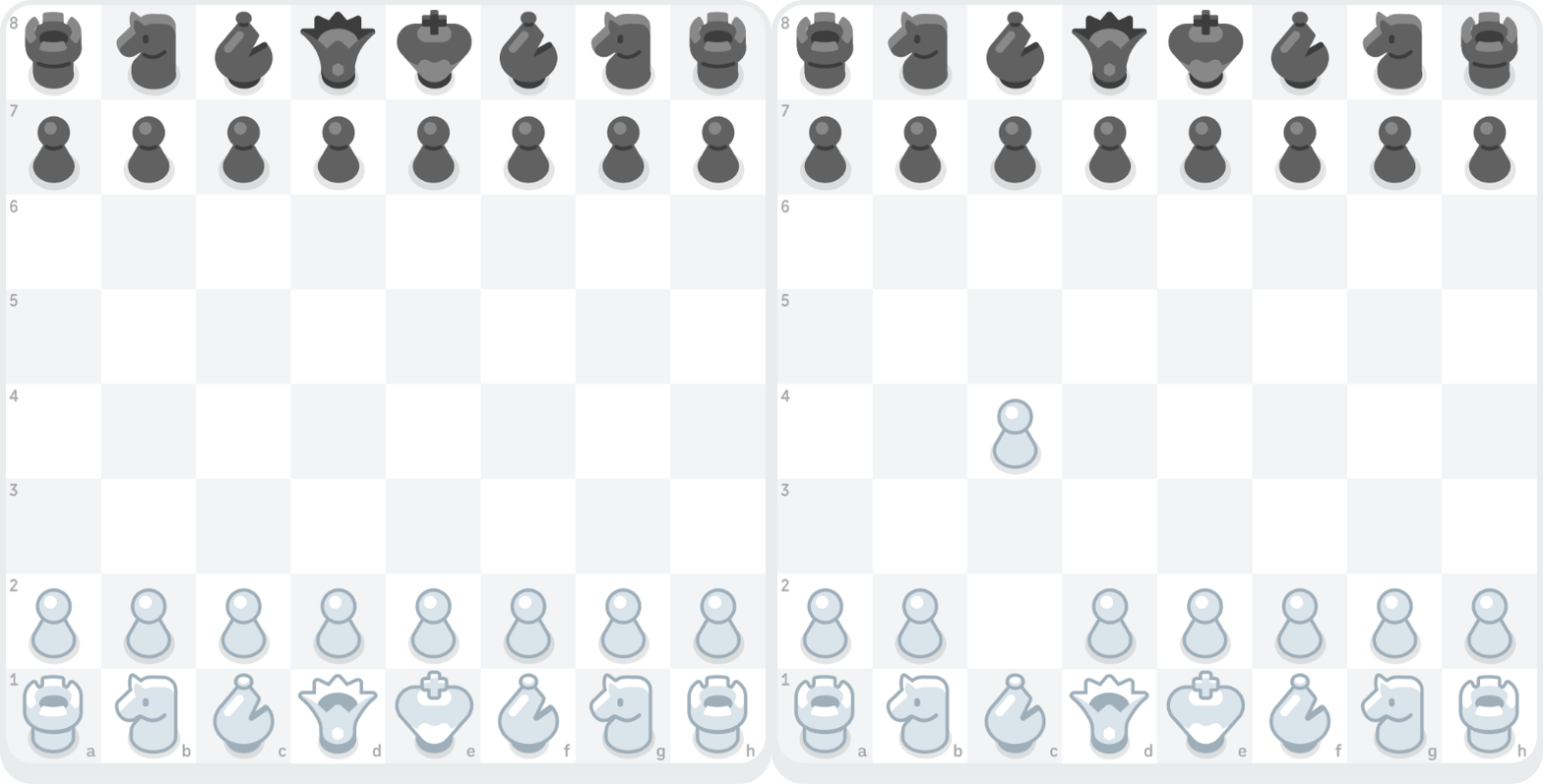
One move, many possibilities
If you want to keep your opponents guessing and unsure of what opening you’ll lead into, try the English Opening.
If you’re looking for more openings, check out our guide featuring over 30 options for every skill level!