
Learning openings requires understanding chess notation, the system for naming pieces and moves. Get a refresher on chess notation here!
French Defense: 3 quick facts
- The French Defense’s name derives from a correspondence match played between London and Paris.
- It’s an extremely reliable, positional Black opening that consistently appears at the top levels in chess.
- With many mainlines, there is a lot of theory to choose from in the French Defense. One downside is that Black can feel a bit cramped in many lines due to a slight space disadvantage and a light-squared bishop that is often trapped behind its own pawn chain, limiting its activity.
French Defense: the moves
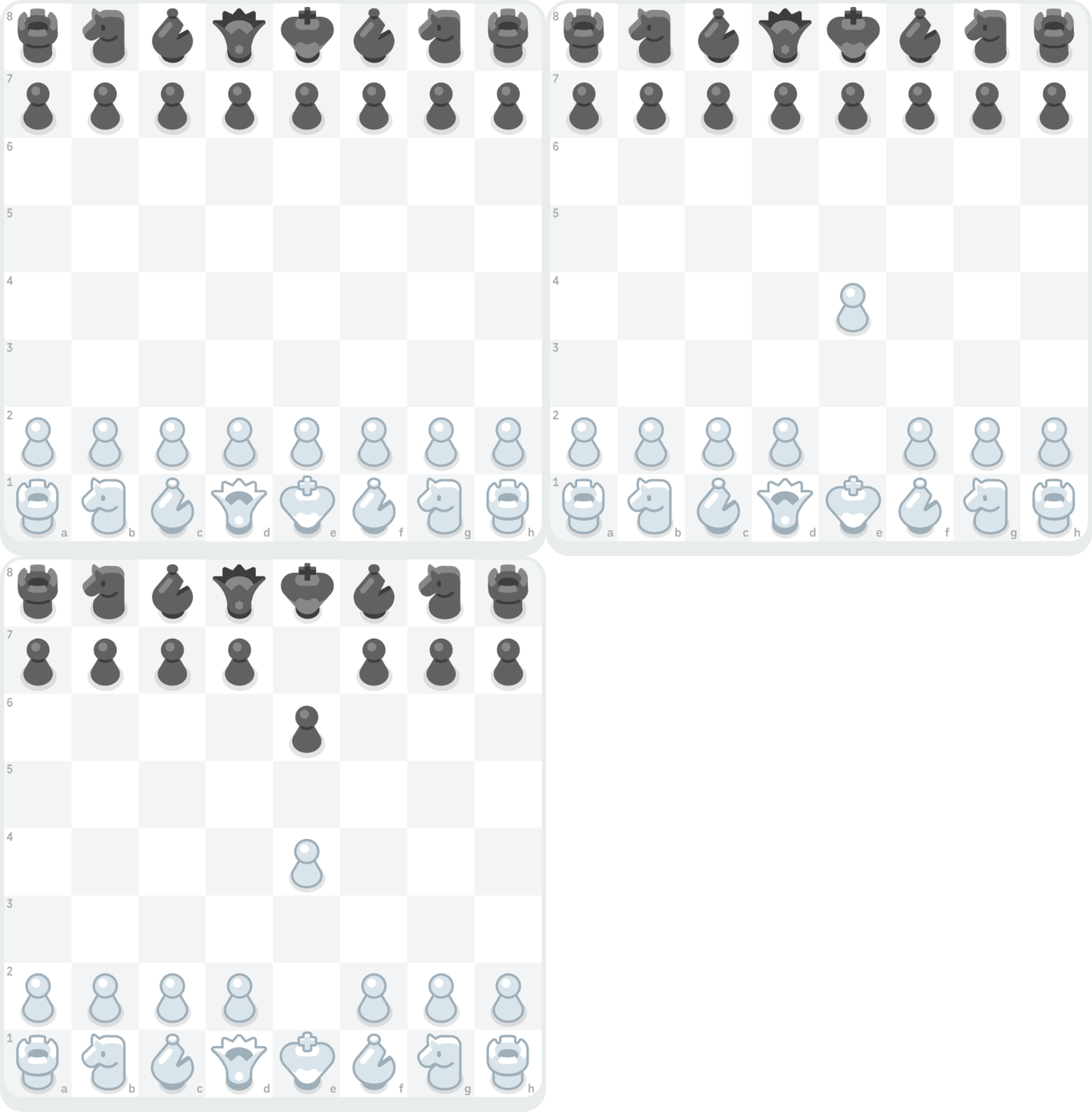
Here are the moves for the French Defense:
💡
1. e4 e6
Ready to learn the French Defense?
The French Defense usually leads to slower, closed positions with lots of careful maneuvering. For a solid opening that steers clear of open, tactical games, try the French!
If you’re looking for more openings, check out our guide featuring over 30 options for every skill level!