
Welcome to another week of Dear Duolingo, an advice column just for learners. Catch up on past installments here.
Hi, hello! This time, we’re starting with a question for you 🫵 Where would you place yourself on the introvert–extrovert scale? If you’re leaning more (or fully) towards introversion, you’ve come to the right place.
Our question this week:
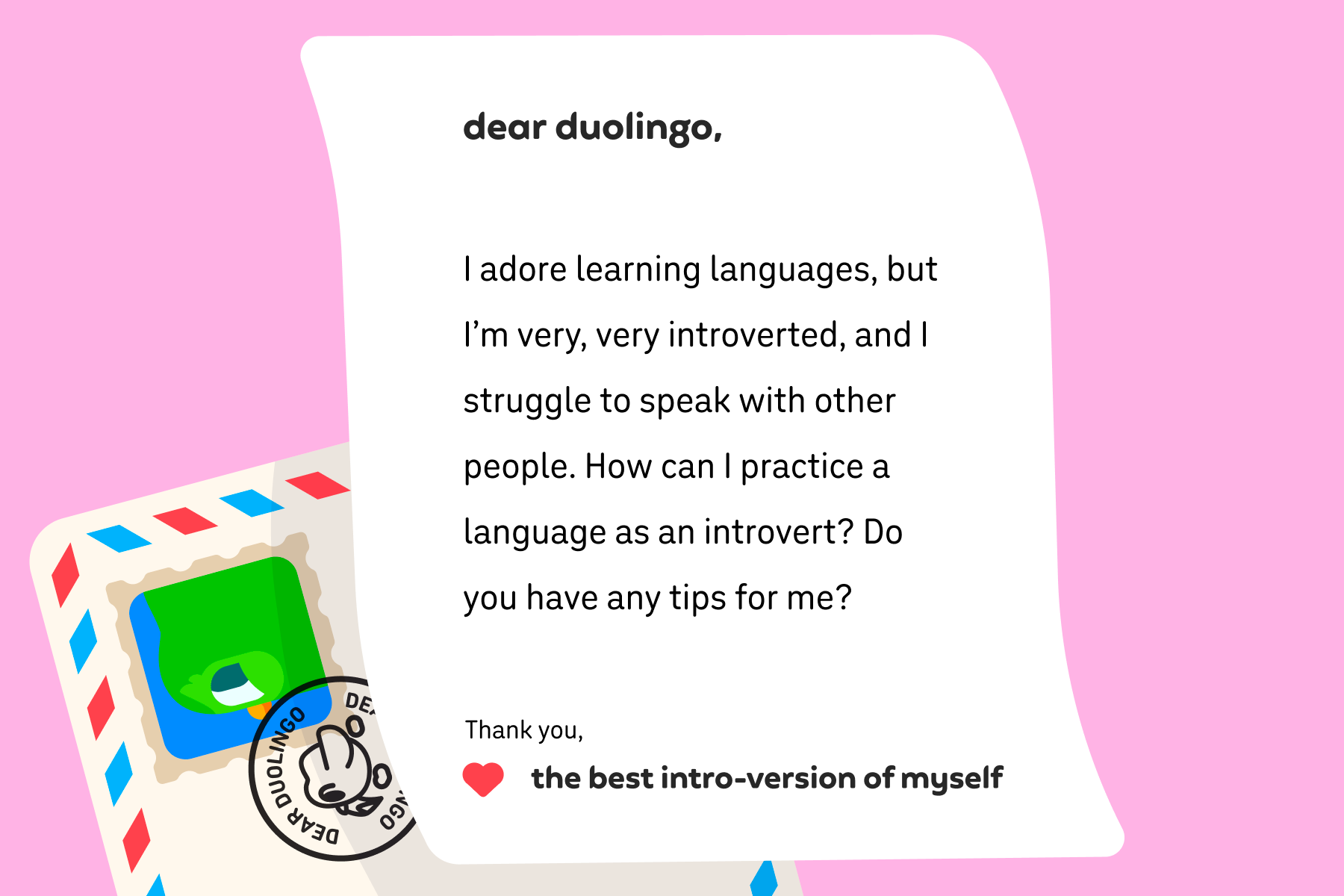
I can relate to this question on a personal level, The Best Intro-Version of Myself, and I know many other learners can, too.
Being introverted is by no means a negative thing, but it can make certain aspects of language learning a little trickier. The good news is that there are definitely ways to deal with this and achieve your language learning goals, even as an introvert. Let’s get into it.
Why can practicing a language be difficult for introverts?
You might find group settings, such as language classes, challenging. Maybe you don’t enjoy small talk, dislike being put on the spot, or you prefer to learn on your own. None of these things are unique to introverted people, but they tend to be more common among them. And they can make practicing a language—especially your speaking skills—more difficult.
Keep in mind, though, that introversion and extroversion aren’t necessarily an either-or situation. Rather, they represent two ends of a continuum, and most of us fall somewhere in between. Many people have a mix of introverted and extroverted traits. For this reason, there’s no one-size-fits-all approach to language learning for more introverted people. What matters most is finding an approach that works for you.
That’s why we’ve put together a few tips and ideas to help introverted learners navigate some of the challenges they may face—especially when it comes to speaking.
6 language learning tips for introverts (plus a bonus tip!)
There are plenty of ways to customize your learning experience if the idea of speaking to strangers or being limited to small talk in your new language makes you shudder! Here are 6 tips for building confidence in real-life interactions, plus one for opting out of unwanted social features on the Duolingo app.
1. Start with building vocabulary
If just the thought of speaking your new language makes you nervous, it can be helpful to build up a solid vocabulary first. Knowing the words you need can give you a sense of confidence, even if your grammar or pronunciation isn’t quite there yet.
Depending on your level, you could:
| A1/A2 | Look up words you’re bound to encounter in real life Practice phrases and whole sentences you’re most likely to need |
|---|---|
| B1/B2 | Learn words that will help your speech flow better, such as connectors or interjections Find vocabulary around topics you want to talk about, such as your interests or current events |
2. Write, write, write
You might want to set speaking aside for the time being and focus on the other productive skill: writing. You can write anything, and no one ever has to read it! Not only will this strengthen your writing skills, but it can also help prepare you for speaking by giving you a chance to practice the vocabulary and grammar you’ll need in a slower, more structured way.
Depending on your level, you could:
| A1/A2 | Start with short, simple sentences Write a short paragraph about yourself |
|---|---|
| B1/B2 | Write a journal entry Draft an email |
3. Talk to yourself
You may not feel ready to speak with other people just yet, but what about becoming your own conversation partner? If talking to yourself feels a little strange, start small.
Depending on your level, you could:
| A1/A2 | Narrate what you’re doing, for example during chores Talk through your plans for the day |
|---|---|
| B1/B2 | Explain a more complex concept, such as how to make your favorite dish Talk through a decision you need to make |
4. Record yourself
I know, I know—many of you will cringe at the thought of listening to your own voice on repeat, but it can actually have a lot of benefits for your learning. Hearing yourself speak your new language can help you identify sounds you struggle with, so you can work on them. It might also show you that your pronunciation is much better than you expected, giving you a bit of a confidence boost!

Depending on your level, you could:
| A1/A2 | Record yourself saying words or phrases that keep tripping you up Record yourself doing a Duolingo lesson (you can even try a speaking-only practice session!) |
|---|---|
| B1/B2 | Pretend you’re on the phone and record your side of the conversation Record yourself giving a short presentation on a topic you’re passionate about |
5. Use the shadowing technique
If you want to learn from a proficient speaker of your new language, consider shadowing. This technique involves listening to audio in your target language and repeating what you hear. Try to mimic the speaker as closely as possible, paying attention not only to the words they use, but also to their accent, intonation, and rhythm. This can be a great way to improve both your pronunciation and fluency.
Depending on your level, you could:
| A1/A2 | Watch a short video designed for language learners and repeat individual words or short phrases Follow online creators who speak your target language and repeat the sentences they use |
|---|---|
| B1/B2 | Listen to an audiobook and repeat the sentences you hear (slow down the audio if needed!) Listen to a podcast (or DuoRadio) and repeat after the host |
6. Use AI-powered technology to your advantage
Do you want to get some speaking practice that’s closer to a real conversation, but without having to interact with another person? AI-powered tools can offer a low-pressure way to practice your new language. Try having a conversation with an AI chatbot. Or, for an experience tailored specifically to your language level, chat with a Duolingo character using the Video Call feature.
Depending on your level, you could:
| A1/A2 | Have a short conversation (for example, about your hobbies) using Duolingo’s Video Call feature Use an AI chatbot to practice a short dialogue you might have in everyday life |
|---|---|
| B1/B2 | Have a longer conversation (for example, about your life goals) using Duolingo’s Video Call feature Use an AI chatbot to practice speaking about a more complex topic |
Bonus tip: Opt out of social features on the Duolingo app
With Friends Quests, Friend Streaks, and leagues, Duolingo can be a very social app. But it doesn’t have to be. If you’d rather use Duolingo without the social pressure, here’s how.
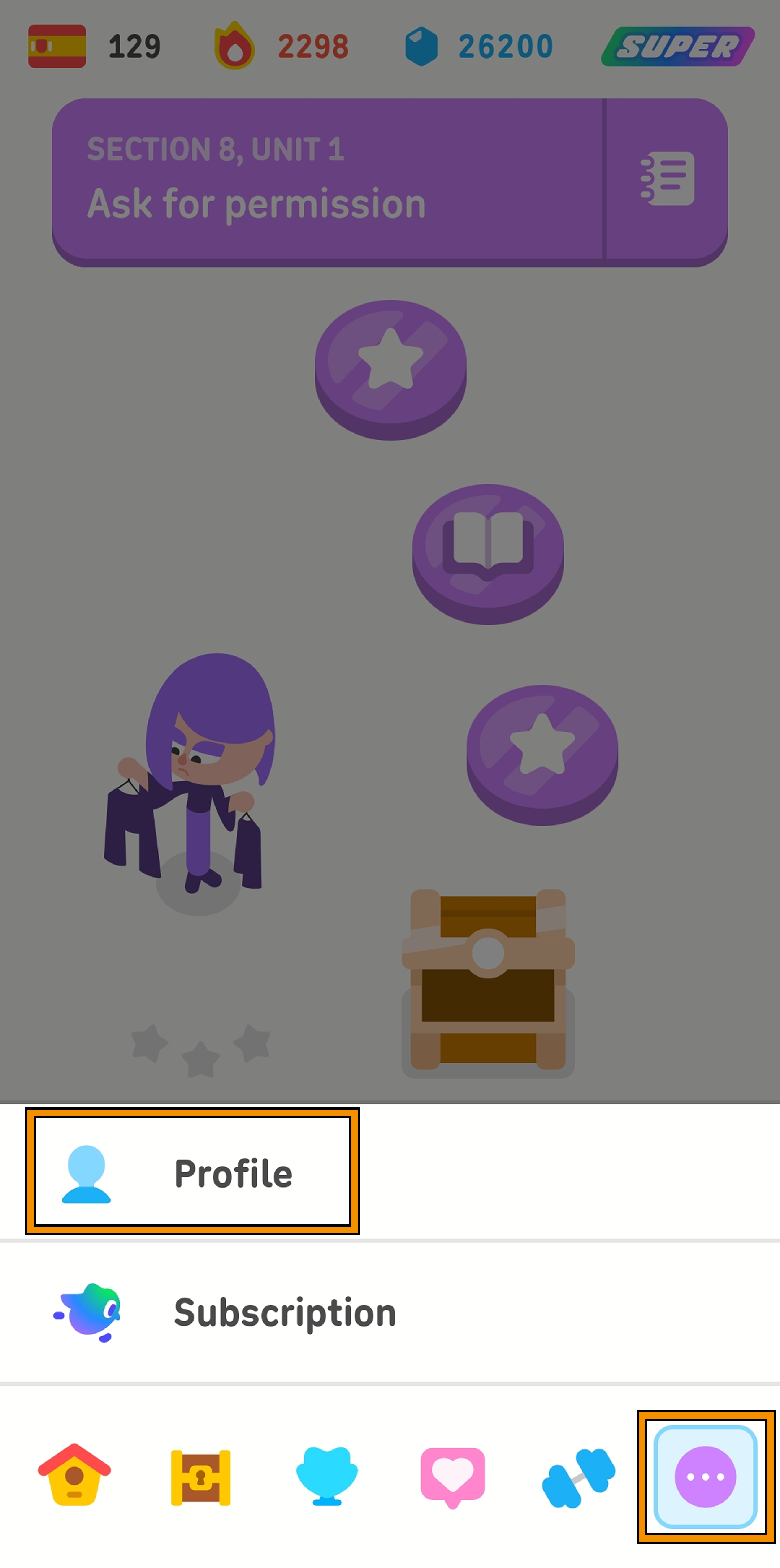
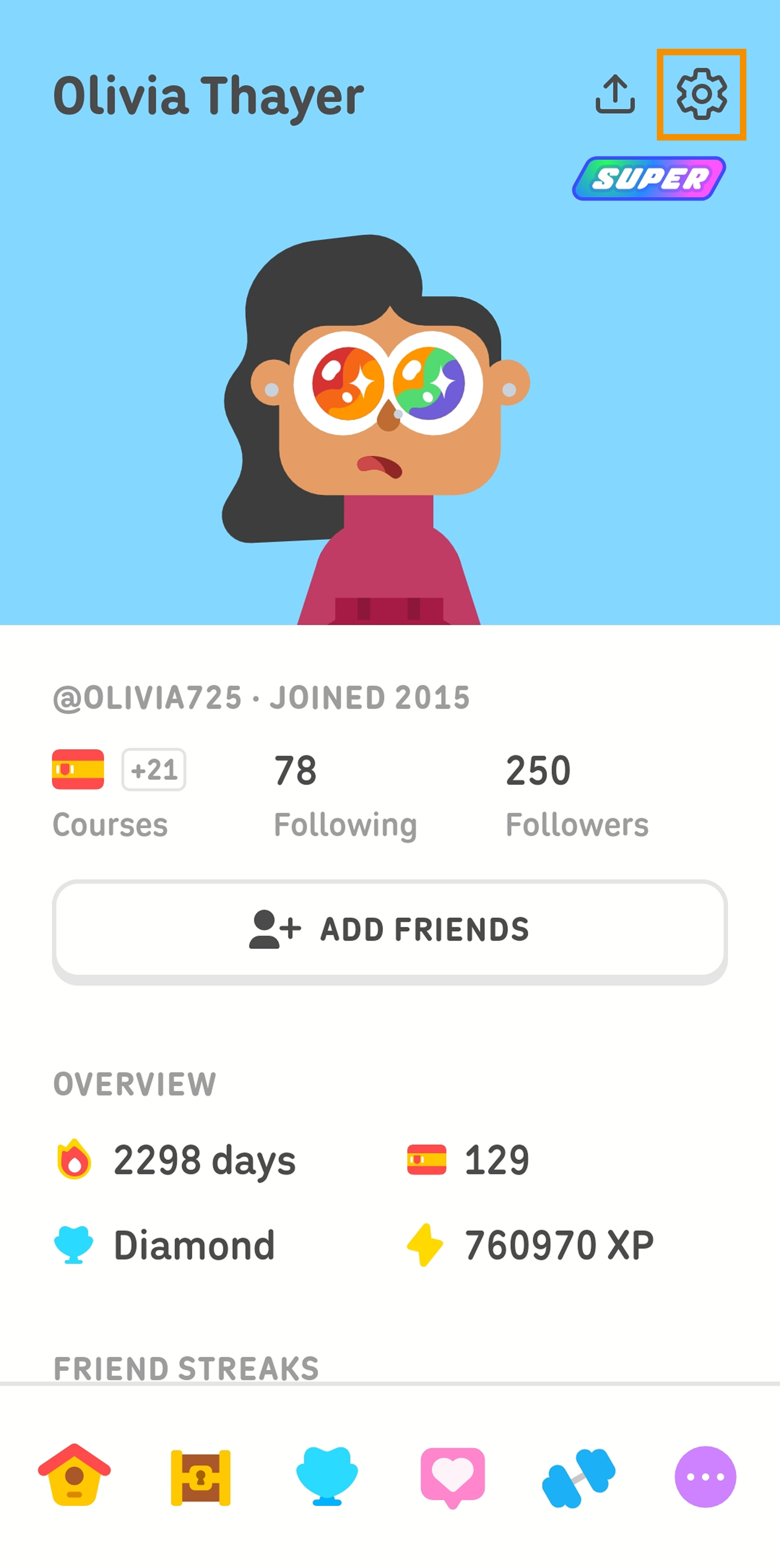
To opt out of Friends Quests and Friend Streaks, navigate to your profile from the bar at the bottom of the screen. From there, tap the settings wheel in the top-right corner.
 |
 |
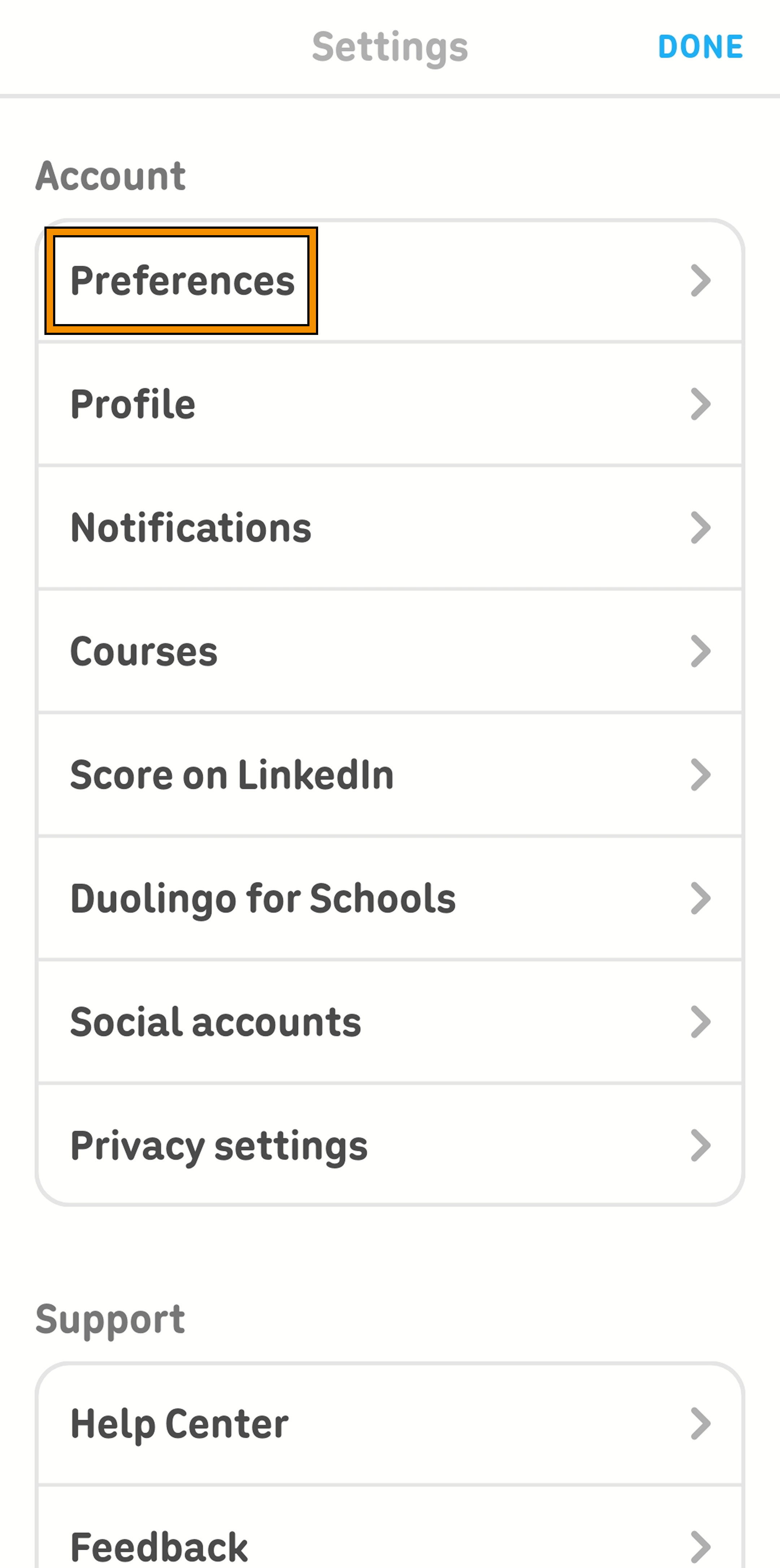
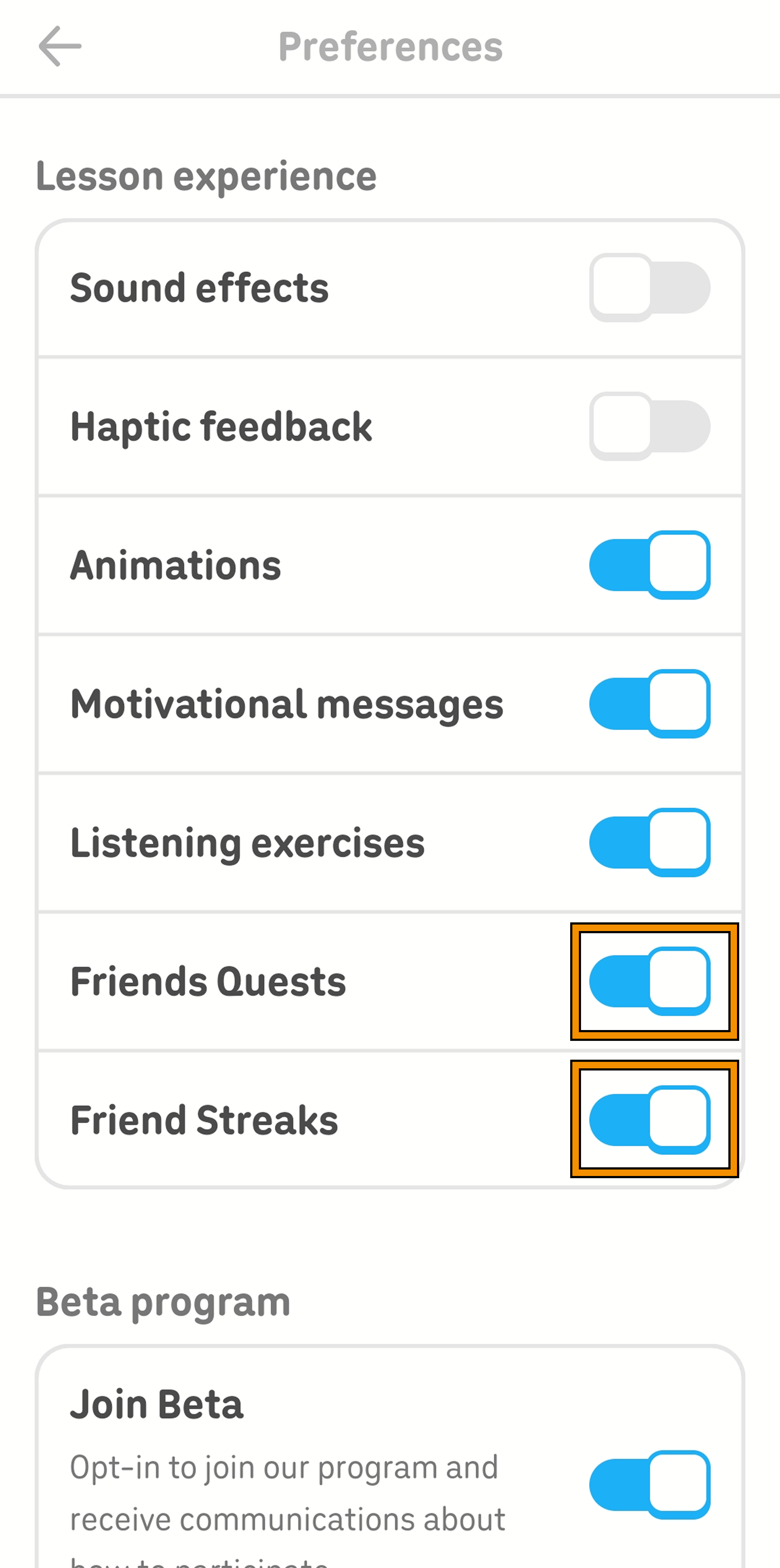
Choose “Preferences,” then use the sliders next to “Friends Quests” and “Friend Streaks” to turn off these features.
 |
 |
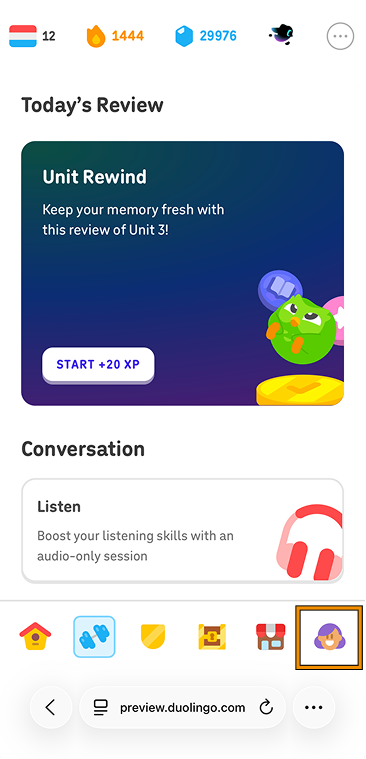
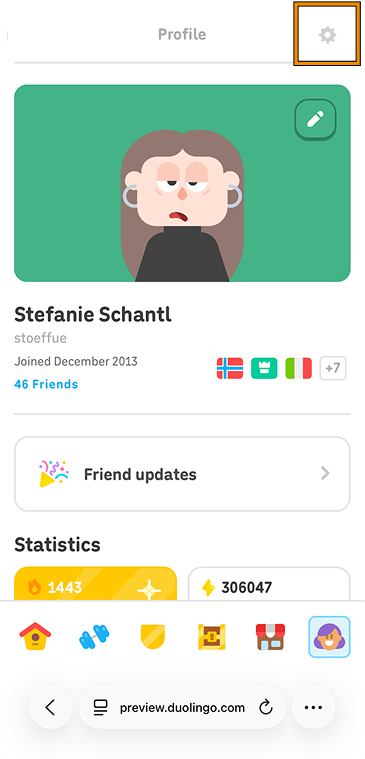
To opt out of the Leaderboards for leagues, visit the Duolingo website on your phone or computer. If you’re using a mobile browser, access your profile from the bar at the bottom of the screen, just like you would in the app. Then, tap the settings wheel in the top-right corner.
 |
 |
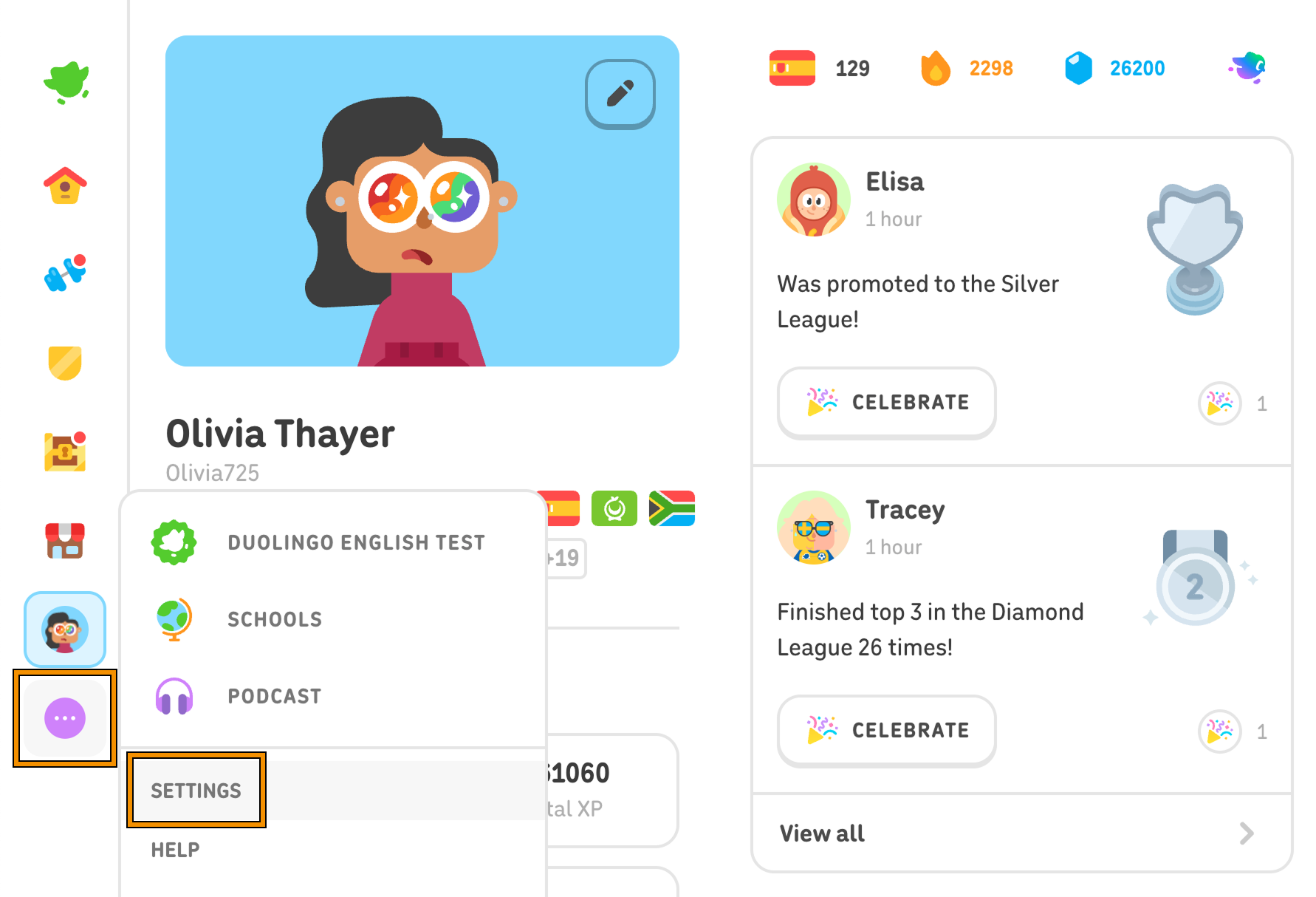
If you’re on a computer, click the three dots in the navigation bar on the left, then choose “Settings.”
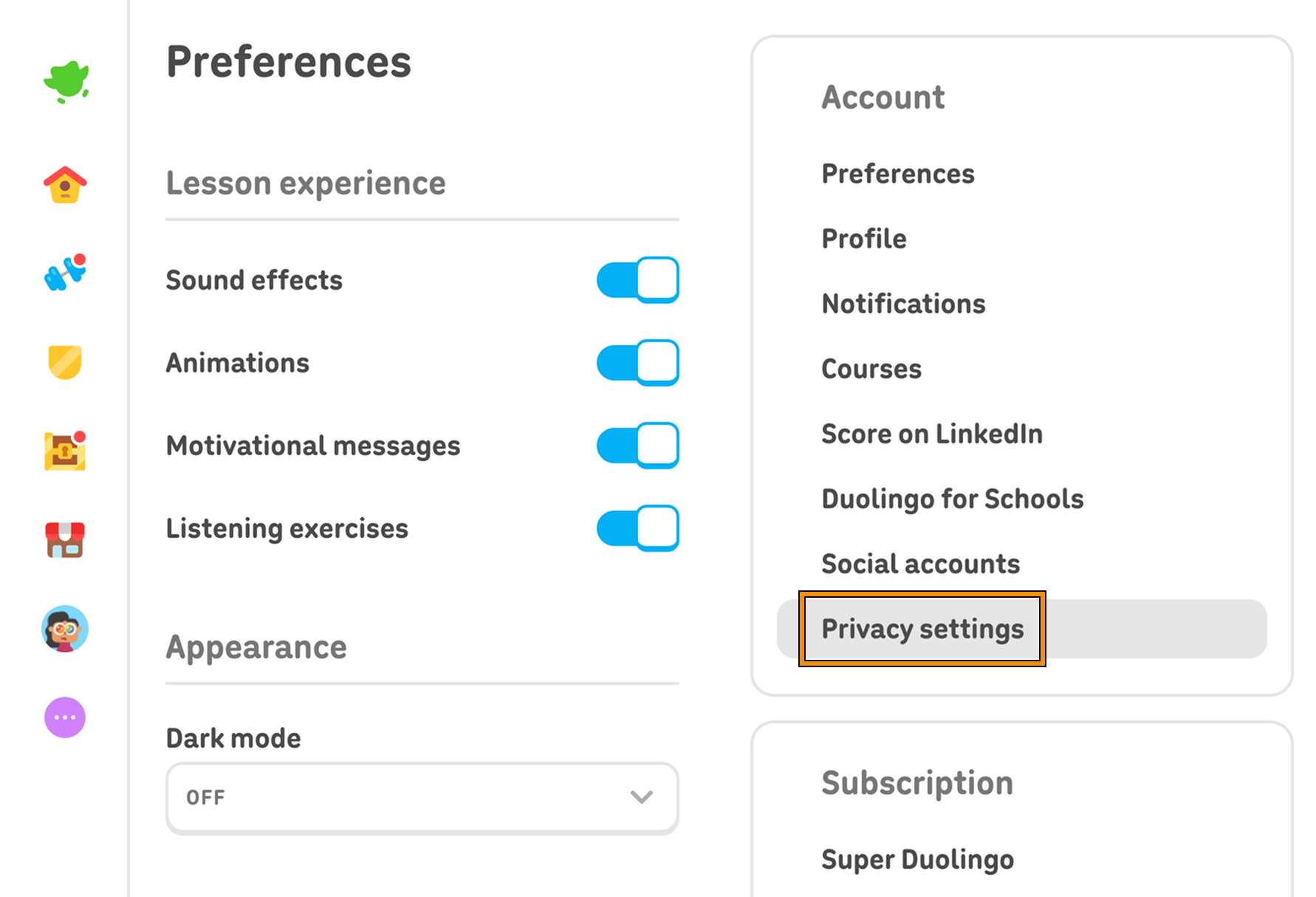
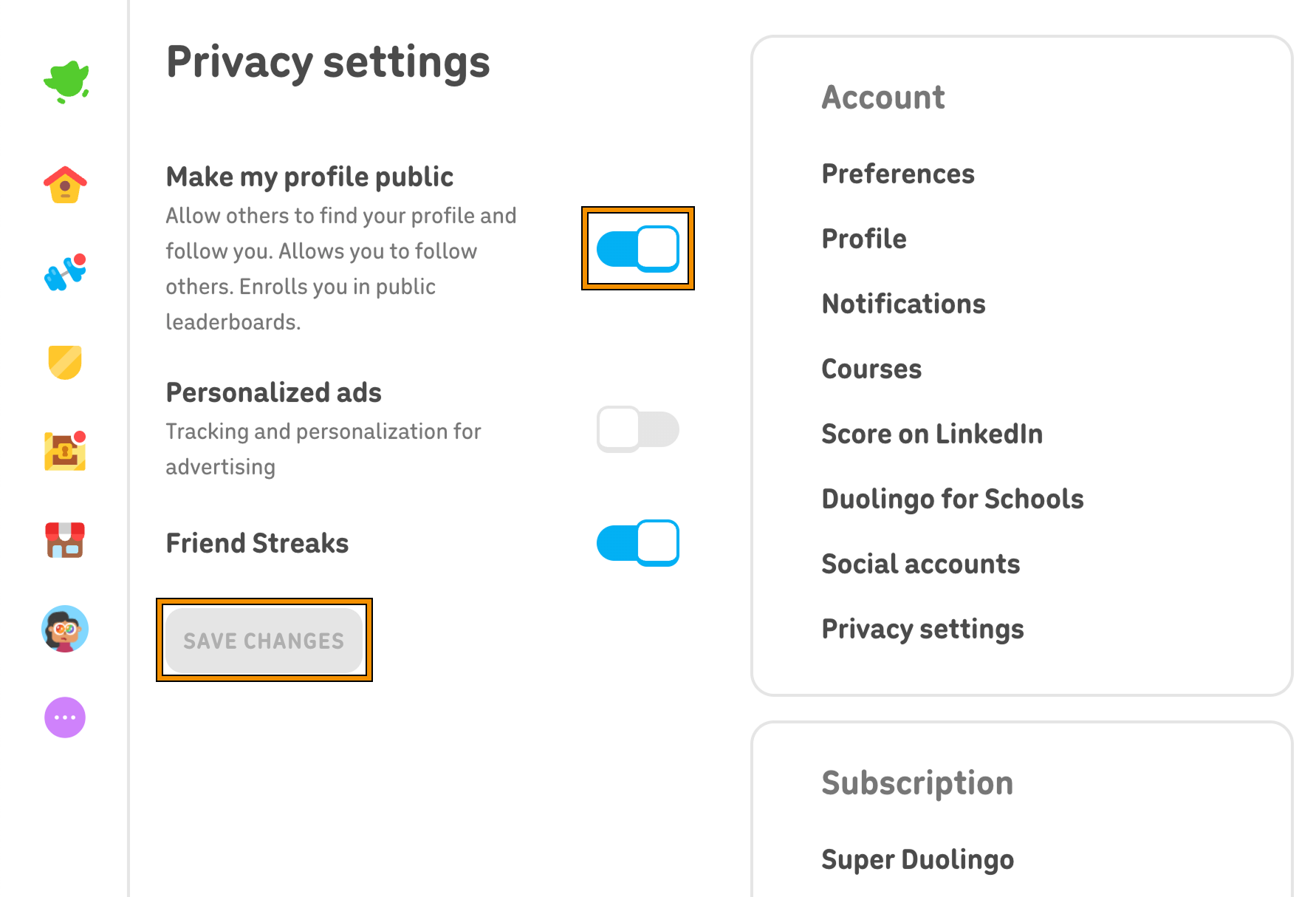
On either device, choose “Privacy settings” and use the slider to turn off “Make my profile public.” This will make your account invisible to other users and remove you from the Leaderboards.
 |
 |
You’ve got this!
Whether you’re an introvert or an extrovert, keep in mind that everybody learns differently—and that’s okay! Find a way that works best for you, stay consistent, and watch your language skills grow.
For more answers to your language and learning questions, get in touch with us by emailing dearduolingo@duolingo.com.