
Rooks already resemble miniature castles—but did you know there’s a unique move involving kings and rooks called castling? Read on to find out more what castling is, and when exactly you should use this special maneuver!
In this post:
- What is castling?
- What are the different types of castling?
- What is the history of castling?
- Rules for castling
- Why should you castle?
- How do you record castling in algebraic notation?
What is castling?
Castling is a special move where one side’s king and a single rook move simultaneously and jump over each other. Each side may castle only once per game.
Castling is advantageous because it removes the king from the dangerous center of the board and tucks it away in the corner, where it usually has three pawns in front of it to shield it from would-be attackers. In addition, castling brings the rook out of the corner of the board and nearer to the center, from where it can easily move to central files, allowing it a much greater reach and influence on the board.
What are the different types of castling?
There are two main types of castling: kingside castling, which is also known as short castling or castling short because the rook moves fewer squares, and queenside castling, which is also known as long castling or castling long because the rook moves further.
| Kingside castling | Queenside castling | |
|---|---|---|
| Before castling | 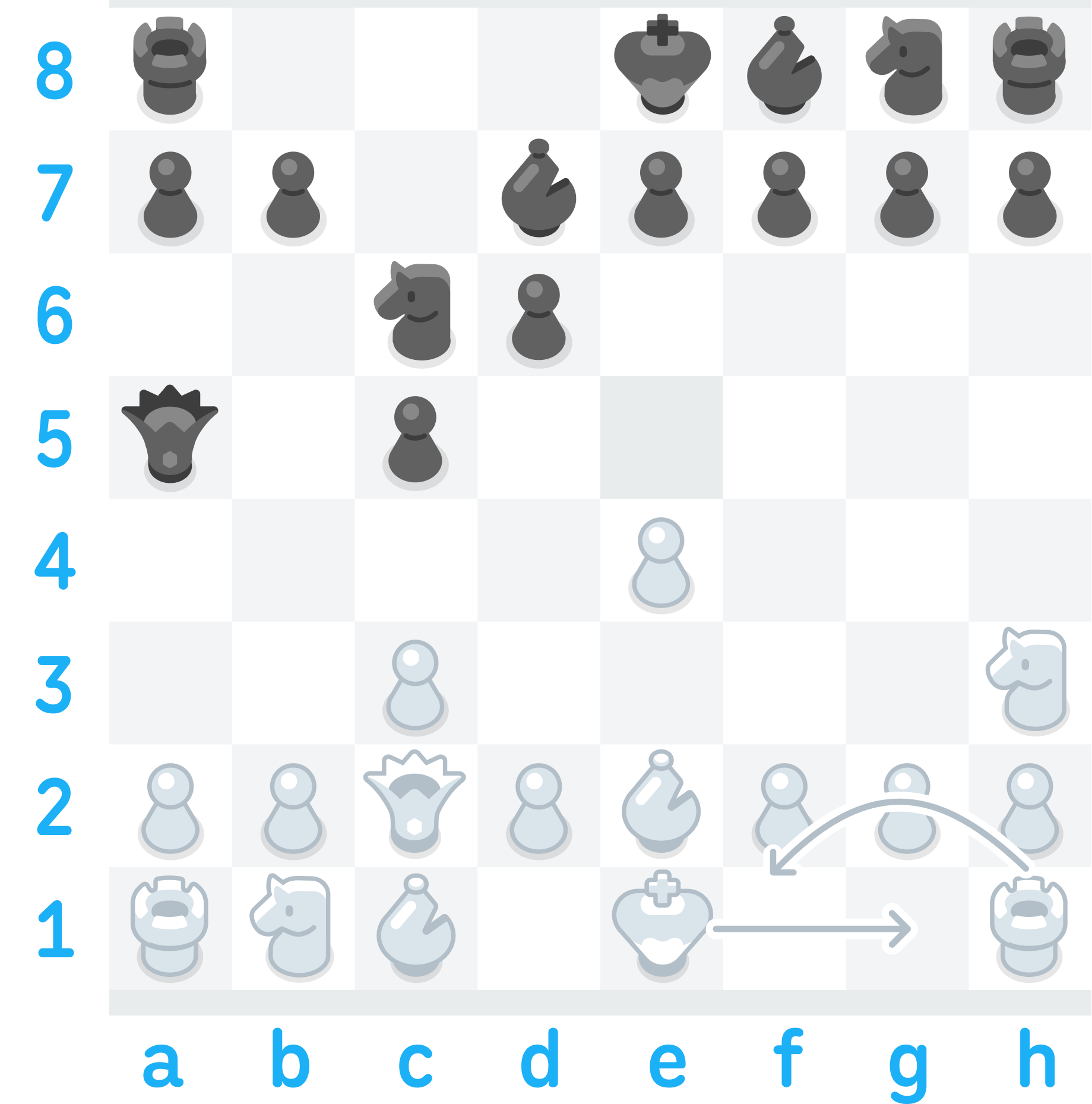
|
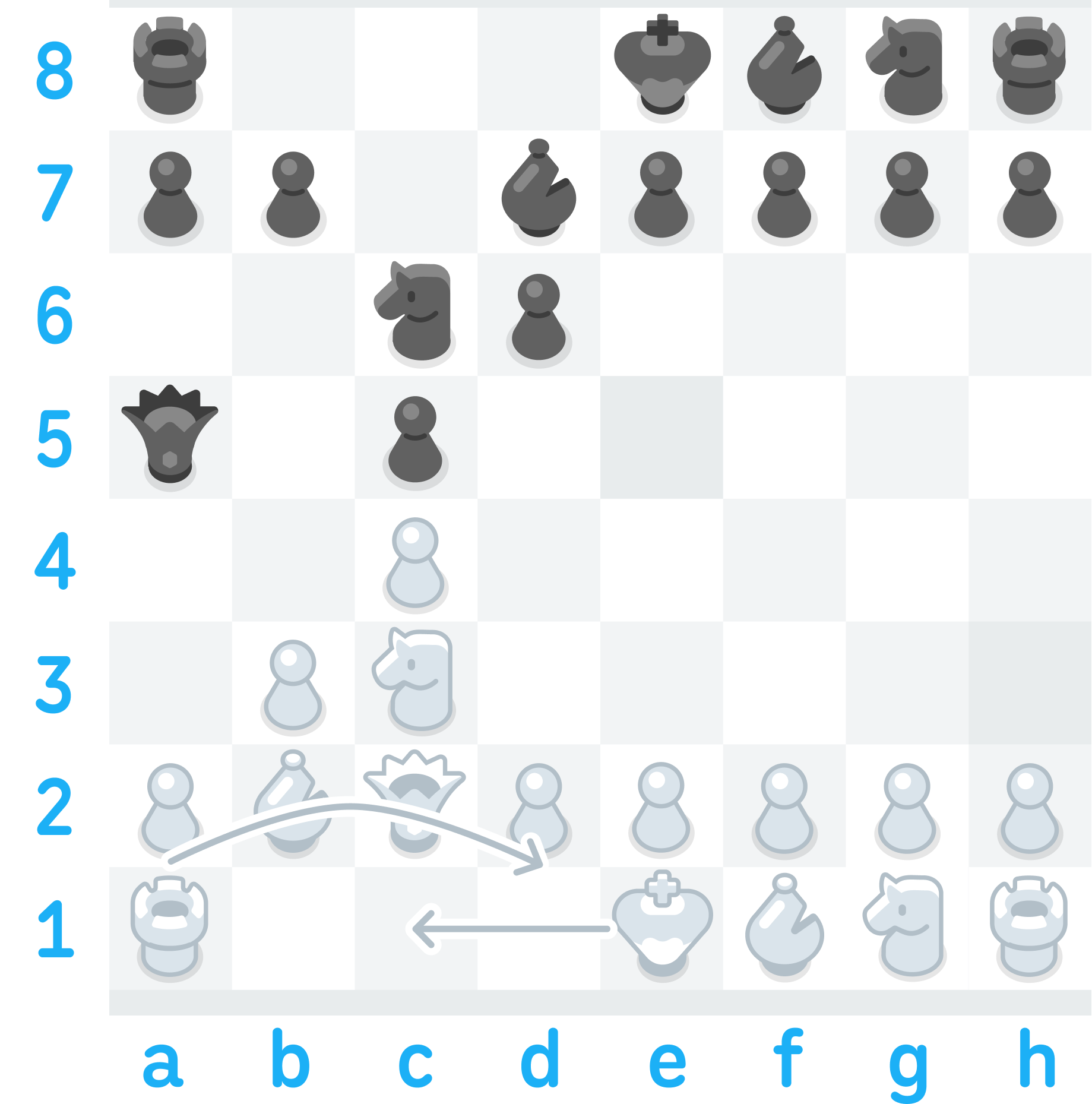
|
| After castling | 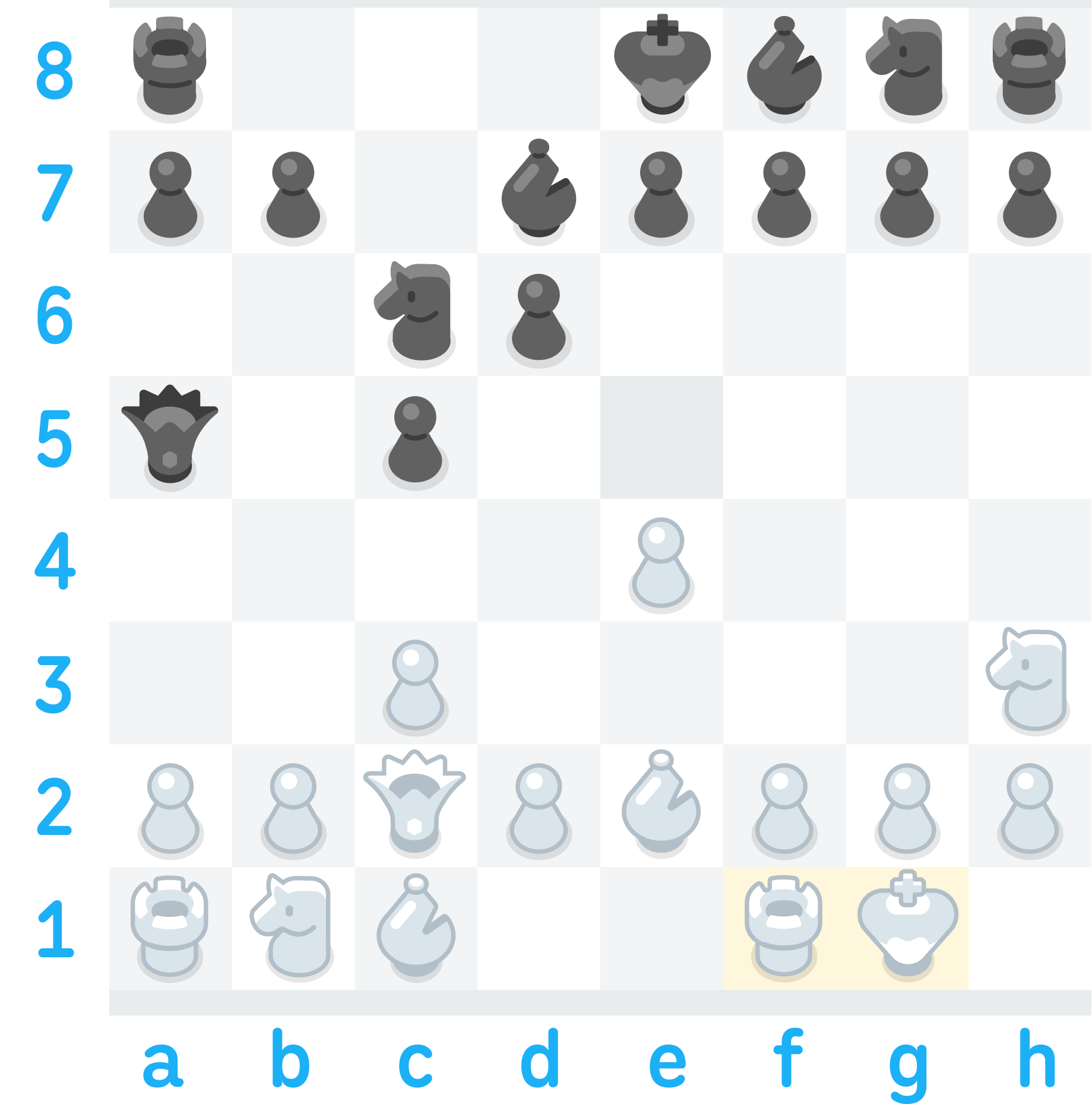
|
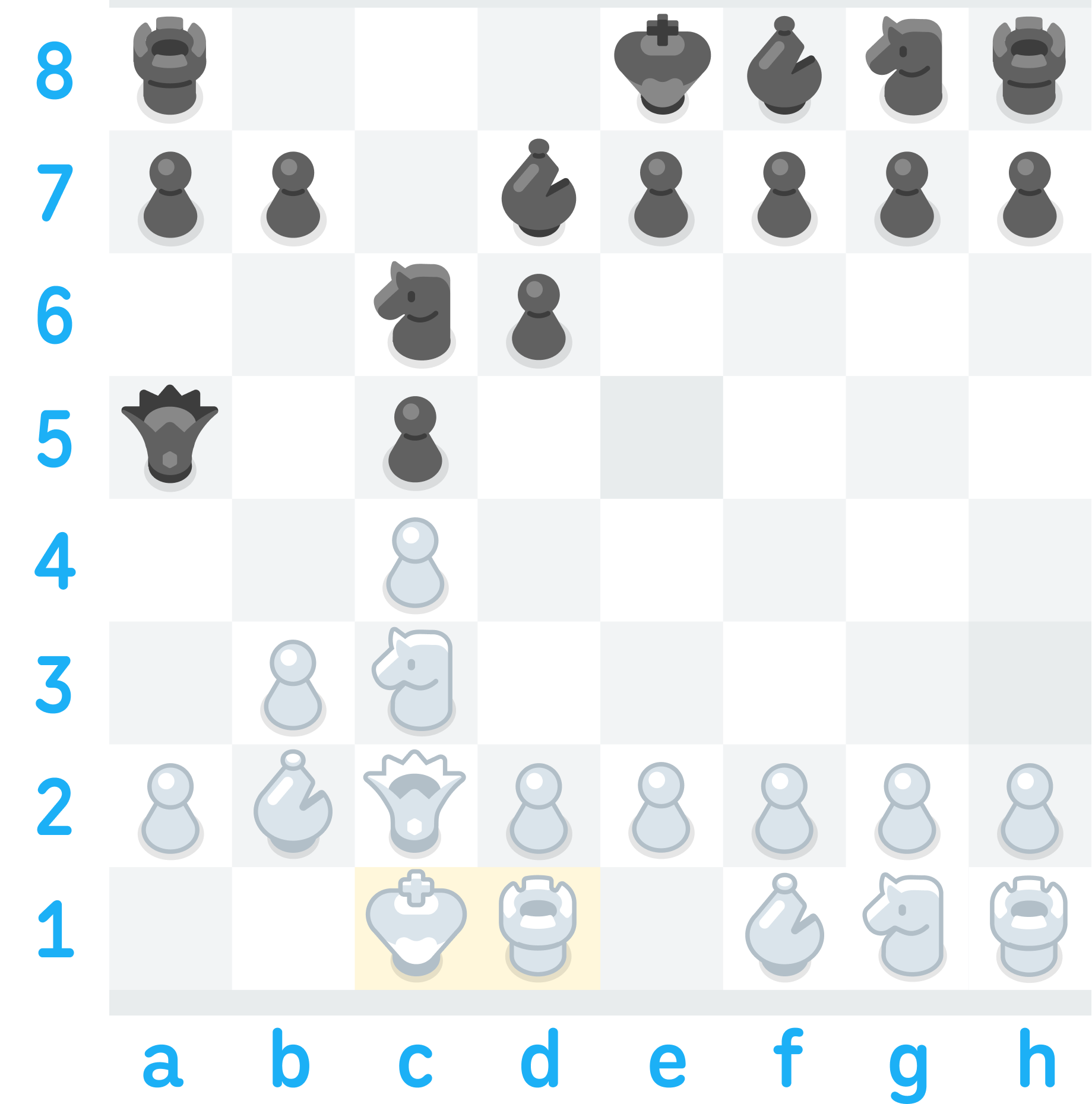
|
There is also “castling by hand,” which is not really castling at all, but is simply moving the king and rook separately over a series of moves, to end up in a position that resembles castling.
Castling by hand is normally only done if the king has been forced to move early on in the game, but the player still wants to bring their king to safety and get their corner rook into the game. However, it is potentially dangerous and much less efficient to castle by hand, because it takes approximately 3 or 4 moves versus just 1 move for regular castling. So castle normally whenever possible, and only castle by hand as a last resort!
What is the history of castling?
Castling was invented to save players time in getting their king to safety out of the center of the board.
Like en passant, castling is a relatively new rule change that was first introduced in medieval Europe. Before this, players would often manually “castle,” taking multiple moves to first move the king up, then move the rook out of the corner and finally slowly move the king into the corner.
As the rules of chess developed and the queen and bishop both got more powerful, it became more and more paramount for the king to find safety early in the game. Thus, the rule of castling was invented, to let players quickly and effectively allow their kings to vacate the center before danger strikes. ⚡️
Rules for castling
There are a few conditions that must be met for your king to be allowed to castle:
Firstly, your king and the rook you’ll be castling with must not have previously moved. For instance, if you’ve moved your kingside rook, you won’t be able to castle kingside for the remainder of the game, but you may still castle queenside if your king and queenside rook have never moved yet, and vice versa. However, if you’ve moved your king or both rooks, then you’ve lost the right to castle—even if you move them back to their original square!
Secondly, there must be a clear path between your king and chosen rook. This means that your knight and bishop must have already moved off their starting squares if you wish to castle kingside, and your knight, bishop, and queen must have vacated their initial squares if you wish to castle queenside.
If your pieces have not moved and you have a clear route between your king and rook, then you also have to fulfill the following conditions in order to be able to successfully castle:
- You cannot castle if you are currently in check. This means that you may not castle in order to escape an enemy’s check. You must first escape check, and only afterwards castle, if castling is still permissible. (For example, this may look like blocking a check with another piece or capturing the checking piece. Remember that if you move your king away to escape check, this will also lose you the right to castle in a subsequent turn!)
- You cannot castle if your king will pass through check while castling. This means that you’ll have to block the potential check, or trade off the enemy piece that is cutting through your castling route in order to successfully castle.
- You cannot castle if your king will end up in check once castled. Once again, this means that you must block the potential check, or trade off the enemy piece, and only after that will you be able to castle.
Why should you castle?
Castling is an efficient way to simultaneously activate a rook and move your king to safety at the same time. Players should generally strive to castle before center pawns are traded off and central files are opened up, which will leave kings in the center exposed and vulnerable to sudden attack. A good general rule of thumb is to castle within the first 10 moves of the game, or even earlier for beginning players.
Once castled, your king is placed behind three pawns, acting as a pawn shield, helping to protect your king. It’s usually best practice to avoid moving any of these three pawns unless you have a very good reason to do so, as moving any of them will only create weakness that the enemy can then target and exploit.
How do you record castling in algebraic notation?
In algebraic notation, kingside castling is notated as 0-0, and queenside castling is written as 0-0-0.
You can remember this by watching how many squares the castling rook travels, and using one zero for each square the castling rook moves. In kingside castling, the rook slides two squares over to land around the king, so this is notated with two zeroes as 0-0, but in queenside castling, the rook slides three squares over to arrive on the other side of the king, so this is recorded as 0-0-0, with three zeroes.
King of your own castle
Castling may seem like a strange combination of moves, but it’s a chess essential. Don’t forget to castle early on in your next game—it just might make the difference between winning and losing!
For more tips and special moves in chess, check out these posts: